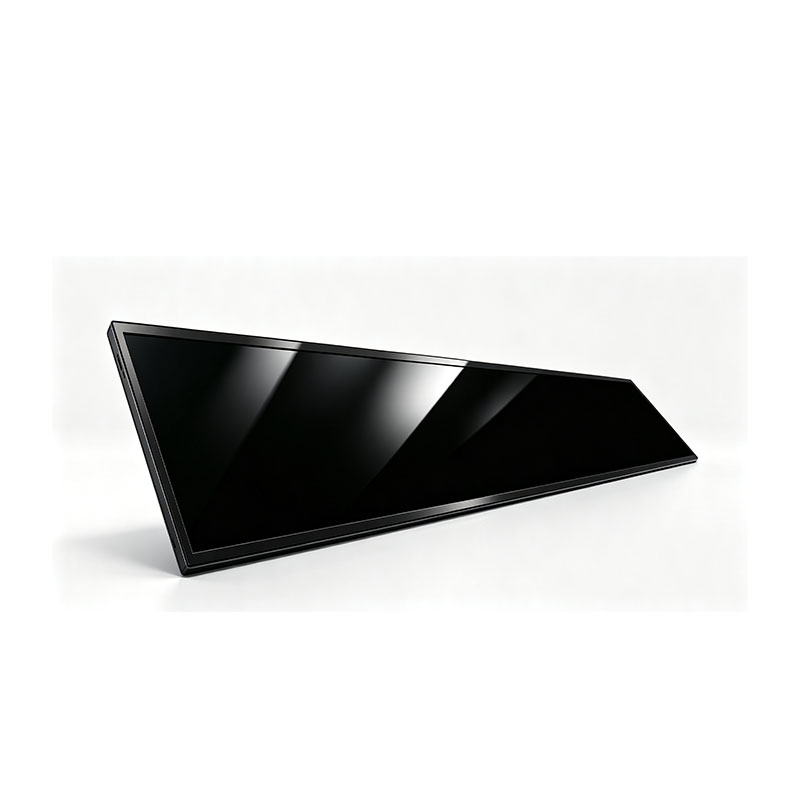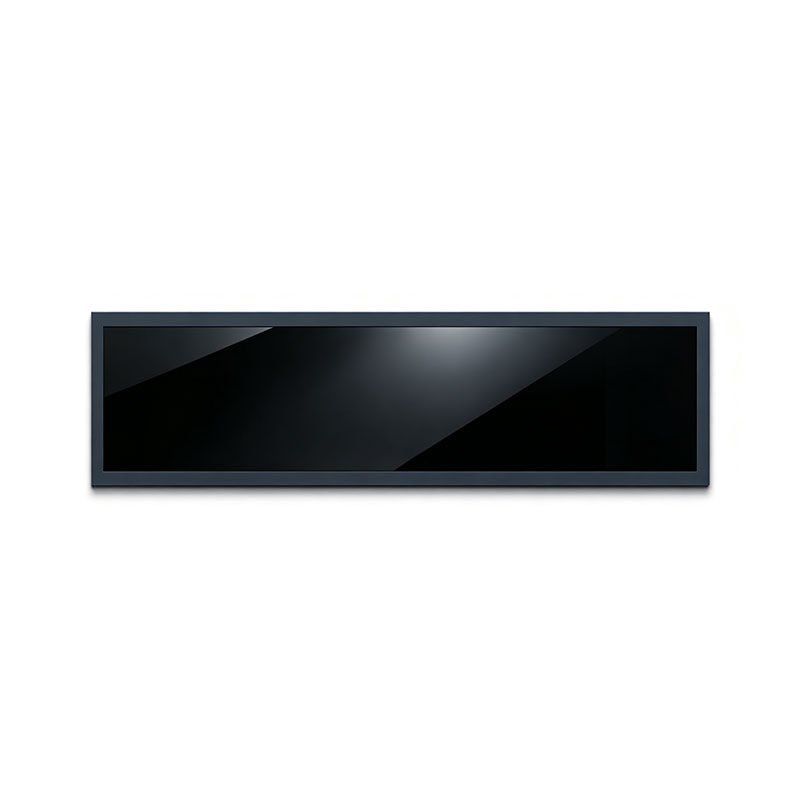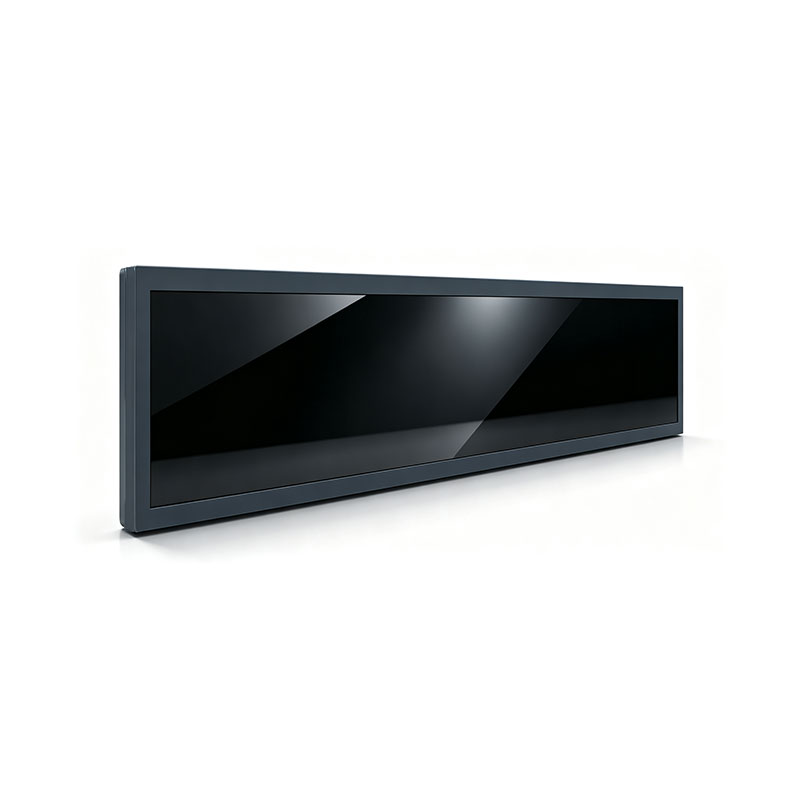
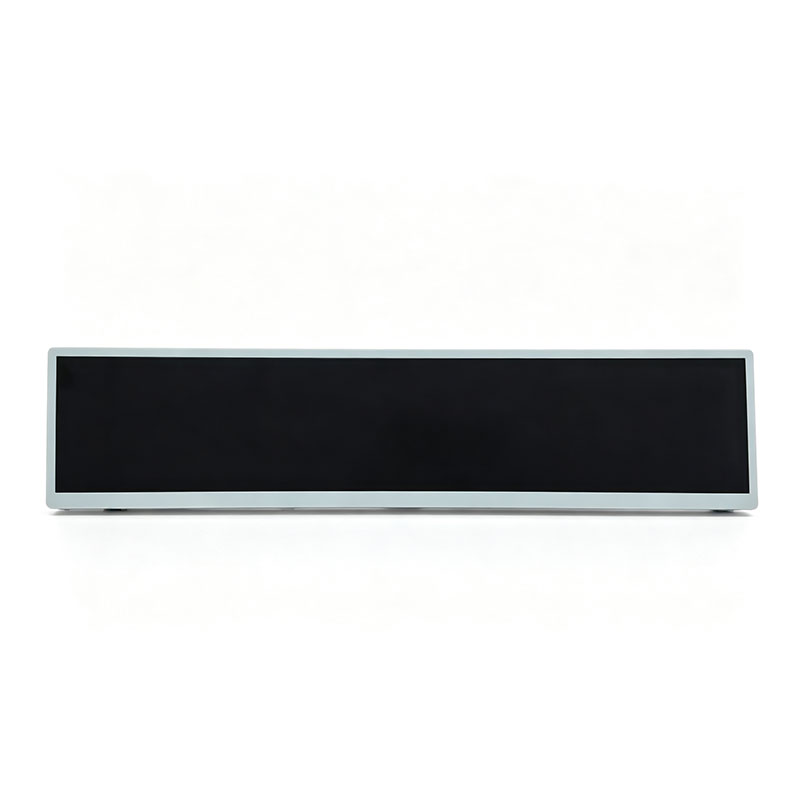
19.1 Inch Stretched LCD TFT Module for OEM Integration
MODEL: QV190FBM-N10C
Need customized solution?
Our engineering team is always ready to provide you with professional technical support and flexible customized services.
Understand light customization servicesBuilt by us. Configured for you.
HITULCD supplies LCD modules and display solutions directly from our manufacturing operation, giving OEMs, integrators and distributors direct access to engineering, customization and production.
Supply
Supplier Qualification
VerificationTechnical Specifications
| LCD PANEL PARAMETERS | HDMI/CONTROL BOARD SPECIFICATIONS | ||
|---|---|---|---|
| ITEM | DETAILS | ITEM | DETAILS |
| Model Number | QV190FBM‑N10C | Input Interface | HDMI, VGA |
| Diagonal Size | 19.1" (21.5" 1/3 Cut) | Power Input | DC 12V‑3A |
| Resolution | 1920(RGB) × 360, >3:1 | OSD KEYS | 5 KEYS (POWER SWITCH, MENU, +, -, EXIT) |
| Pixel Arrangement | RGB Vertical Stripe | OSD CONTROL | BRIGHTNESS, COLOR, CONTRAST, AUTO ROTATION, H/V POSITION, ETC. |
| Display Area(A.A) | 476.64(W)×89.37(H) mm | ||
| Overall Dimension | 491.5(W)×109.4(H)×13.3(D) mm | ||
| Panel Weight | 780g (Typ.) | ||
| Surface Treatment | Matte (Haze 25%) | ||
| LCD Technology | ADS, Normally Black, Transmissive | ||
| Panel Type | a‑Si TFT‑LCD, LCM | ||
| Typical Brightness | 700 nits (Typ.) | ||
| Contrast Ratio | 1200:1 (Typ.)(Transmissive) | ||
| Response Time | 30 (Typ.)(Tr+Td) ms | ||
| Viewing Angle | 89°/89°/89°/89°(Typ.)(CR≥10) | ||
| Viewing Direction | Full Viewing Angle | ||
| Display Colors | 16.7M Colors,72% NTSC | ||
| Refresh Rate | 60Hz | ||
| Backlight Type | 18S4P WLED,30K Hours,No Driver IC | ||
| Power Consumption | 15.3W (Typ.) | ||
| Signal Interface | 30 pins,1 mm LVDS(2 ch,8‑bit) | ||
| Supply Voltage | 5.0V (Typ.) | ||
| Touch Panel | Without Touch Function | ||
| Application Fields | Industrial Equipment,Digital Signage,Vehicle Displays | ||
| Operating Temperature | -20 ~ 60 °C | ||
| Storage Temperature | -20 ~ 60 °C | ||
19.1" Stretched Bar LCD (QV190FBM-N10C): One Platform, Multiple OEM/ODM Integration Paths
For OEM integrators, project managers and procurement teams sourcing a bar-format display for a specific enclosure
The QV190FBM-N10C (19.1", cut from a 21.5" base panel, 1920×360 @ 3:1, 700 nits) is built on our cuttable bar-display platform — the same panel family, backlight design and driver architecture we've adapted into multiple finished integrations for retail, transportation and industrial customers. Rather than a single fixed product, this module is a starting point our engineering team configures around your enclosure, interface and environment.
1. Integration Flexibility Built Into the Platform
Dimensional fit. As part of our cuttable panel series, the active area and outline can be trimmed from the 21.5" source panel to match your target enclosure — you're not limited to the stock 19.1" outline if your housing needs a slightly different width or height.
Interface & control board options. The standard board supports HDMI/VGA input with a 5-key OSD (brightness, color, contrast, auto-rotation, H/V position). For projects with different signal requirements, we build custom AD/control boards supporting HDMI, DP or VGA combinations, ambient-light dimming sensors, and RS-232/RS-485 control — so the display talks to your existing controller rather than the other way around.
Mechanical & housing integration. Our mechanical engineering team works from your enclosure drawings to confirm bezel width, mounting method (rail-mount, embedded/open-frame, VESA, or custom bracket), and depth clearance (the panel's own profile is 13.3mm) before tooling. This covers everything from ultra-slim cabinet embedding to ruggedized frames for transit hubs.
Optical & durability upgrades. Optional optical bonding, anti-glare or anti-reflective front glass, and higher-brightness variants (up to 1000+ nits) are available on the same platform for semi-outdoor or high-ambient-light installations.
Branding & packaging. Private-label silkscreen, custom packaging, and documentation branding are available for OEM programs, so the finished unit ships under your product identity.
2. Where This Platform Has Been Deployed
The 19.1" bar format sits in a size range our team has repeatedly integrated across three recurring project types:
Retail Floor & Shelf Information BarsMounted as freestanding floor information bars or along shelf rails in supermarkets and pharmacies to show real-time pricing, promotions and wayfinding. The narrow 3:1 aspect ratio fits standard gondola shelving and floor-stand cabinets without structural rework, and the matte surface (25% haze) reduces glare under retail ceiling lighting.
Convenience Store Bar DisplaysUsed as slim shelf-edge or counter-top signage in convenience store chains, where cabinet depth is tight and the display needs to run 24/7 without thermal derating. The elongated panel and optimized backlight avoid the brightness falloff typical of a standard panel simply cropped down to size.
Bus & Transit Passenger Information DisplaysIntegrated into bus and transit interiors for route information and passenger announcements, where the wide -20°C to 60°C operating range handles daily heating/cooling cycles, and the compact depth fits into ceiling- or wall-mounted transit enclosures.
Across all three, the engineering starting point is the same panel and backlight — what changes is the interface board, mounting bracket, and optical treatment, configured per project.
3. How We Run an OEM/ODM Program
DFM review — we check your enclosure drawings, target interface, and environmental spec against the base platform before quoting, and flag any change that would affect cost or lead time.
Sample stage — first-article samples let you validate fit, brightness and interface compatibility before committing to tooling.
Reliability validation — production units go through our standard environmental and duty-cycle testing program, with reports available on request.
Certification — CE, FCC and RoHS compliance is standard on this platform, with UL, CCC or EAC available on request for region-specific requirements.
Production scale — supports prototype runs through to volume programs (12,000+ units/month capacity), with 2–3 weeks standard lead time and 4–6 weeks for custom-configured builds.
Ongoing support — 12-month product warranty with direct engineering access for post-launch questions, not just a sales handoff.
Next Step
Send us your enclosure drawing (or rough dimensions), target interface, and deployment environment (indoor/outdoor, temperature range, required certifications). We'll come back with a configuration recommendation — brightness, interface board, mounting method — based on which of the above integration paths is the closest match to your project.
Contact: chenhua@hitulcd.com | +86 186 8232 8732
Custom-Cut Stretched Bar LCD Modules: Engineering & Reliability Overview
For OEM integrators, project managers and procurement teams evaluating a cut-panel bar display program
Our 19.1" stretched bar module (QV190FBM-N10C, cut from a 21.5" standard panel, 1920×360 @ 3:1) is a representative example of our cutting-based bar display capability — the same process and controls below apply to other custom cut widths and source panel sizes. This page is built to answer the questions our engineering team is asked most often before a buyer commits to a cutting program.
1. Cutting Process & Design Feasibility
Cutting method. For most stretched bar conversions we use mechanical wheel-cutting, which is proven, cost-effective, and suitable for straight-line cuts with standard tolerance requirements (±0.3mm typical). For tighter tolerances, thinner glass, or cut lines that pass close to active circuitry, we switch to ultra-fast laser cutting, which produces a cleaner edge with lower mechanical stress and reduces the risk of micro-cracking. The method is selected per project based on your target dimension, tolerance class, and glass thickness — we confirm this during design review rather than applying a single default process to every request.
Circuit clearance review. Before any cut is approved, our engineering team maps your requested cut line against the source panel's Gate/Source trace layout and TFT array boundary to confirm there is no interference. To run this check quickly, we typically ask for:
The source panel model number or datasheet (or the panel itself, if it's non-standard)
Your target outline dimensions and the intended cut-line position relative to the active area
Any mechanical constraints (bezel, mounting, connector position) that affect where the cut can be made
This lets us confirm feasibility — and flag any risk to signal integrity or active area — before tooling starts, not after.
Edge quality standard. Post-cut edges are inspected against defined flatness and micro-crack criteria under magnification before parts move to sealing. Panels outside spec are rejected at this stage, prior to assembly.
2. Reliability & Edge Sealing
Sealing process. Every cut edge goes through a secondary UV-cure dispensing process to re-seal the panel, protecting against liquid crystal leakage and moisture ingress at the cut line. This is a standard step in our cutting workflow, not an optional add-on.
Reliability testing. Cut-and-sealed modules are validated on the same environmental program we run for standard product, adjusted to consumer- or industrial-grade requirements depending on your application:
85°C/85% RH (double-85) damp heat testing
High/low temperature cycling and thermal shock
Structural drop testing
Test reports and reference data from comparable cutting projects are available on request during the evaluation stage, so you can benchmark against your own qualification requirements before committing to tooling.
Optical performance at the edge. The sealed edge zone is checked for light leakage and color shift (Mura) under production lighting conditions as part of standard outgoing inspection, so this isn't left for your incoming QC to catch.
3. Cost, Yield & Lead Time
NRE and first samples. Setting up a new cutting program (fixture, cut-line programming, seal validation) carries a one-time NRE that varies by panel size, glass thickness and cut complexity — we quote this per project rather than publishing a flat number, since a laser-cut thin-glass job and a straightforward mechanical cut are priced differently. First article samples (typically 20pcs) are generally deliverable within 4–6 weeks of design sign-off.
Mass production expectations. Once a cutting profile is qualified, production yield is tracked and reported per batch; we share this figure — along with our standard MOQ for the cut configuration — at the quotation stage so it's based on your specific dimensions rather than a generic estimate. As a reference point, our standard (non-cut) product MOQ starts at 1 unit, with 2–3 weeks standard lead time; custom cutting programs typically run 4–6 weeks and carry a project-specific MOQ confirmed with your quote.
Next Step
If you're evaluating a cut-to-size bar display for your program, send us your target dimensions, source panel reference (if known), and application environment (indoor/outdoor, temperature range, expected certification). Our engineering team will confirm cutting feasibility, sealing approach, and a realistic NRE/lead-time estimate before you commit to tooling.
Contact: chenhua@hitulcd.com | +86 186 8232 8732
Know The Terms Before You Inquire.
|
01 — Shipping Terms
Incoterms Available
EXW
Ex Works — pick up from our factory
FOB
Free On Board — most common for ocean freight
CIF
Cost, Insurance & Freight — to your port
|
02 — Order Minimum
MOQ: 1 Units
Applies to standard specs. Custom brightness, cutting or bezel may adjust MOQ, confirmed at quotation. Sample units available before bulk order
|
03 — Payment Protection
Multiple Secured Methods
|
A Real Factory. Publicly Verifiable.
|
Legal Company Name
Shenzhen Hantu Jiashi Technology Co., Ltd.
|
Unified Social Credit Code
91440300306068446B
|
|
Legal Representative
YUN CHEN
|
Registered Capital
RMB 2,000,000
|
|
Established
May 23, 2014 (11+ years operation)
|
Business Status
● Active / In Operation
|
|
Registered Factory Address
Building B, Gangshen Innovation Park, Huaning Road, Dalang Sub-district, Longhua District, Shenzhen, Guangdong, China
|
|
Contact HITULCD
We'll respond via email within 24 hours. If you'd like to discuss details over WhatsApp or a call, please leave a preferred time and contact method in your message — we will never call you unannounced.
Related solutions
This product is suitable for the following industry application scenarios
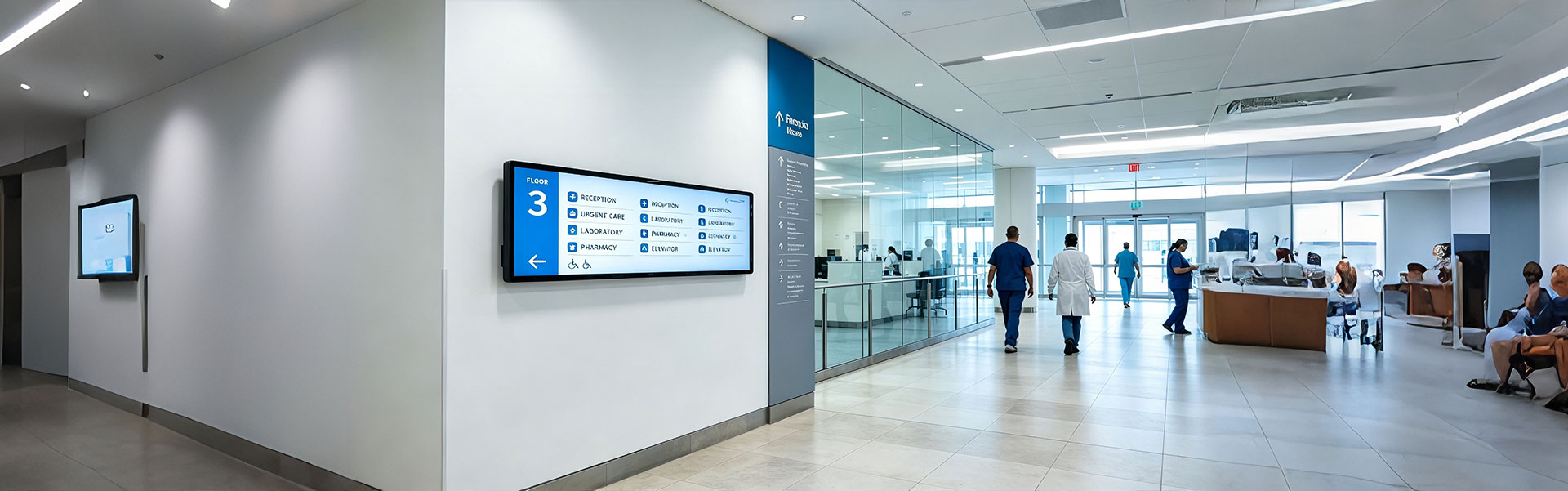
Floor Information Bar LCD Display Solution
Ultra-wide, high-brightness stretched bar LCD disp...
view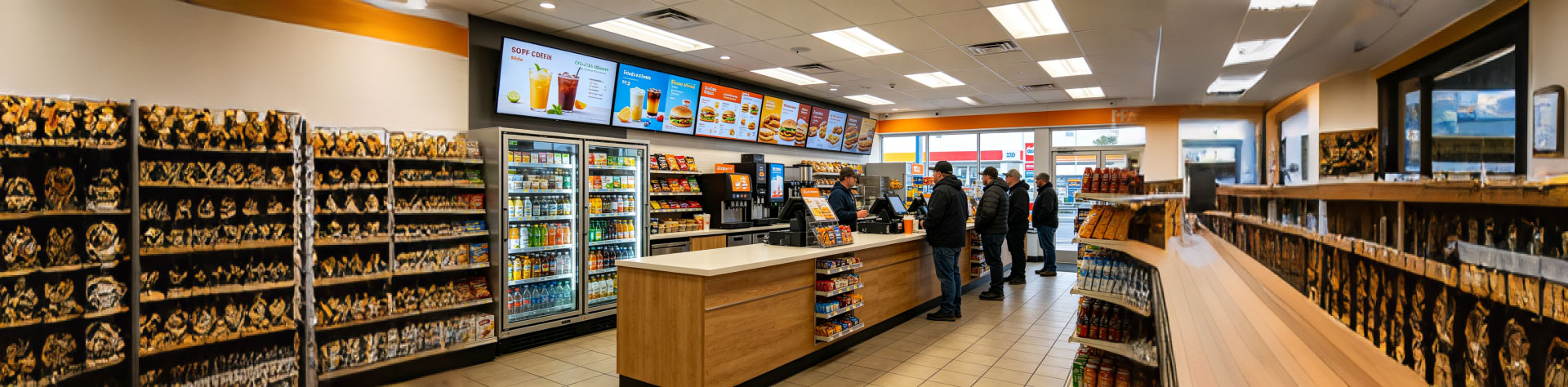
Convenience Store Bar LCD Display Solution
Ultra-slim, high-brightness stretched bar LCD disp...
view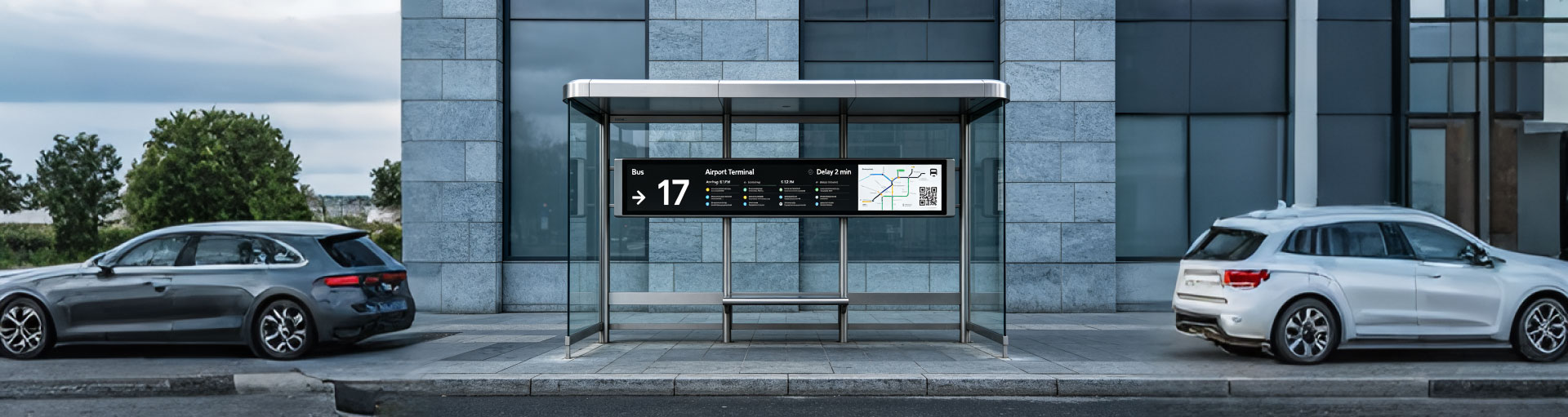
Bus Passenger Information Stretched Bar Display Solution
A rugged, ultra-wide stretched bar display solutio...
viewRelated Products
You may also be interested in the following products