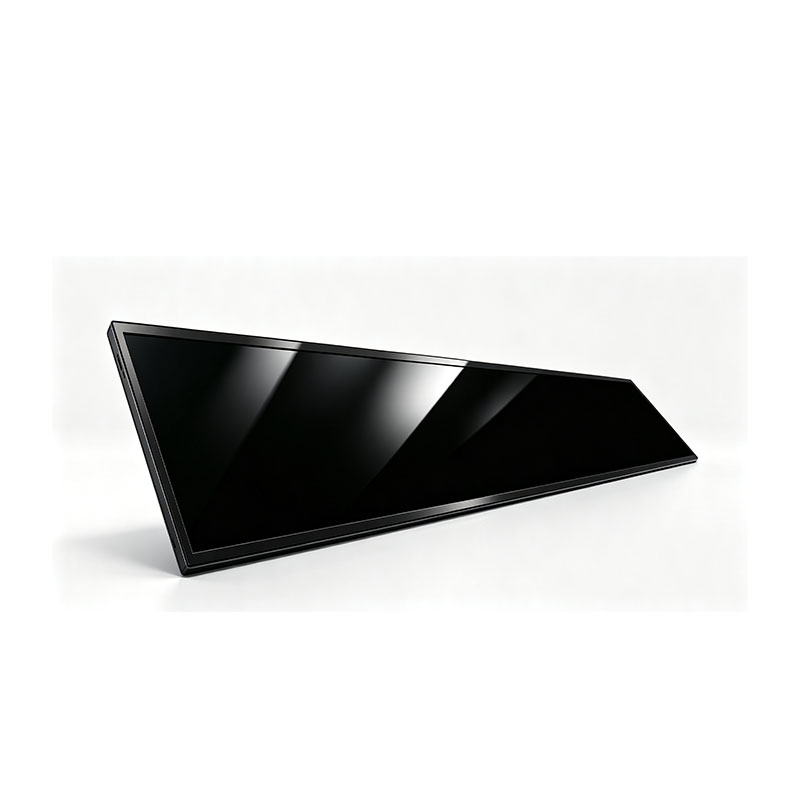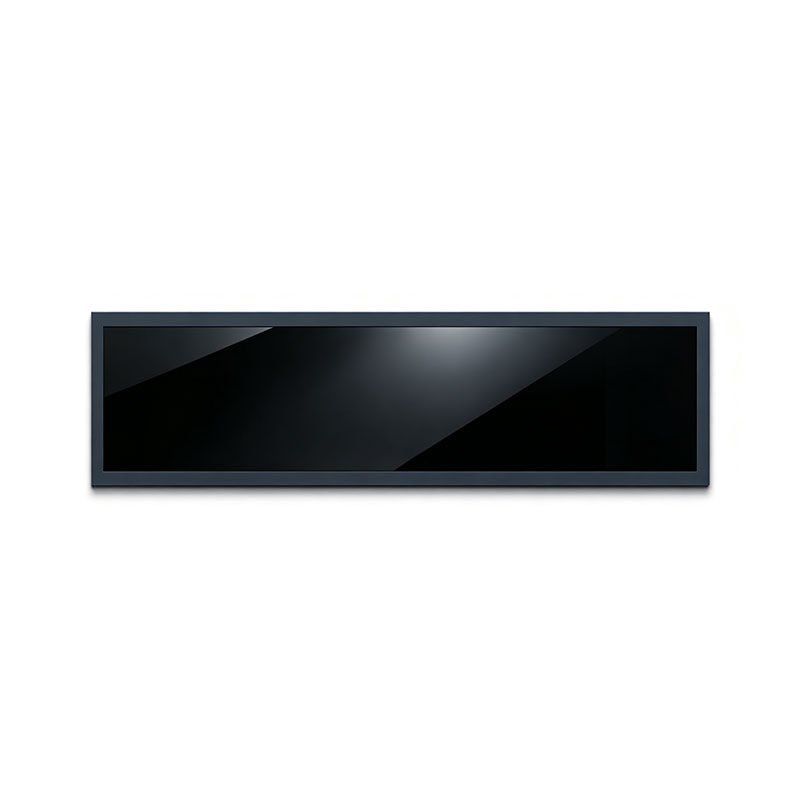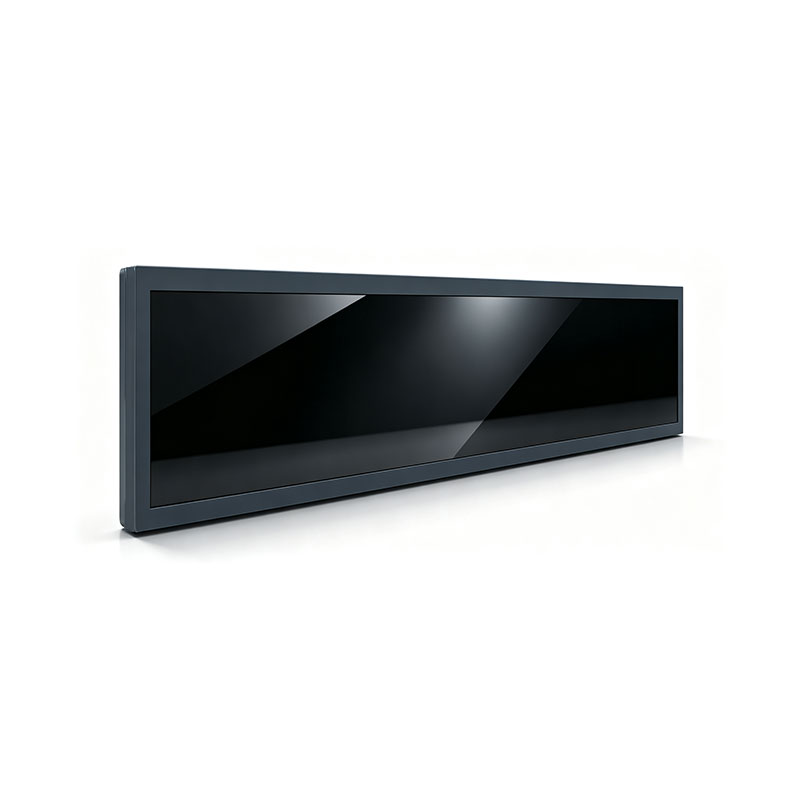

28.6 Inch Stretched LCD Panel for OEM Display Integration
MODEL: P286IVN01.0
Need customized solution?
Our engineering team is always ready to provide you with professional technical support and flexible customized services.
Understand light customization servicesBuilt by us. Configured for you.
HITULCD supplies LCD modules and display solutions directly from our manufacturing operation, giving OEMs, integrators and distributors direct access to engineering, customization and production.
Supply
Supplier Qualification
VerificationTechnical Specifications
| LCD PANEL PARAMETERS | HDMI/CONTROL BOARD SPECIFICATIONS | ||
|---|---|---|---|
| ITEM | DETAILS | ITEM | DETAILS |
| Model Number | P286IVN01.0 | Input Interface | HDMI, VGA |
| Manufacturer | HITULCD | Power Input | DC 12V‑3A |
| Diagonal Size | 28.6" (32.0" 1/2 Cut Panel) | OSD KEYS | 5 KEYS (POWER, MENU, +, -, EXIT) |
| Resolution | 1920(RGB) × 540, 3.56:1 | OSD CONTROL | BRIGHTNESS, COLOR, CONTRAST, ROTATION, H/V POSITION |
| Panel Type | a‑Si TFT‑LCD, LCM | ||
| Pixel Arrangement | RGB Vertical Stripe | ||
| Display Area(A.A) | 698.4(W)×196.425(H) mm | ||
| Overall Dimension | 722.2(W)×220.23(H)×28.9(D) mm | ||
| Panel Weight | 3.10Kgs (Typ.) | ||
| Surface Treatment | Matte (Haze 2%), Hard Coating (3H) | ||
| Contrast Ratio | 4000:1 (Typ.)(Transmissive) | ||
| Typical Brightness | 700 nits | ||
| Response Time | 8 (Typ.)(G to G) ms | ||
| LCD Technology | AMVA3, Normally Black, Transmissive | ||
| Viewing Angle | 89°/89°/89°/89°(Typ.)(CR≥10) | ||
| Viewing Direction | Full Viewing Angle | ||
| Display Colors | 16.7M Colors,72% NTSC | ||
| Refresh Rate | 60Hz | ||
| Backlight Type | WLED,70K Hours,With LED Driver | ||
| Power Consumption | - | ||
| Signal Interface | 51 pins,0.5 mm LVDS(2 ch,8‑bit) | ||
| Supply Voltage | 12.0V (Typ.) | ||
| Touch Panel | Without Touch Function | ||
| Application Fields | Industrial Equipment,Digital Signage,Vehicle Displays | ||
| Operating Temperature | -20 ~ 60 °C | ||
| Storage Temperature | -20 ~ 60 °C | ||
HITULCD OEM/ODM Display Manufacturing
Built Around What Overseas Buyers Actually Struggle With
1. Why This Page Exists: The Real Problem Behind an OEM/ODM Search
Buyers rarely search "OEM/ODM LCD manufacturer" out of curiosity. They land here because one of a few specific situations forced them to look for a new supplier:
A standard panel doesn't fit the enclosure — the mechanical design is locked, but no catalog panel matches the cutout, bezel, or mounting depth.
The existing supplier can't hit brightness/reliability specs for an outdoor, semi-outdoor, or 24/7 industrial deployment, and warranty claims are piling up.
A single-source panel is going end-of-life and the buyer needs a re-engineered equivalent before their own product line stalls.
Procurement needs a second/backup source for supply-chain resilience, but the incumbent supplier won't share full technical documentation.
A project has moved from prototype to volume, and the original small-batch vendor can't scale, or can't provide the compliance paperwork (CE/FCC/RoHS/UL) needed to sell in the EU or US.
This document is written to answer the questions these buyers ask before they'll take a sales call — not to describe HITULCD in the abstract.
2. Who This Is For
| Role | What they need from this page |
|---|---|
| Project Manager / Program Owner | Confidence that a factory can be treated as a design partner, not just a parts supplier — timeline predictability, single point of technical contact, and a track record with similar programs. |
| Procurement / Sourcing Manager | Verifiable supplier legitimacy (registration, certifications, financial standing), transparent MOQ/pricing structure, and multiple-sourcing risk mitigation. |
| Hardware / Display Engineer | Real engineering depth: bonding process control, signal interface flexibility, DFM feedback, and access to people who can read a mechanical drawing — not a sales rep relaying questions to a factory. |
3. OEM vs. ODM — Which One Matches Your Project
| OEM (re-brand / modify existing product) | ODM (full custom design) | |
|---|---|---|
| Starting point | An existing HITULCD panel/kit is close to your requirement | No existing platform fits; design starts from your spec |
| Typical changes | Brightness tier, interface (HDMI/LVDS/eDP), size within existing platform, logo/label, packaging | Custom cell size/cutting, custom AD board, custom mechanical housing, custom touch stack |
| Engineering involvement | Configuration-level | Full DFM cycle, from cell/backlight selection through housing integration |
| Best fit | Buyers who need speed and lower NRE, adapting a known-good platform | Buyers with a fixed enclosure/mechanical constraint, or a differentiated product requirement |
| Typical timeline | Faster — closer to standard lead times | Longer — full design, sample, and qualification cycle |
Most projects start as a conversation, not a decision — we'll tell you honestly if your requirement is a same-day OEM configuration or a multi-week ODM build, rather than pushing every inquiry into the more expensive path.
4. What "Full-Process" Actually Means Here
A common concern from overseas buyers: "Is this factory actually manufacturing, or just trading/assembling bought-in panels?" HITULCD's OEM/ODM scope covers the stages that determine whether we can actually solve your problem in-house, rather than passing it to a third party:
Cell-level bonding — automated COG/FOG bonding (JYD-I900E, JYD-F900E/F900A) with micron-level alignment control
Cutting & structural customization — fiber laser cutting (GH-1111, 7.5KW) and precision OC glass cutting (OC-1200A) for custom sizes and stretched-bar formats
Backlight & assembly integration — from backlight module to complete open-frame monitor assembly
Reliability qualification — dimensional inspection (2D measuring instruments), high/low temperature and humidity chambers, aging tests, and microscopic visual inspection at each stage
11-step production line traceability — from cell feeding and vacuum quenching through ACF attachment, IC bonding, FPC bonding, ITO encapsulation, and final visual inspection
This is the level of detail a hardware engineer needs to evaluate a factory — not a general "we do OEM" claim.
5. De-Risking the Decision: What Buyers Ask Before They Commit
"How do we know this company is real and stable?"Founded 2014 (11+ years in operation), 38+ export markets, 120,000+ units annual capacity. Legal registration is publicly verifiable against Chinese government business registries (available on request per product line).
"Will our product be compliant in our home market?"CE (EU), FCC (US), RoHS, plus ISO 9001:2015, ISO 14001:2015, IATF 16949:2016, UL, REACH, and WEEE support — reducing the compliance burden on your side before the product ships.
"What happens if there's a defect after volume shipment?"Standard 12-month product warranty, engineering support included, and full reliability test data available for review — not just a datasheet claim.
"Can we actually reach an engineer, or only a sales contact?"DFM review and technical documentation are handled by the same engineering team running production — inquiries with drawings get routed to that team directly, not filtered through non-technical staff.
6. Typical OEM/ODM Program Flow
Requirement intake — mechanical drawing, target spec (size, brightness, interface, environment), volume forecast
Feasibility & DFM review — confirms whether OEM (configuration) or ODM (full custom) path applies; flags any design conflicts early
Quotation — NRE (if applicable), sample lead time, unit pricing at stated volume tiers, MOQ
Sample build & qualification — first-article sample plus relevant reliability test data (temperature/humidity, aging, dimensional)
Production ramp — from small-batch to volume, with the same QC checkpoints applied throughout
Ongoing engineering support — spec changes, second-source requests, and warranty support post-shipment
7. Where This Applies
Same manufacturing base supports customization across the full product range: industrial high-brightness kits (5.5"–86", 350–3000 nits), stretched bar displays, open frame monitors, window/outdoor digital signage, and OLED/e-paper/touch integration — so a buyer standardizing on one supplier across multiple display formats in a single product line doesn't need to qualify a second factory.
8. Start a Project
Bring a drawing, not just a size — the fastest way to get an accurate OEM/ODM answer is to send:
Mechanical/mounting drawing (DXF/DWG/STEP if available)
Target spec: size, brightness, interface, operating environment
Expected annual volume
Target compliance markets (EU/US/other)
Contact: chenhua@hitulcd.com | Tel: +86 186 8232 8732 | Request a Quote
28.6" Stretched LCD Panel (P286IVN01.0) — Technical & Engineering Brief
For OEM Integrators, Procurement Managers & Project Engineers
1. Product Overview
The P286IVN01.0 is a 28.6" ultra-wide stretched-bar LCD module, produced by cutting a standard 32" a-Si TFT-LCD panel in half ("32" 1/2 Cut Panel"). This gives OEMs a cost-effective, high-availability bar-format display without waiting on a dedicated bar-panel production line.
| Item | Spec |
|---|---|
| Model | P286IVN01.0 |
| Diagonal Size | 28.6" (derived from 32" panel, 1/2 cut) |
| Resolution | 1920 × 540 (RGB), Aspect Ratio ≈3.56:1 |
| Active Area | 698.4(W) × 196.425(H) mm |
| Overall Dimension | 722.2(W) × 220.23(H) × 28.9(D) mm |
| Brightness | 700 nits (Typ.) |
| Contrast Ratio | 4000:1 (Typ.) |
| Surface | Matte, Haze 2%, 3H Hard Coating |
| Panel Technology | AMVA3, Normally Black, Full Viewing Angle 89°/89°/89°/89° |
| Interface | 51-pin, 0.5mm LVDS (2ch, 8-bit) |
| Backlight | WLED, 70,000 hrs, integrated LED driver |
| Operating / Storage Temp | -20°C ~ 60°C |
| Control Board | HDMI/VGA input, DC 12V-3A, 5-key OSD |
This brief addresses the technical due-diligence questions that engineering and procurement teams typically raise before committing to a custom-cut bar panel project.
2. Cutting Process & Design Feasibility
2.1 Cutting method
We evaluate cutting method on a per-project basis according to target size and tolerance:
Mechanical wheel scribing (cut & break) — suitable for straightforward rectangular cuts with standard tolerance requirements; lower cost, shorter lead time.
Ultrafast laser cutting (cold cutting) — recommended when tighter dimensional tolerance, minimal micro-crack risk, or a cut line close to active circuitry is required. Laser cutting produces a cleaner edge with reduced heat-affected zone (HAZ), at a higher unit cost.
The recommendation is confirmed during the DFM (Design for Manufacturability) review once your target dimensions and tolerance class are provided.
2.2 Circuit clearance & routing check
Before any cut line is finalized, our engineering team cross-checks the proposed cut against the source panel's Gate/Source driving IC layout and TFT array boundary to confirm:
No interference with active Gate/Source trace routing
Sufficient clearance margin from the array edge to avoid leakage current or dead-line defects
Compatibility with the existing LVDS/COF (Chip-on-Film) bonding position, or whether COF relocation/re-bonding is required
Information required from you to begin feasibility review:
Target final dimensions (W × H) and tolerance requirement (±mm)
Mounting/bezel drawing or mechanical interface drawing (DXF/DWG/STEP preferred)
Required active display area (if cropped from original AA)
Interface requirement (LVDS pin-out reused, or new COF/PCBA needed)
Intended orientation and viewing direction
Our team will return a cut-line proposal marked against the original panel's array map, along with a feasibility confirmation (Go / Go-with-conditions / No-go) within the initial review.
2.3 Edge quality standard
Post-cut edges are inspected against internal QC criteria covering:
Edge straightness/flatness: controlled within our standard tolerance band per cut length (confirmed at quotation stage based on final size)
Micro-crack / chipping control: 100% visual + magnified inspection; edges exceeding chip depth or crack-propagation limits are rejected
Edge grinding: chamfered/ground edge finish available on request to reduce stress concentration points
3. Sealing & Reliability Assurance
3.1 Secondary sealing process
After cutting, the exposed cell edge (where liquid crystal material and polarizer layers are exposed) is treated with a secondary sealing process to restore moisture/liquid-crystal containment:
UV-cure edge sealant (dispensed) is our standard method — applied along the cut edge and cured under UV to form a moisture barrier
Edge sealing is validated with dye-penetration / visual leak-check before the module proceeds to burn-in
3.2 Reliability test data
Cut-panel modules are qualified against the same reliability program used for our standard modules, tier selectable per your end-application (consumer-grade vs. industrial-grade):
| Test | Typical Condition | Notes |
|---|---|---|
| High-Temp/High-Humidity (85/85, "Double-85") | 85°C / 85% RH, 96–168 hrs (industrial spec extendable) | Checked for edge delamination, Mura, leakage |
| High/Low Temp Storage & Operation | -20°C ~ 60°C cycling | Per datasheet operating range |
| Thermal Shock | Cold/hot chamber cycling, multiple cycles | Verifies seal integrity at temperature extremes |
| Drop / Mechanical Shock | Per standard packaging drop-test protocol | Structural integrity of module + housing |
We can share sample test reports/data from comparable prior cut-panel programs under NDA during the qualification stage — exact pass/fail benchmarks depend on the final mechanical design (bezel, backing plate, mounting stress) and will be re-verified for your specific configuration rather than assumed from a different project.
3.3 Optical performance after edge sealing
Known risk areas after cutting/sealing are actively controlled for:
Light leakage at the cut edge — mitigated via backlight light-guide masking/trimming plus the edge seal itself; inspected under dark-room conditions
Mura / color shift near the cut boundary — checked against our standard Mura acceptance criteria (uniformity photometric scan); any panel showing localized non-uniformity beyond spec is screened out before shipment
4. Cost, Yield & Lead Time
| Item | Typical Range* |
|---|---|
| NRE (cutting fixture, cut-line engineering, first-article qualification) | Quoted per project after DFM review — scales with tolerance class and whether laser vs. mechanical cutting is used |
| First sample (≈20 pcs) lead time | Typically 3–4 weeks from confirmed drawing/spec, subject to source panel availability |
| Mass production yield | Dependent on cut complexity and proximity to active circuitry; discussed transparently at quotation once cut-line design is finalized — simple straight cuts away from active array trend meaningfully higher than cuts requiring COF relocation |
| MOQ (mass production) | Standard catalog spec: 1 unit. Custom cutting/brightness/bezel programs carry a separate MOQ confirmed at quotation (source-panel batch size is typically the driver) |
| Standard lead time (non-custom) | 2–3 weeks |
| Custom project lead time | 4–6 weeks |
* Final figures are confirmed once your drawing, tolerance class, and volume forecast are reviewed — we do not want to quote a number that doesn't reflect your actual cut-line complexity.
5. Compliance & Supplier Verification
Certifications: CE / FCC / RoHS standard; UL / CCC / EAC available on request; ISO9001, REACH, WEEE
Manufacturer: Shenzhen Hantu Jiashi Technology Co., Ltd. (HITULCD) — Unified Social Credit Code 91440300306068446B, established May 2014, in operation 11+ years
Production capacity: 12,000+ units/month, supports prototype through volume programs
Warranty: 12 months with engineering support
Shipping terms: EXW / FOB / CIF
Payment: T/T, L/C, PayPal (samples), O/A (established partners)
6. Next Step
To move to a formal feasibility review and quotation, please share:
Target dimension & tolerance drawing
Mechanical/mounting interface drawing
Interface requirement (reuse existing LVDS pinout or new design)
Target application environment (indoor/outdoor, temperature range, expected test standard — consumer or industrial)
Estimated annual volume
Our engineering team will return a cut-line feasibility assessment, sealing process recommendation, and formal NRE/sample quotation.
Contact: chenhua@hitulcd.com | Tel: +86 186 8232 8732
Know The Terms Before You Inquire.
|
01 — Shipping Terms
Incoterms Available
EXW
Ex Works — pick up from our factory
FOB
Free On Board — most common for ocean freight
CIF
Cost, Insurance & Freight — to your port
|
02 — Order Minimum
MOQ: 1 Units
Applies to standard specs. Custom brightness, cutting or bezel may adjust MOQ, confirmed at quotation. Sample units available before bulk order
|
03 — Payment Protection
Multiple Secured Methods
|
A Real Factory. Publicly Verifiable.
|
Legal Company Name
Shenzhen Hantu Jiashi Technology Co., Ltd.
|
Unified Social Credit Code
91440300306068446B
|
|
Legal Representative
YUN CHEN
|
Registered Capital
RMB 2,000,000
|
|
Established
May 23, 2014 (11+ years operation)
|
Business Status
● Active / In Operation
|
|
Registered Factory Address
Building B, Gangshen Innovation Park, Huaning Road, Dalang Sub-district, Longhua District, Shenzhen, Guangdong, China
|
|
Contact HITULCD
We'll respond via email within 24 hours. If you'd like to discuss details over WhatsApp or a call, please leave a preferred time and contact method in your message — we will never call you unannounced.
Related solutions
This product is suitable for the following industry application scenarios
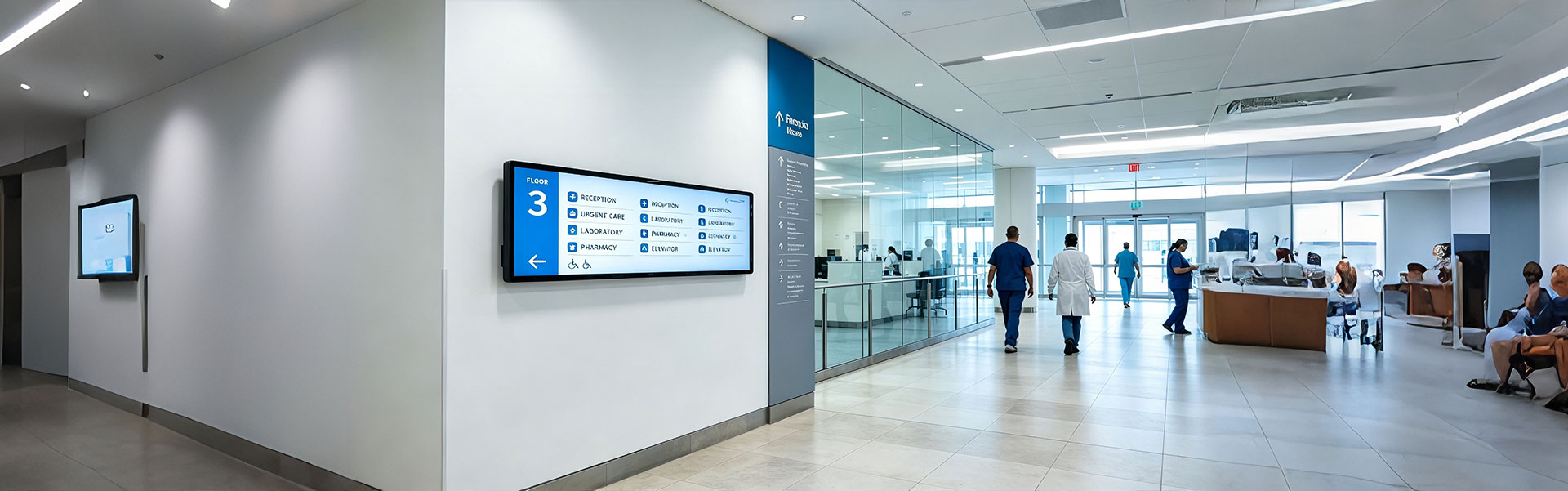
Floor Information Bar LCD Display Solution
Ultra-wide, high-brightness stretched bar LCD disp...
view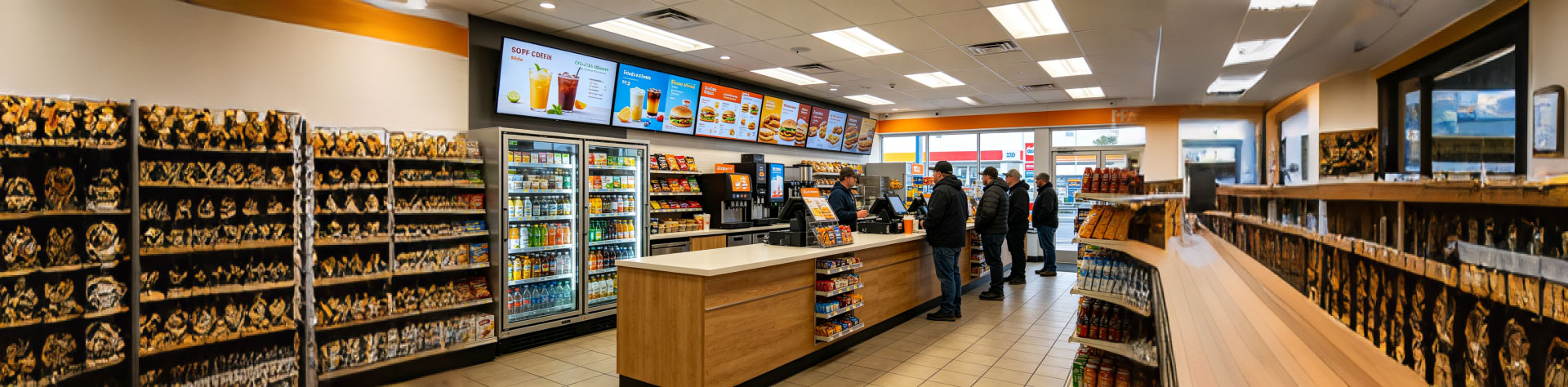
Convenience Store Bar LCD Display Solution
Ultra-slim, high-brightness stretched bar LCD disp...
view
Bus Passenger Information Stretched Bar Display Solution
A rugged, ultra-wide stretched bar display solutio...
viewRelated Products
You may also be interested in the following products