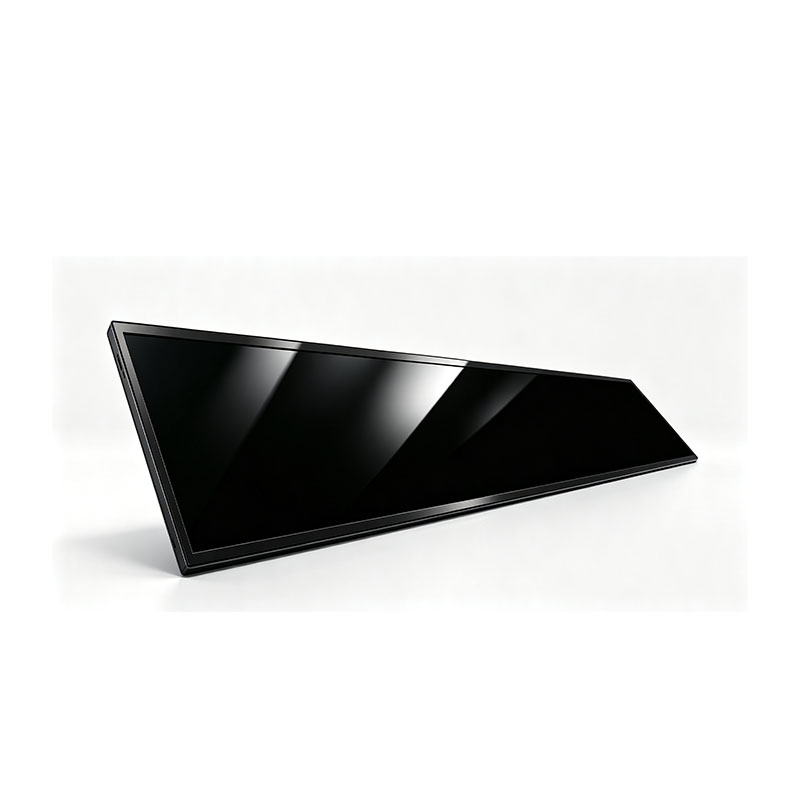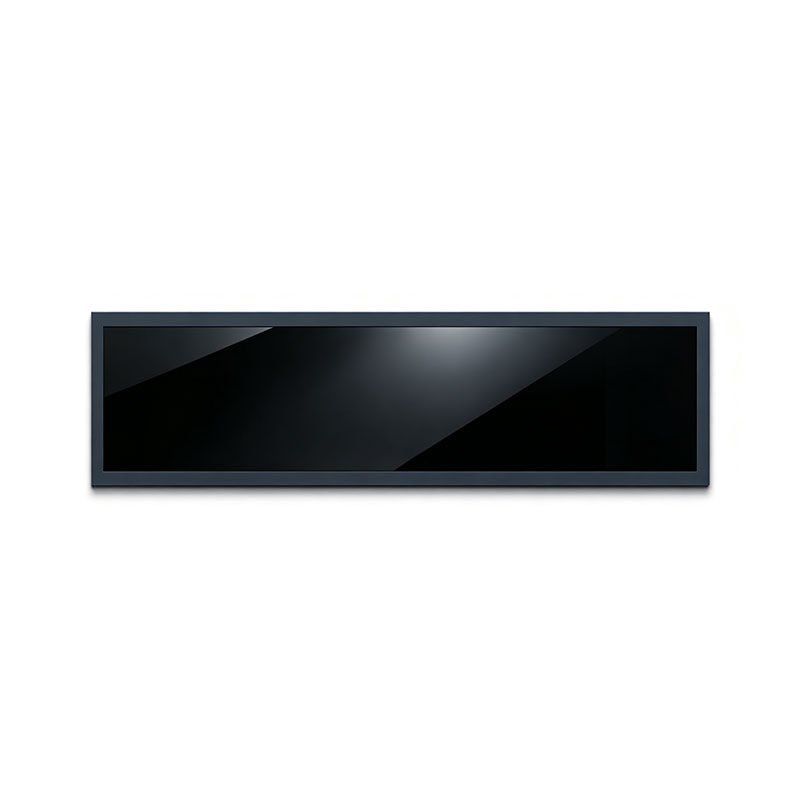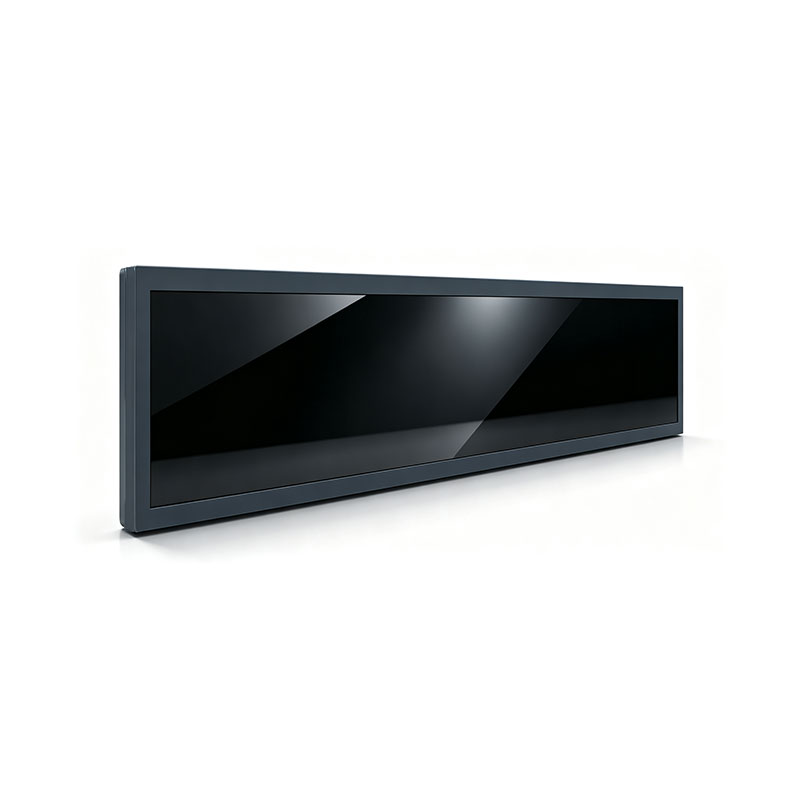

36.6 Inch Long Narrow LCD Module for Product Integration
MODEL: S366AJ1‑LE1
Need customized solution?
Our engineering team is always ready to provide you with professional technical support and flexible customized services.
Understand light customization servicesBuilt by us. Configured for you.
HITULCD supplies LCD modules and display solutions directly from our manufacturing operation, giving OEMs, integrators and distributors direct access to engineering, customization and production.
Supply
Supplier Qualification
VerificationTechnical Specifications
| LCD PANEL PARAMETERS | HDMI/CONTROL BOARD SPECIFICATIONS | ||
|---|---|---|---|
| ITEM | DETAILS | ITEM | DETAILS |
| Model Number | S366AJ1‑LE1 | Input Interface | HDMI, VGA |
| Manufacturer | HITULCD | Power Input | DC 12V‑5A |
| Diagonal Size | 36.6" Native Stretched Bar (Not Cut Panel) | OSD KEYS | 5 KEYS (POWER, MENU, +, -, EXIT) |
| Resolution | 1920(RGB) × 290, 6.62:1 | OSD CONTROL | BRIGHTNESS, COLOR, CONTRAST, ROTATION, H/V POSITION |
| Panel Type | a‑Si TFT‑LCD, LCM | ||
| Pixel Arrangement | RGB Vertical Stripe | ||
| Display Area(A.A) | 919.296(W)×138.852(H) mm | ||
| Overall Dimension | 951.3(W)×170.8(H)×12.4(D) mm | ||
| Panel Weight | 2.95±0.15Kgs (Typ.) | ||
| Surface Treatment | Matte (Haze 1%), Hard Coating (3H) | ||
| Contrast Ratio | 5000:1 (Typ.)(Transmissive) | ||
| Typical Brightness | 1000 NITS | ||
| Response Time | 11 (Typ.)(G to G) ms | ||
| LCD Technology | Super MVA, Normally Black, Transmissive | ||
| Viewing Angle | 89°/89°/89°/89°(Typ.)(CR≥10) | ||
| Viewing Direction | Full Viewing Angle | ||
| Display Colors | 16.7M Colors,72% NTSC | ||
| Refresh Rate | 60Hz | ||
| Backlight Type | WLED,50K Hours,With LED Driver | ||
| Power Consumption | - | ||
| Signal Interface | 51 pins,0.5 mm LVDS(2 ch,8‑bit) | ||
| Supply Voltage | 12.0V (Typ.) | ||
| Touch Panel | Without Touch Function | ||
| Application Fields | Industrial Equipment,Digital Signage,Vehicle Displays | ||
| Operating Temperature | -20 ~ 60 °C | ||
| Storage Temperature | -20 ~ 60 °C | ||
HITULCD OEM/ODM Display Solutions: Target Market & Customer Analysis + Page Copy
This document has two parts: (1) a short analysis of who the OEM/ODM page is actually written for and why, based on HITULCD's product line and stated capabilities, and (2) ready-to-publish English page copy built on that analysis.
Part 1 — Target Market Analysis
Product base: Stretched Bar Display, Industrial High-Brightness Display, Open Frame Monitor, Digital Window Display, Outdoor Digital Display, OLED, Accessories.Named application verticals: Smart Retail, Transportation, Medical Equipment, Outdoor Advertising, Industrial Automation, Gas Station Terminals.
This product mix has two things in common that shape who buys it:
Non-standard form factors and brightness tiers (ultra-wide/narrow bars, 1000–3000 nit outdoor-readable panels, open-frame kits) — these are, by definition, rarely stocked off-the-shelf by large panel distributors. Buyers who need them are almost always building a finished product (a kiosk, a shelf-edge display, a bus information sign, a fuel-dispenser screen) around the display, not reselling the panel itself.
Regulatory/compliance-sensitive end markets (transportation, medical, fuel stations, retail equipment sold across the EU/US) — which pushes buyers toward suppliers who can already show CE/FCC/RoHS/ISO9001 and are willing to put engineering contact and factory registration information in front of the buyer before any sample is ordered.
Implication for the OEM/ODM page: the market is not "buy a screen," it's "find a manufacturing partner who can adapt a screen (size, brightness, interface, touch, mechanical housing) into a component of our product, and do it at a volume and lead time we can plan around." The page needs to sell engineering access and production reliability, not just a spec sheet.
Part 2 — Target Customer Analysis
Three buyer roles typically arrive at this page, each reading it for a different reason:
| Role | What they came to check | What convinces them |
|---|---|---|
| Hardware / display engineer | Whether their spec (size, interface, brightness, touch, mechanical constraint) is actually feasible, and what they need to submit to get a real answer | Specific customization axes listed (not vague "customization available"), a clear feasibility-review step before commitment |
| Procurement / purchasing manager | MOQ, lead time, payment terms, shipping incoterms, supplier legitimacy (registration, certs) | Concrete numbers (MOQ, lead time ranges, T/T–L/C–PayPal–O/A options, EXW/FOB/CIF), verifiable company registration |
| Project manager / program owner | Whether this can be a single point of contact from prototype to repeat production, and what the program timeline looks like end-to-end | A clear process flow (inquiry → feasibility → sample → pilot → mass production → after-sales), warranty and support commitment |
These three roles usually read the same page in the same visit — so the copy below is structured to let each of them find their section quickly rather than forcing a single linear narrative.
Part 3 — OEM/ODM Page Copy (ready to publish)
OEM/ODM Display Solutions
Built by us. Customized for your product.
HITULCD is a direct manufacturer of LCD, OLED and high-brightness display modules — not a trading company. That means when you bring us a non-standard size, brightness requirement, mechanical constraint or interface need, you're talking directly to the engineering and production team that will build it, from first sample to repeat mass-production runs.
We support both:
OEM — we build to your specification, under your brand, for products you design.
ODM — our engineering team helps develop the display configuration and mechanical/electrical integration around your product concept, from a base platform we already manufacture.
What We Customize
| Customization Axis | What's Available |
|---|---|
| Size & aspect ratio | Standard sizes, ultra-wide/narrow stretched-bar formats, and non-standard cut or native panel sizes to fit your enclosure |
| Brightness & backlight | 350–3,000 nits depending on panel family, for indoor, semi-outdoor and full-outdoor readability |
| Touch integration | Capacitive/resistive touch overlay integration where the application requires it |
| Interface & control board | HDMI/VGA/LVDS and other control-board configurations, OSD key layout, rotation and position controls |
| Mechanical & enclosure | Open-frame kits, bezel design, cover-glass bonding, and mounting method (embedded, VESA, wall/floor) to match your housing |
| Cosmetic & optical treatment | Matte/anti-glare or hard-coated surface finishes, anti-reflective options |
How an OEM/ODM Program Works With Us
Inquiry & requirement intake — share your target application, rough size/brightness/interface needs, and expected volume.
Feasibility review — our engineering team confirms what's achievable against your spec, and flags anything (panel choice, tolerance, mechanical clearance) that needs adjustment before quoting.
Sample / prototype run — a small first-article batch is produced so you can validate fit, function and appearance in your own housing.
Pilot / small-batch production — a limited run to validate process consistency and yield ahead of full commitment.
Mass production — scheduled against our standing production capacity, with quality inspection records available for your review.
After-sales & engineering support — backed by a 12-month product warranty and direct access to the engineering team for field issues or next-generation revisions.
Why OEM/ODM Buyers Work With HITULCD
Direct factory access — no trading-company markup or communication layer; you deal directly with the people who design and build the module.
Production capacity — 12,000+ units/month, supporting everything from prototype runs to volume programs.
Predictable lead times — 2–3 weeks for standard configurations; 4–6 weeks for custom engineering projects.
Compliance in place, not promised — ISO9001, CE, FCC and RoHS as standard; UL, CCC and EAC available on request, with documentation provided for your own regulatory filings.
12-month warranty with ongoing engineering support after delivery.
Trade-friendly terms — EXW, FOB or CIF shipping; T/T, L/C, PayPal (for samples) or O/A for established partners.
Low barrier to start — MOQ as low as 1 unit on standard specifications, with samples available before any bulk commitment (custom brightness, cutting or bezel work may adjust MOQ, confirmed at quotation).
Publicly verifiable factory — registered legal entity (Shenzhen Hantu Jiashi Technology Co., Ltd., est. 2014) with business records filed with Chinese government registries, available for your supplier-qualification file.
Where Our OEM/ODM Displays End Up
Smart Retail (shelf-edge and floor displays) · Transportation (passenger information signage) · Medical Equipment · Outdoor Advertising · Industrial Automation · Gas Station Terminals
Start an OEM/ODM Program
Tell us your target application, approximate size/brightness/interface requirements, and expected volume — our engineering team will respond with a feasibility assessment and next steps, typically within 24 hours.
[Contact Our Engineering Team →]
Custom-Sized Stretched Bar LCD Modules: Technical FAQ for OEM Buyers, Project Managers & Engineers
Reference product: 36.6" Long Narrow LCD Module (Model S366AJ1‑LE1) — HITULCD (Shenzhen Hantu Jiashi Technology Co., Ltd.)
This document is intended for overseas engineers, procurement managers and project owners who are evaluating a non-standard aspect-ratio LCD for a kiosk, digital signage, transportation display or equipment-integration project. Two paths exist to reach an unusual "stretched bar" form factor: (1) a native stretched panel, built by the glass fab at the target aspect ratio, or (2) a cut panel, where a standard-size TFT panel is mechanically or laser-cut down to a narrower strip. Because most inbound RFQs raise the same set of technical concerns, we've organized this FAQ around three stages of your evaluation: process feasibility, reliability/sealing, and cost/yield/lead time.
1. Cutting Process & Design Feasibility
Q: For a custom size, which cutting method do you recommend — mechanical wheel scribing or laser cutting?The right method depends on the target dimension, panel thickness and required edge tolerance:
Mechanical wheel (scribe-and-break) is lower-cost and suitable for straight-line cuts with looser tolerance (typically ±0.3–0.5 mm), but carries a higher risk of micro-chipping at the edge.
Laser cutting (CO₂ or UV/cold laser) gives a tighter tolerance (down to ±0.1 mm on suitable glass), a cleaner edge, and lower thermal/mechanical stress on the panel — recommended when the cut line runs close to active circuitry or when the customer requires a polished, chip-free edge for exposed-edge industrial design.
Our engineering team confirms the appropriate method after reviewing your target dimensions and the source panel's internal layout — please treat any cutting method as a recommendation only until confirmed against the actual panel drawing.
Q: Will the cut line interfere with the Gate/Source driving circuitry or the active TFT array?This is the single most important feasibility check before any cutting project is quoted. It depends entirely on where the non-active border (the routing/fan-out area for Gate and Source lines) sits relative to your desired cut line on the specific source panel you intend to use.
Q: What drawings or parameters do you need from us to confirm feasibility at the pre-evaluation stage?To run a feasibility check, please provide:
The source panel's model number and, if available, the manufacturer's outline/mechanical drawing (showing active area, Gate/Source COF or COG bonding location, and non-display border width).
Your target final dimensions (active area and outline), with tolerance.
Intended mounting method (bezel, embedded/flush mount, VESA, etc.) and any keep-out zones on your side.
Application environment (indoor/outdoor, operating temperature range, exposure to moisture/dust).
With this information we can indicate, before any sample is cut, whether the cut line clears the circuit area or whether an alternative source panel/size is advisable.
Q: What edge-flatness and micro-crack control standard applies after cutting?Cut edges are inspected against an internal edge-quality standard covering chipping depth, edge flatness and squareness; laser-cut edges are additionally checked under magnification for micro-cracks before a panel proceeds to sealing. Exact acceptance criteria (chip depth limits, inspection magnification, AQL) are confirmed per project and can be shared alongside the sample offer once your target spec is known.
2. Reliability & Edge-Sealing Assurance
Q: How is the cut edge sealed against moisture ingress and liquid-crystal leakage?A cut panel exposes the LC cell edge that was previously protected by the original glass border, so a secondary edge-sealing step is required. Depending on the panel and application, this typically uses UV-cure edge sealant applied by controlled dispensing, chosen for adhesion to glass, low outgassing and cure speed compatible with production throughput; alternative sealants may be used where a wider operating-temperature range or higher humidity resistance is required. The dispensing process and cure profile are qualified for each panel model as part of project engineering — we don't apply a one-size-fits-all seal across different glass types.
Q: Can the finished module pass standard reliability testing, and can you share benchmark data from similar cutting projects?Cut-and-sealed modules are put through the same class of environmental and mechanical qualification used across our product line — this generally includes high-temperature/high-humidity (double-85) soak, thermal cycling (hot/cold shock), and structural drop testing, with test level (consumer-grade vs. industrial-grade) selected to match your application. We're glad to share test reports and pass/fail data from comparable past cutting projects once we know your target panel and environmental spec — this lets us reference the closest real precedent rather than a generic figure.
Q: Does the sealed edge cause light leakage or color-shift (Mura) near the border?It can, if the seal or the polarizer/backlight interface at the cut edge is not properly controlled — this is one of the main reasons the sealing and dispensing process is qualified per panel rather than treated as an afterthought. Panels are visually inspected under production lighting conditions specifically for edge light leakage and Mura before shipment, and the acceptance criteria are shared as part of the quotation/sample package.
Note: The 36.6" module referenced above (S366AJ1‑LE1) is a native stretched panel, not a cut panel — it is built at the finished 6.62:1 aspect ratio at the glass-fab stage. For projects where edge-sealing risk, Mura risk or long-term reliability margin are the top priority, a native stretched panel avoids the cutting/sealing question entirely and is worth comparing against a cut-panel approach at the quotation stage.
3. Cost, Yield & Lead Time
Q: What is the NRE for a custom cutting project, and how long does a first sample run (e.g., 20 pcs) take?NRE and sample lead time depend on the source panel, target dimension, cutting method and sealing qualification required, so we quote these per project rather than publishing a flat rate. As a general framework: our standard lead time for existing product configurations is 2–3 weeks, while custom projects (including new cutting/sealing qualification) typically run 4–6 weeks from confirmed spec to first samples — final timing is confirmed in the formal quotation once drawings and target quantities are reviewed.
Q: Based on your experience, what yield can we expect at mass production, and what is your MOQ?Yield for a cutting-based custom size is influenced by cut-line proximity to circuitry, glass thickness and target tolerance, so we provide a project-specific yield expectation only after the feasibility review in Section 1 is complete, rather than quoting a single number across all sizes. On order quantities: our published MOQ for standard specifications is as low as 1 unit, but custom brightness, cutting or bezel changes typically raise the MOQ, which is confirmed at the time of quotation. Sample units are available ahead of any bulk commitment.
Company & Compliance Snapshot (for supplier qualification)
| Item | Detail |
|---|---|
| Legal entity | Shenzhen Hantu Jiashi Technology Co., Ltd. (est. 2014) |
| Certifications | ISO9001, CE, FCC, RoHS, REACH; UL/CCC/EAC available on request |
| Production capacity | 12,000+ units/month |
| Standard lead time | 2–3 weeks (standard) / 4–6 weeks (custom) |
| Warranty | 12 months, with engineering support |
| Shipping terms | EXW, FOB, CIF |
| Payment | T/T, L/C, PayPal (samples), O/A for long-term partners |
Next Step
To move a custom-cut or native stretched-bar project from inquiry to feasibility confirmation, please send:
Source panel model/drawing (if a cut-panel approach) or target active-area dimensions (if a native panel is preferred),
Target quantity (sample and projected annual volume), and
Application/environmental requirements.
Our engineering team will respond with a feasibility assessment, recommended process, and indicative NRE/lead time.
Know The Terms Before You Inquire.
|
01 — Shipping Terms
Incoterms Available
EXW
Ex Works — pick up from our factory
FOB
Free On Board — most common for ocean freight
CIF
Cost, Insurance & Freight — to your port
|
02 — Order Minimum
MOQ: 1 Units
Applies to standard specs. Custom brightness, cutting or bezel may adjust MOQ, confirmed at quotation. Sample units available before bulk order
|
03 — Payment Protection
Multiple Secured Methods
|
A Real Factory. Publicly Verifiable.
|
Legal Company Name
Shenzhen Hantu Jiashi Technology Co., Ltd.
|
Unified Social Credit Code
91440300306068446B
|
|
Legal Representative
YUN CHEN
|
Registered Capital
RMB 2,000,000
|
|
Established
May 23, 2014 (11+ years operation)
|
Business Status
● Active / In Operation
|
|
Registered Factory Address
Building B, Gangshen Innovation Park, Huaning Road, Dalang Sub-district, Longhua District, Shenzhen, Guangdong, China
|
|
Contact HITULCD
We'll respond via email within 24 hours. If you'd like to discuss details over WhatsApp or a call, please leave a preferred time and contact method in your message — we will never call you unannounced.
Related solutions
This product is suitable for the following industry application scenarios
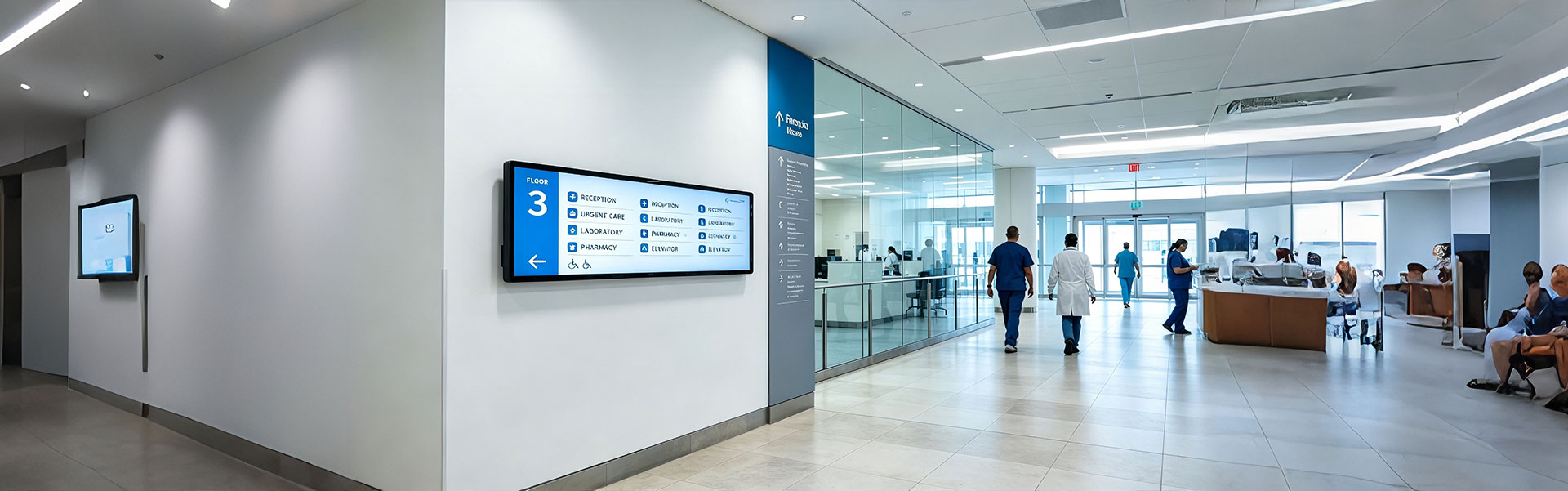
Floor Information Bar LCD Display Solution
Ultra-wide, high-brightness stretched bar LCD disp...
view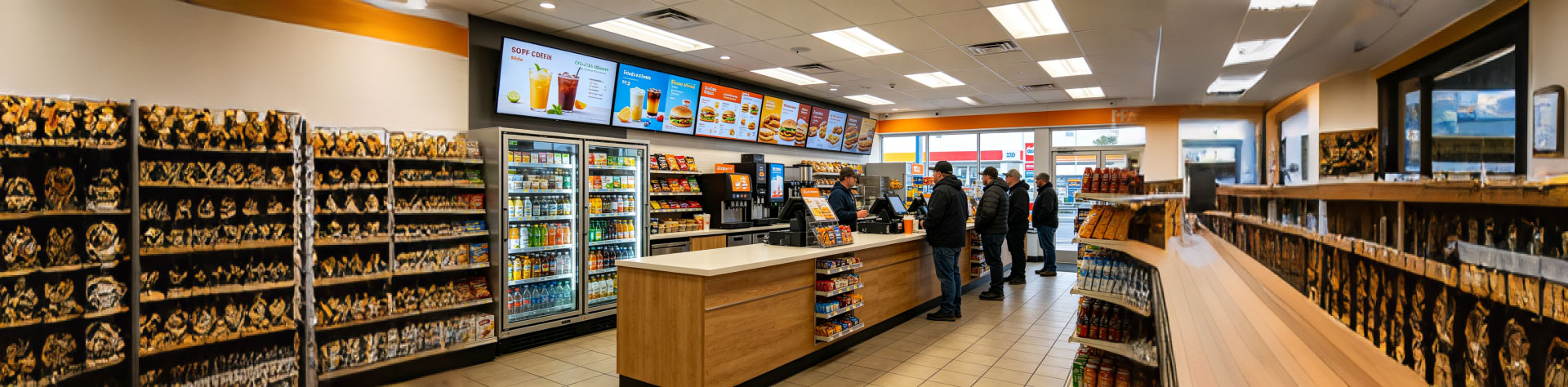
Convenience Store Bar LCD Display Solution
Ultra-slim, high-brightness stretched bar LCD disp...
view
Bus Passenger Information Stretched Bar Display Solution
A rugged, ultra-wide stretched bar display solutio...
viewRelated Products
You may also be interested in the following products