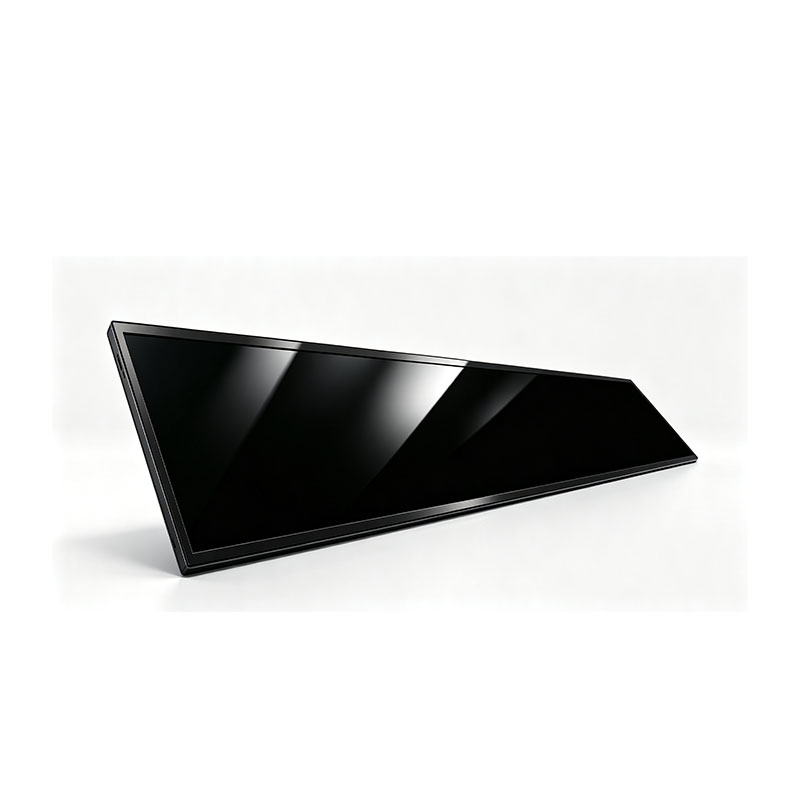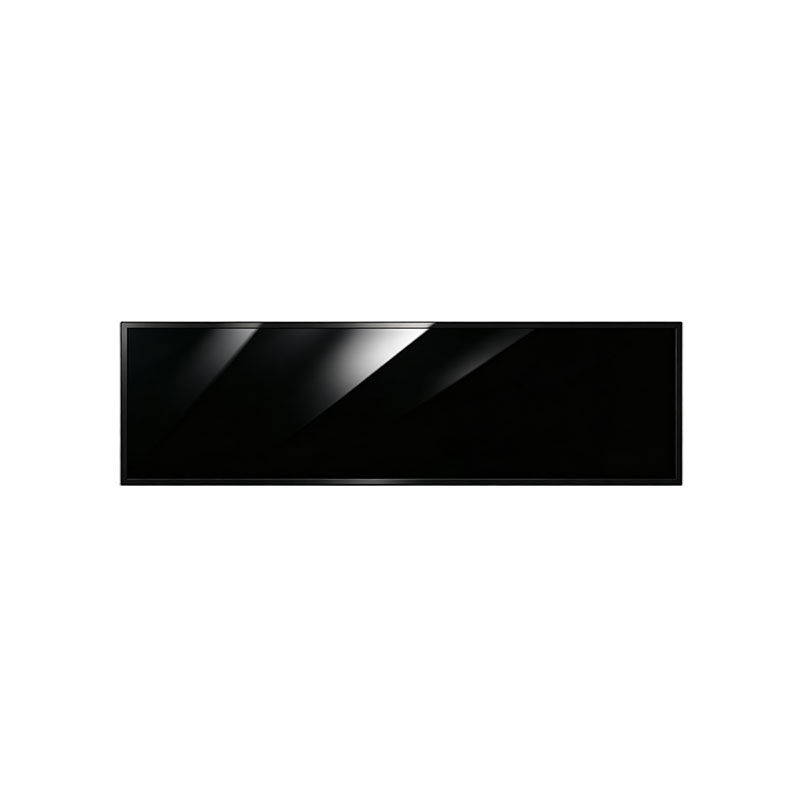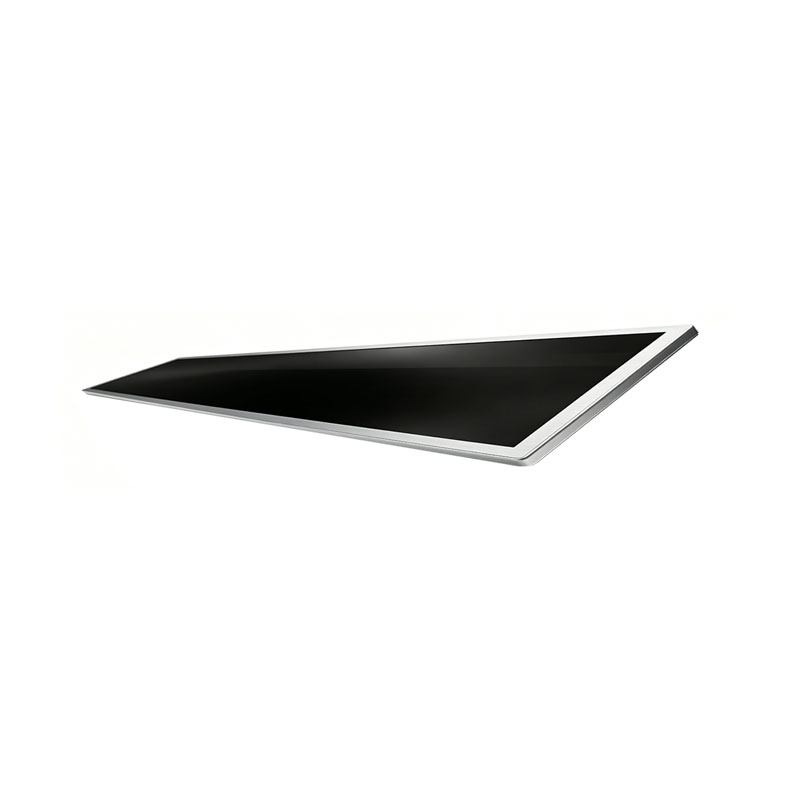
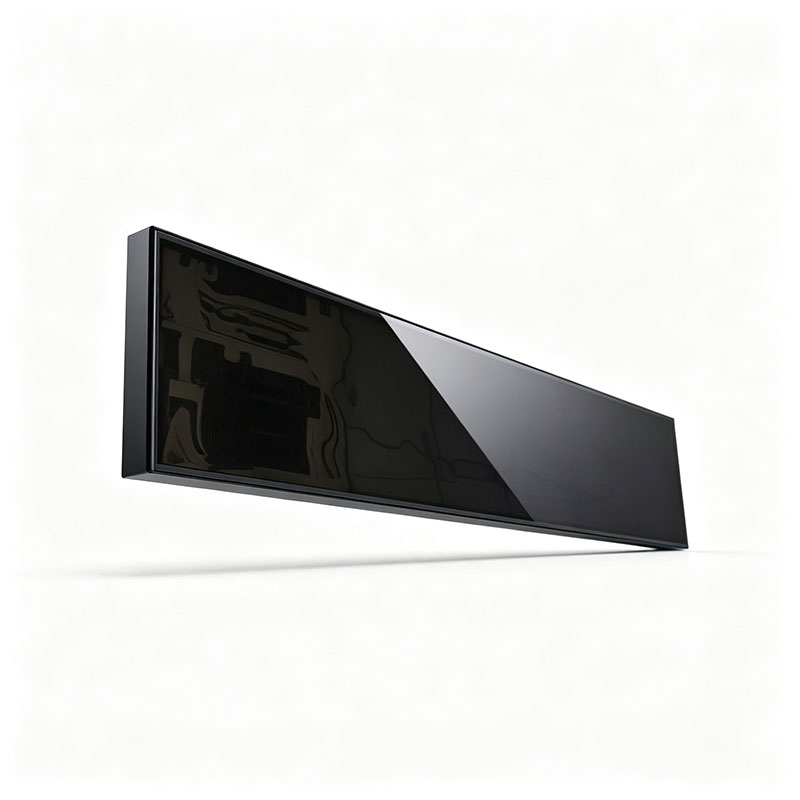
48.5 Inch Stretched LCD Module for Digital Signage OEMs
MODEL: P485IVN01.1
Need customized solution?
Our engineering team is always ready to provide you with professional technical support and flexible customized services.
Understand light customization servicesBuilt by us. Configured for you.
HITULCD supplies LCD modules and display solutions directly from our manufacturing operation, giving OEMs, integrators and distributors direct access to engineering, customization and production.
Supply
Supplier Qualification
VerificationTechnical Specifications
| LCD PANEL PARAMETERS | HDMI/CONTROL BOARD SPECIFICATIONS | ||
|---|---|---|---|
| ITEM | DETAILS | ITEM | DETAILS |
| Model Number | P485IVN01.1 | Input Interface | HDMI, VGA(LVDS‑based controller) |
| Manufacturer | HITULCD | Power Input | DC 12V‑5A |
| Diagonal Size | 48.5" Cut‑Type Stretched Bar (Not Native Panel) | OSD KEYS | 5 KEYS (POWER, MENU, +, -, EXIT) |
| Resolution | 1920(RGB) × 360, 5.33:1 | OSD CONTROL | BRIGHTNESS, COLOR, CONTRAST, ROTATION, H/V POSITION |
| Panel Type | a‑Si TFT‑LCD, LCM | ||
| Pixel Arrangement | RGB Vertical Stripe | ||
| Display Area(A.A) | 1209.6(W)×226.8(H) mm | ||
| Overall Dimension | 1232.4(W)×249.6(H)×29(D) mm | ||
| Panel Weight | 4.47Kgs (Typ.) | ||
| Surface Treatment | Matte (Haze 28%), Hard Coating (3H) | ||
| Contrast Ratio | 4000:1 (Typ.)(Transmissive) | ||
| Typical Brightness | 700 NITS | ||
| Response Time | 8 (Typ.)(G to G) ms | ||
| LCD Technology | AMVA3, Normally Black, Transmissive | ||
| Viewing Angle | 89°/89°/89°/89°(Typ.)(CR≥10) | ||
| Viewing Direction | Full Viewing Angle | ||
| Display Colors | 16.7M Colors,72% sRGB | ||
| Refresh Rate | 60Hz | ||
| Backlight Type | WLED,50K Hours,With LED Driver | ||
| Power Consumption | - | ||
| Signal Interface | 51 pins,0.5 mm LVDS(2 ch,8‑bit) | ||
| Supply Voltage | 12.0V (Typ.) | ||
| Touch Panel | Without Touch Function | ||
| Application Fields | Industrial Equipment,Digital Signage,Vehicle Displays | ||
| Operating Temperature | -20 ~ 60 °C | ||
| Storage Temperature | -20 ~ 60 °C | ||
Stretched Bar LCD Displays: Market Outlook & HITU LCD's OEM/ODM Partnership Model
A Market-Driven Case for Custom-Cut LCD Sourcing | Prepared for Overseas Sourcing Managers, Project Leads & Brand Owners
1. Market Context: Why Stretched/Bar-Type LCD Demand Is Rising
Multiple industry research firms track the stretched/bar-type LCD display market as a distinct, fast-growing segment within digital signage — estimates of absolute market size vary significantly across reports (figures in recent studies range from the low hundreds of millions to several billion USD, reflecting different scope definitions), but the directional signal is consistent: mid-to-high single-digit, and in several forecasts double-digit, CAGR growth through the early 2030s, driven by the following demand drivers:
Public transportation modernization — buses, trains, and subway systems are replacing static route/ad panels with narrow-format digital displays that fit door headers, ceiling rails, and car-body recesses where a standard 16:9 monitor physically cannot be installed.
Retail shelf-edge and point-of-sale digitization — retailers are converting paper shelf labels and static POS signage to dynamic bar-format LCDs to support real-time pricing and promotions.
Space-constrained architectural integration — elevators, corridors, drive-thru lanes, and building lobbies increasingly specify ultra-wide displays sized to the physical opening rather than to a standard panel size.
North America and Europe as high-value, spec-driven demand centers — buyers in these regions tend to prioritize documented reliability data, customization support, and supply continuity over lowest unit price, which favors suppliers with genuine engineering capability rather than pure trading/resale operations.
Asia-Pacific as the manufacturing base — the majority of panel cutting, module assembly, and backlight customization capacity sits in China and other APAC hubs, meaning most Western brand owners and system integrators source this category through OEM/ODM relationships rather than in-house production.
Implication for buyers: because "stretched" sizes are non-standard and application-specific, the category does not fit a catalog-and-ship model well. Demand is structurally OEM/ODM in nature — most projects require a custom cut, a custom brightness/interface configuration, or both.
2. Where Buyers Get Stuck — and What an OEM/ODM Partner Should Solve
Overseas project managers and engineers evaluating this category typically encounter the same three bottlenecks:
| Buyer Pain Point | What It Means in Practice |
|---|---|
| Fragmented, non-standard sizing | The exact opening dimension rarely matches a stock panel size, forcing either an oversized/undersized compromise or a custom cut project. |
| High MOQ / NRE from panel-level suppliers | Panel makers are geared for large-volume standard SKUs; custom cuts are often treated as a low-priority, high-MOQ afterthought. |
| Reliability risk on cut/sealed edges | Buyers cannot easily verify sealing quality, moisture resistance, or long-term optical stability from a datasheet alone — this becomes a trust and qualification problem, not just a spec problem. |
| Program management across iterations | Digital signage and transportation projects typically go through 2–3 design revisions (size, brightness, interface) before final approval; buyers need a partner that can turn samples quickly at each stage, not just at final PO. |
An OEM/ODM partner's value in this category is therefore less about "who can cut glass" and more about who can de-risk the cutting, sealing, and qualification process at low-to-mid volume, with engineering support through multiple design iterations.
3. HITU LCD's OEM/ODM Service Model
3.1 Service Scope
OEM (build-to-spec): Customer provides target dimensions, resolution, interface, and reliability requirements; HITU LCD selects the appropriate source cell, cutting method, backlight design, and control board, and manufactures to the agreed spec.
ODM (design-assist): For customers without in-house display engineering resources, our team proposes the size, aspect ratio, brightness tier, and interface based on the intended installation (transportation, retail shelf, elevator, kiosk, etc.), reducing the customer's internal engineering load.
Full-stack module capability: cutting → edge sealing → backlight/LGP customization → driver board integration → optical bonding/touch (optional) → reliability testing → packaging, all managed internally rather than outsourced across multiple vendors.
3.2 Size & Customization Range
Standard and cuttable panel platform from 8" to 88", with cuttable models (18.5", 21.5", 23.8", 27", 32", 40", and others) available for one-axis custom trimming.
Custom aspect ratios available for OEM orders from 50 units, with smaller-volume sampling supported for qualification purposes.
Brightness tiers from indoor (350–800 nits) through semi-outdoor (1000–1500 nits) to full outdoor/sunlight-readable (2000–3000 nits), matched to the deployment environment.
3.3 Engineering Support Through the Program Lifecycle
Feasibility stage — dimensional and circuit-clearance review, cutting method recommendation (mechanical vs. laser), budgetary quote.
Sampling stage — first-article samples (~20 pcs typical) for customer qualification, including reliability test data package.
Design iteration — support for 2nd/3rd revision samples as project specs are finalized with the end customer (common in transportation and retail rollout projects).
Mass production — yield tracking and process lock-in as volume ramps, with documentation available for customer QA audits.
Post-launch — supply continuity and lead-time planning for repeat/service-part orders, which matters for multi-year signage and transit deployments.
3.4 Positioning vs. Typical Alternatives
| Sourcing Route | Typical Limitation |
|---|---|
| Panel-level manufacturer (direct) | Custom cuts treated as low priority; high MOQ; limited responsiveness for sub-1,000-unit projects |
| General trading company / broker | No in-house cutting/sealing process visibility; limited ability to support DFM iteration or share reliability data |
| HITU LCD OEM/ODM model | In-house cutting, sealing, and testing; engineering support from feasibility through mass production; MOQ and sample lead times sized for project-stage buyers |
4. Recommended Next Step for Buyers
Given that most stretched-format projects are won or lost at the feasibility/DFM stage — not at final RFQ — we recommend engaging early with:
Target opening dimensions and application environment
Expected order volume (sample + annual forecast)
Reliability grade required (consumer vs. industrial/transportation)
Our engineering team will return a feasibility assessment, cutting-method recommendation, and budgetary NRE/MOQ/lead-time estimate for planning purposes.
Market sizing figures referenced in Section 1 reflect a synthesis of publicly available industry research and are directional; estimates vary meaningfully by research provider and scope definition. This document is intended as a positioning and capability reference for RFQ/qualification discussions and should be validated against current commercial terms with HITU LCD's sales team.
48.5" Stretched (Bar-Type) LCD Module for Digital Signage OEM
Custom-Cut Ultra-Wide Panel Solution | Engineering-Grade Documentation for OEM Buyers
1. Product Overview
The 48.5" stretched LCD module is a custom-cut, ultra-wide aspect-ratio panel derived from a standard mother-glass TFT-LCD, engineered for applications where a conventional 16:9 display cannot fit — shelf-edge signage, transportation displays, elevator door panels, drive-thru menu boards, and narrow architectural recesses.
This document is intended for overseas engineers, sourcing/procurement managers, and project leads evaluating HITU LCD as an OEM cutting and module-assembly partner. It summarizes the technical, reliability, and commercial information typically required at the RFQ and DFM (Design-for-Manufacturing) review stage.
1.1 Reference Specifications
| Parameter | Typical Value | Notes |
|---|---|---|
| Diagonal Size | 48.5" | Cut from standard mother-glass cell |
| Resolution | 1920 × 360 / 3840 × 1080 (project-dependent) | Confirm against available cell library |
| Aspect Ratio | 16:3 / 32:9 (custom ratios available) | Determined by cut dimensions |
| Brightness | 500–1000 cd/m² (up to 3000 cd/m² for sunlight-readable option) | Indoor / semi-outdoor / outdoor tiers |
| Contrast Ratio | 1000:1 – 8000:1 | Panel-dependent |
| Viewing Angle | 178°(H) / 178°(V) | Full viewing angle panels available |
| Backlight Lifetime | 50,000–100,000 hrs (MTBF) | LED edge-lit backlight |
| Interface | LVDS / eDP, HDMI / VGA / Android board optional | Driver/control board customizable |
| Touch Option | PCAP touch, optical bonding available | Added after cutting & sealing |
Exact resolution, brightness, and pixel pitch depend on the source cell selected for cutting and should be confirmed with our engineering team against your target dimensions.
2. Custom Cutting: Technology & Feasibility
Cutting a standard LCD cell into a stretched bar format is a precision process that directly affects yield, optical performance, and long-term reliability. We evaluate every custom cutting request in three stages: dimensional review → circuit clearance check → cutting method selection.
2.1 Cutting Method Selection
| Method | Typical Tolerance | Best Suited For |
|---|---|---|
| Mechanical wheel (scribe-and-break) | ±0.3–0.5 mm | Straight-line cuts, cost-sensitive, higher volume |
| Ultra-fast (UV/picosecond) laser cutting | ±0.1 mm or tighter | Tight tolerance, irregular/curved edges, reduced micro-crack risk |
We recommend the cutting method based on your required dimensional tolerance, cut-edge proximity to active circuitry, and target order volume — laser cutting is generally recommended when the cut line falls close to the Gate/Source driver area or when edge strength under vibration/drop is critical.
2.2 Circuit Clearance & Pre-Cut Evaluation
Before confirming feasibility, our engineering team checks whether the requested cut line intrudes on the Gate driver, Source driver, or active TFT array (AA) area of the source cell. To complete this review, we typically request:
Target outline dimensions and cut-line position (mechanical drawing or DXF)
Preferred orientation (portrait/landscape) and active area requirement
Source cell part number (if a specific base panel is required) or performance target (resolution, brightness, size range) so we can propose a suitable base cell
Tolerance requirements (±mm) and any keep-out zones for mounting/bezel
2.3 Edge Finish Standard
Post-cut edges are inspected against internal flatness and micro-crack (chipping) criteria before proceeding to sealing. Panels with visible chipping beyond spec or edge deviation from the cut line are rejected prior to the sealing stage — this inspection is a mandatory gate in our process flow, not a final QC-only check.
3. Reliability & Edge-Sealing Assurance
Cutting exposes the internal glass/liquid-crystal structure at the edge, so sealing quality determines long-term reliability. This is the area customers most often ask about, and we address it as follows:
3.1 Sealing Process
Cut edges are re-sealed using a secondary UV-cure dispensing (edge glue) process, applied along the entire cut edge to restore the liquid-crystal barrier and block moisture ingress.
Dispensing parameters (bead width, cure time, UV dosage) are set per panel thickness and cut length to ensure a continuous, void-free seal.
3.2 Reliability Test Program
Cut-and-sealed modules are qualified against standard reliability benchmarks before release to production. Typical test coverage (please confirm applicable grade — consumer or industrial — for your project):
| Test | Typical Condition | Purpose |
|---|---|---|
| High-temp / high-humidity ("Double 85") | 85°C / 85% RH, 240–500 hrs | Validate seal integrity against moisture ingress |
| Thermal shock (cold-hot cycling) | -20°C ↔ 60°C (or per spec), multiple cycles | Validate seal/bond durability under thermal stress |
| High/low temperature storage & operation | Per industrial-grade requirement | Confirm functional stability across ambient range |
| Structural drop test | Per packaging/mounting spec | Confirm edge and bond durability under handling/transport shock |
We can share test summary reports for comparable cut-panel projects on request under NDA, and will align the specific test matrix and pass/fail criteria to your product's use case (retail/indoor vs. transportation/industrial).
3.3 Optical Performance After Cutting
Edge-zone inspection covers light leakage (backlight bleed at the cut/sealed edge) and Mura (brightness/color non-uniformity), both checked under darkroom conditions before shipment.
Backlight design (edge-lit LED bar length, light guide plate trim) is adjusted specifically for the cut dimension to minimize edge light leakage and color shift versus the original panel.
4. Cost, Yield & Lead Time
| Item | Typical Range | Notes |
|---|---|---|
| NRE (tooling/engineering setup) | Project-dependent | Driven by cut complexity, tolerance, and whether a new backlight/BL bar design is required |
| First sample lead time (≈20 pcs) | 2–4 weeks from DFM sign-off | Confirmed after drawing/spec review |
| Mass-production yield | Typically 90%+ for standard straight-line cuts within qualified tolerance; lower for tight-tolerance or irregular cuts | Improves with volume as process is locked |
| MOQ | From 50 units for custom aspect ratios/OEM cuts | Lower MOQ possible for standard cuttable sizes from our existing library |
Figures above are typical ranges for reference during initial RFQ screening. Final NRE, lead time, yield target, and MOQ are confirmed after our engineering team reviews your drawings and DFM inputs.
5. What We Need From You to Start a Feasibility Review
Target size, resolution/AA area, and cut-line drawing (DXF/PDF)
Base cell part number (if known) or performance requirements (brightness, resolution, interface)
Application environment (indoor / semi-outdoor / outdoor / vehicle-mounted) and required reliability grade
Target volume (sample qty + annual forecast) for MOQ and pricing alignment
Preferred interface (LVDS/eDP/HDMI) and whether a driver/control board is required
6. Why HITU LCD
In-house DFM review, cutting, edge-sealing, and reliability testing under one roof — no third-party handoffs
Custom aspect ratios and sizes from 8" to 88", with cuttable panel models for fast-turn custom dimensions
Engineering support from initial feasibility check through mass-production yield ramp
Reliability data and process documentation available for customer qualification/audit
Ready to evaluate feasibility for your project? Send us your target dimensions and drawing, and our engineering team will respond with a cutting-method recommendation, feasibility assessment, and budgetary quote.
This document is a technical/commercial reference for RFQ discussion. Final specifications, test data, and commercial terms are subject to confirmation by HITU LCD's engineering and sales team based on the specific project drawing and requirements.
Know The Terms Before You Inquire.
|
01 — Shipping Terms
Incoterms Available
EXW
Ex Works — pick up from our factory
FOB
Free On Board — most common for ocean freight
CIF
Cost, Insurance & Freight — to your port
|
02 — Order Minimum
MOQ: 1 Units
Applies to standard specs. Custom brightness, cutting or bezel may adjust MOQ, confirmed at quotation. Sample units available before bulk order
|
03 — Payment Protection
Multiple Secured Methods
|
A Real Factory. Publicly Verifiable.
|
Legal Company Name
Shenzhen Hantu Jiashi Technology Co., Ltd.
|
Unified Social Credit Code
91440300306068446B
|
|
Legal Representative
YUN CHEN
|
Registered Capital
RMB 2,000,000
|
|
Established
May 23, 2014 (11+ years operation)
|
Business Status
● Active / In Operation
|
|
Registered Factory Address
Building B, Gangshen Innovation Park, Huaning Road, Dalang Sub-district, Longhua District, Shenzhen, Guangdong, China
|
|
Contact HITULCD
We'll respond via email within 24 hours. If you'd like to discuss details over WhatsApp or a call, please leave a preferred time and contact method in your message — we will never call you unannounced.
Related solutions
This product is suitable for the following industry application scenarios
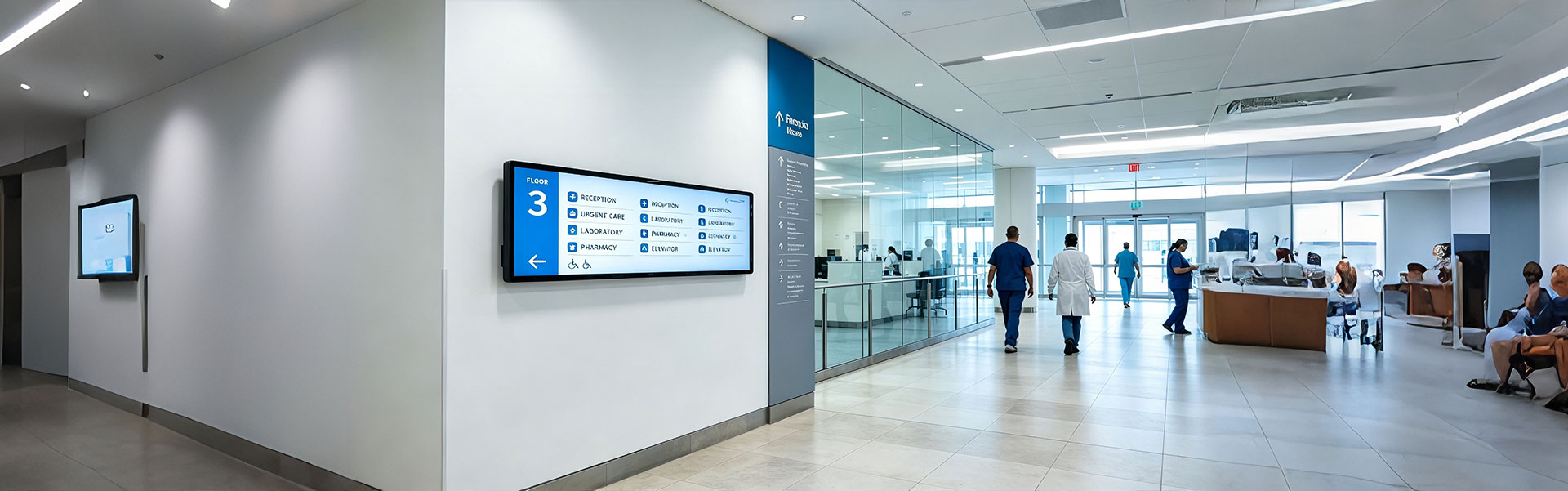
Floor Information Bar LCD Display Solution
Ultra-wide, high-brightness stretched bar LCD disp...
view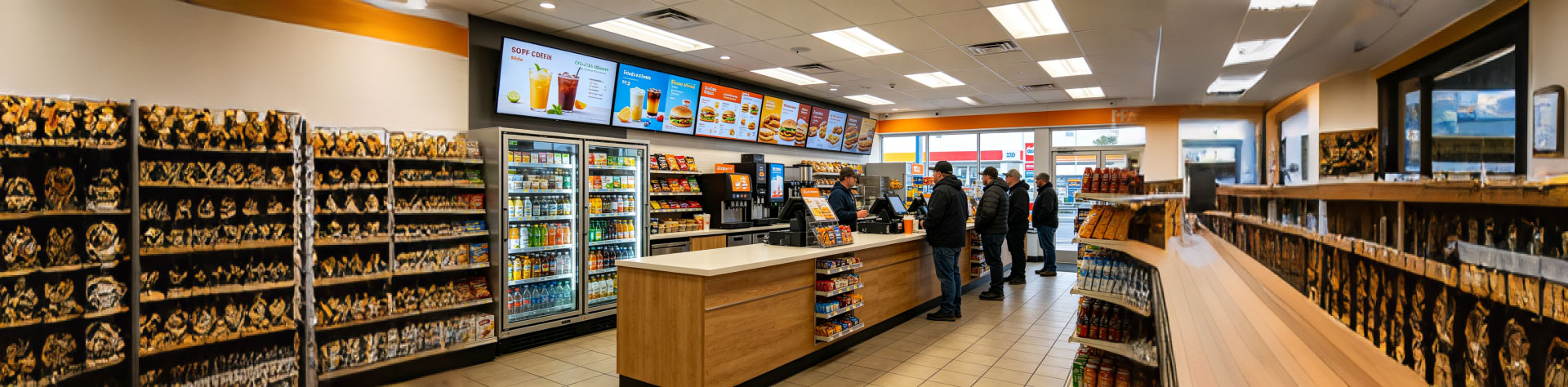
Convenience Store Bar LCD Display Solution
Ultra-slim, high-brightness stretched bar LCD disp...
view
Bus Passenger Information Stretched Bar Display Solution
A rugged, ultra-wide stretched bar display solutio...
viewRelated Products
You may also be interested in the following products