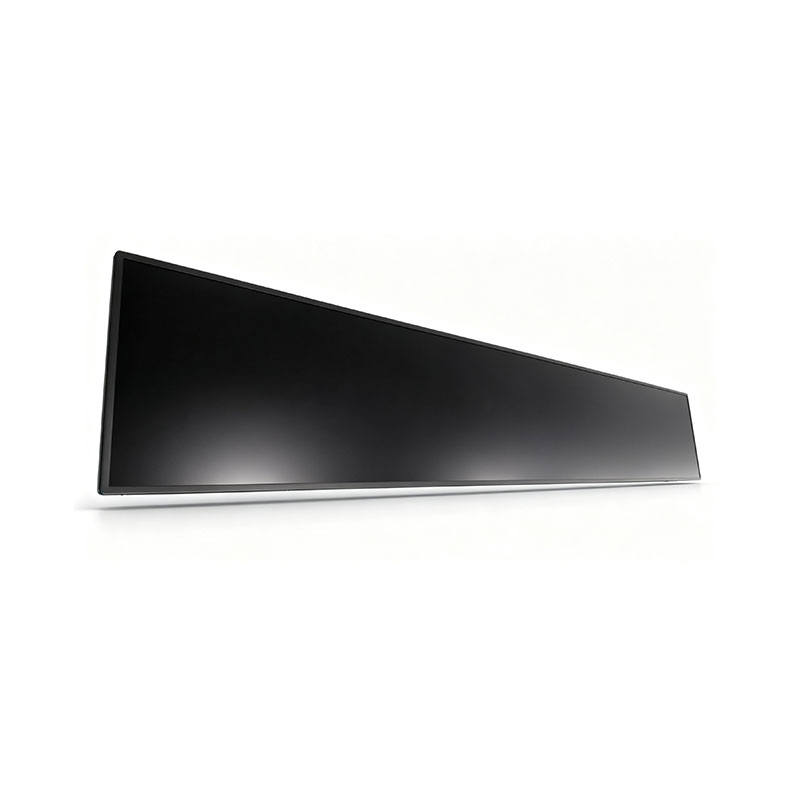
86 Inch Custom Ultra-Wide LCD Module for OEM Display Systems
MODEL: LD860DBN-UJA1
Need customized solution?
Our engineering team is always ready to provide you with professional technical support and flexible customized services.
Understand light customization servicesBuilt by us. Configured for you.
HITULCD supplies LCD modules and display solutions directly from our manufacturing operation, giving OEMs, integrators and distributors direct access to engineering, customization and production.
Supply
Supplier Qualification
VerificationTechnical Specifications
| LCD PANEL PARAMETERS | HDMI/CONTROL BOARD SPECIFICATIONS | ||
|---|---|---|---|
| ITEM | DETAILS | ITEM | DETAILS |
| Model Number | LD860DBN‑UJA1 | Input Interface | Require V‑by‑One Driver Board(NOT LVDS) |
| Manufacturer | HITULCD | Power Input | DC 12V‑5A |
| Diagonal Size | 86.0" Native Stretched Bar (Not Cut Panel) | OSD KEYS | Depends on V‑by‑One controller |
| Resolution | 3840(RGB) × 600, 6.4:1 | OSD CONTROL | Depends on V‑by‑One controller |
| Panel Type | a‑Si TFT‑LCD, LCM | ||
| Pixel Arrangement | RGB Vertical Stripe | ||
| Display Area(A.A) | 2148.48(W)×335.7(H) mm | ||
| Overall Dimension | 2158.3(W)×348.5(H)×82.2(D) mm | ||
| Panel Weight | 15.04Kgs (Typ.) | ||
| Surface Treatment | Matte (Haze 10%), Hard Coating (3H) | ||
| Contrast Ratio | 1100:1 (Typ.)(Transmissive) | ||
| Typical Brightness | 500 NITS | ||
| Response Time | 8 (Typ.)(G‑to‑G) ms | ||
| LCD Technology | IPS, Normally Black, Transmissive | ||
| Viewing Angle | 89°/89°/89°/89°(Min.)(CR≥10) | ||
| Viewing Direction | Full Viewing Angle | ||
| Display Colors | 1.07B Colors,98% sRGB | ||
| Refresh Rate | 60Hz | ||
| Backlight Type | WLED,50K Hours,With LED Driver | ||
| Power Consumption | - | ||
| Signal Interface | 51 pins,0.5 mm V‑by‑One 8‑lanes (NOT LVDS) | ||
| Supply Voltage | 12.0V (Typ.) | ||
| Touch Panel | Without Touch Function | ||
| Application Fields | Industrial Equipment,Digital Signage | ||
| Operating Temperature | 0 ~ 50 °C | ||
| Storage Temperature | -20 ~ 60 °C | ||
OEM / ODM Services
Custom-Cut Ultra-Wide LCD Modules for Digital Signage, Transportation & Retail Integrators
1. Why This Market Is Moving Toward OEM/ODM Sourcing
Standard flat-panel makers build to a small set of fixed aspect ratios (16:9, 21:9, 32:9). But a growing share of real-world installations — elevator headers, transit door panels, shelf-edge signage, ticket kiosk headers, control-room strip displays — need a narrow, elongated form factor that no mother-glass fab produces natively. That gap is exactly what precision-cut "stretched bar" LCD modules exist to fill, and it's why this category has become a steady growth niche even while the broader professional-display market has been through a slower cycle overall.
Independent market research on this segment shows the same pattern: a comparatively small but fast-growing category, driven less by unit volume and more by design-in wins with signage integrators, transit OEMs, and retail fixture makers who need a display shaped to fit their enclosure — not the other way around. That structural demand is what makes OEM/ODM the natural sourcing model here, rather than buying a finished monitor off a shelf: brand owners and integrators don't want "a stretched screen," they want their screen, sized to their housing, branded with their logo, and validated to their reliability bar.
What this means for you as a buyer:
If you build signage hardware, kiosks, elevator control panels, or transit displays, you are very likely the target OEM customer for this product category — not the end retail buyer of a finished monitor.
The commercial model that fits this market is closer to "component + engineering partnership" than "catalog purchase."
2. OEM vs. ODM — Which Model Fits Your Program?
| OEM (Original Equipment Manufacture) | ODM (Original Design Manufacture) | |
|---|---|---|
| You provide | Your own dimension spec, mechanical drawing, and performance target | A general application need; we propose the design |
| We provide | Module built exactly to your spec, under your part number / branding | A ready or near-ready design, adapted and branded for you |
| Best for | Companies with in-house display engineering who need a manufacturing partner | Companies that want a proven form factor without designing it from scratch |
| Design ownership | Yours | Shared / supplier reference design, customized |
| Typical lead time | Longer at first cut (DFM + sampling), faster on repeat orders | Shorter, since a reference design already exists |
Most customers in this category start as ODM (using one of our existing cut dimensions or a close variant) and migrate to full OEM once volume justifies a fully custom cut and dedicated tooling/fixtures.
3. What Can Be Customized
Cut dimension & aspect ratio — any bar-format ratio derivable from available mother-glass sizes
Brightness — standard indoor brightness through high-brightness sunlight-readable backlight redesign
Interface — LVDS, V-by-One, HDMI/DP driver board integration
Mounting & mechanical — open-cell for your own housing, or full kit with frame/bracket to your drawing
Touch integration — capacitive touch overlay bonding where the application calls for interactivity
Cosmetic/branding — bezel finish, silkscreen logo, custom packaging and labeling under your brand
Firmware/OSD (board-level kits) — custom boot logo, input source defaults, control protocol
4. How an OEM/ODM Engagement Typically Runs
Inquiry & NDA (optional) — you share your target dimension, application, and volume expectation; an NDA can be signed before drawings are exchanged if needed.
DFM feasibility review — our engineering team checks your requested cut line against the source panel's circuit layout (Gate/Source routing, TFT array) to confirm the dimension is achievable, and recommends mechanical cutting or laser cutting accordingly.
Quotation — NRE, sample lead time, unit pricing at your target MOQ, and expected mass-production yield are quoted together, not piecemeal.
Sampling — first-article samples (commonly a small batch, e.g. ~20 units) are built and sent for your validation, including your own environmental or mechanical testing if required.
Reliability sign-off — cut-edge sealing, humidity/thermal testing, and drop testing results are reviewed and agreed before mass production tooling is locked.
Mass production & branding — units are built to your part number, with your branding, packaging, and any custom firmware/OSD applied.
Ongoing supply — repeat orders run against the locked spec, with faster turnaround than the first article since DFM and tooling are already validated.
5. Who This Is For
Signage & kiosk manufacturers needing a display shaped to an existing chassis
Transportation OEMs (bus, rail, elevator) integrating information bars into fixed architectural spaces
Retail fixture & shelf-system makers adding shelf-edge or header displays to their product line
System integrators delivering a turnkey signage or control-room project who need a component partner, not a finished retail monitor
6. Getting Started
To scope an OEM/ODM program, share:
Target application and installation environment
Dimension / aspect ratio requirement (or an existing reference product you're trying to match or replace)
Expected sample quantity and annual production volume
Branding and packaging requirements
Any reliability or certification standards your end customer requires
Our team will return a DFM feasibility assessment, estimated NRE and sample lead time, and a proposed OEM or ODM engagement path based on your volume and design-ownership needs.
Market sizing referenced above reflects general third-party industry research on the stretched/bar-format display segment and is directional, not a guaranteed forecast. Please confirm current lead times, MOQ, and pricing directly with our sales/engineering team for your specific program.
86" Custom Ultra-Wide LCD Module
Precision-Cut Bar-Type TFT Display for OEM / System Integrators
Category: Stretched Bar Display · Custom Aspect Ratio LCD Module Application: Digital signage bars, elevator/lobby displays, retail shelf-edge, transportation info bars, control-room strip displays, kiosk & vending integration
1. Product Overview
This 86" ultra-wide LCD module is precision-cut from a standard mother-glass panel to achieve a non-standard, elongated aspect ratio that native panel manufacturers do not offer as a stock item. It is designed specifically for OEMs and system integrators who need a bar-format display to fit narrow architectural spaces — door headers, shelf edges, elevator surrounds, transit info strips — without redesigning the enclosure around a standard 16:9 panel.
We supply this as a module-level component (open-cell / panel + backlight + driver board, per your integration requirement) so your engineering team can integrate it directly into your own chassis, mechanical housing, and control system.
2. Key Specifications
| Parameter | Typical Value (confirm against final datasheet) |
|---|---|
| Panel size | 86" diagonal, cut from standard mother glass |
| Resolution | 3840 × 600 (or per customer-specified cut ratio) |
| Aspect ratio | Ultra-wide bar format (e.g. ~58:9 class) |
| Brightness | 500–3000 nits available, sunlight-readable options |
| Interface | LVDS / V-by-One / HDMI, DP (board-level dependent) |
| Viewing angle | Wide viewing angle, IPS-class options available |
| Operating temp | 0°C ~ 50°C (industrial-grade options on request) |
| Backlight | Custom-redesigned LED backlight strip, matched to cut dimension |
| Form factor | Open cell, panel + backlight assembly, or full driver-board kit |
Note: exact figures depend on the source mother-glass batch and the specific cut ratio you require — our engineering team confirms final specs after DFM (design-for-manufacture) review of your drawing.
3. Why a Cut-to-Size Panel Instead of a Native Bar Panel?
Native ultra-wide panels in custom aspect ratios are expensive to tool and typically require large MOQs from panel fabs. Precision-cutting a standard mass-produced panel into your target aspect ratio gives you:
Faster access to non-standard ratios without waiting on a new panel tooling cycle
Lower NRE than commissioning a native custom cell
Flexible resizing — the same mother glass can be cut to multiple bar formats for different product lines
Custom backlight redesign so brightness stays uniform across the new form factor, not just a masked-off standard backlight
4. Engineering Due-Diligence: What We Address Before You Commit
We know that qualifying a cut-glass panel for a production program is different from buying an off-the-shelf monitor. These are the questions our OEM/engineering customers raise during evaluation, and how our process is built to answer them:
4.1 Cutting Process & Design Feasibility
Cutting method: Mechanical wheel-cutting or ultra-fast laser cutting, selected based on your target dimension, tolerance requirement, and glass thickness — we recommend the method during DFM review, not before.
Circuit clearance check: Before cutting, we map your requested dimensions against the panel's Gate/Source trace routing and active TFT array area to confirm the cut line does not intersect active circuitry or bonding pads.
What we need from you to run feasibility: target outline dimension, active area requirement, panel model/source (if specified), and tolerance (±mm) — this lets us run a pre-cut interference check against the panel's internal layout before quoting.
Edge quality standard: Post-cut edge flatness and micro-crack control are inspected under our internal QC standard; we can share our edge-inspection criteria and sample photos on request.
4.2 Reliability & Edge Sealing
Sealing process: Cut edges are re-sealed with a secondary sealant process (e.g. UV-cure edge dispensing) to restore moisture and liquid-crystal containment at the cut line.
Reliability testing: Cut modules can be qualified against standard consumer or industrial-grade reliability protocols — including high-temperature/high-humidity (85°C/85%RH) testing, thermal shock cycling, and structural drop testing. We can share test reports from comparable past cutting programs during technical review.
Optical integrity at the edge: Edge regions are inspected for light leakage and color-shift (Mura) after sealing; acceptance criteria are agreed with you before mass production sign-off.
4.3 Cost, Yield & Lead Time
NRE & sampling: Non-recurring engineering cost and first-sample lead time (e.g. for an initial ~20-unit sample run) depend on cut complexity and whether tooling/fixtures are new — we quote this per project after DFM review.
Expected yield & MOQ: Mass-production yield and minimum order quantity depend on the cut geometry, panel source availability, and required reliability grade — we share realistic yield expectations based on comparable prior programs once your spec is finalized.
We're glad to walk your engineering team through this step by step rather than have you take specs on faith — most OEM programs start with a short technical call plus drawing exchange before any commercial quote.
5. Typical Applications
Transit and airport information bar displays
Elevator interior / door-header displays
Retail shelf-edge and price-strip displays
Vending machine and kiosk narrow-format screens
Control room and industrial status bar displays
Architectural signage integrated into narrow structural spaces
6. What We Need From You to Start a Feasibility Review
To move from inquiry to a formal DFM feasibility check and quotation, please share:
Target outline dimension and active display area (with tolerance)
Reference source panel (if you have one in mind) or performance target (brightness, resolution, viewing angle)
Interface preference (LVDS / HDMI / DP / custom driver board)
Reliability grade required (consumer vs. industrial) and any relevant standards
Expected sample quantity and target mass-production volume
Application environment (indoor/outdoor, temperature range, enclosure constraints)
7. Next Step
Our engineering team reviews every custom-cut inquiry against panel-level design constraints before quoting — this protects you from ordering a dimension that turns out to intersect active circuitry after tooling has started. Send us your target drawing or dimension requirement and we'll return a feasibility assessment along with estimated NRE, sample lead time, and MOQ for your specific case.
This document is a template product brief for OEM/engineering evaluation purposes. Final specifications, test data, pricing, and MOQ should be confirmed directly with the supplier's engineering and sales team against your specific drawing and volume requirements.
Know The Terms Before You Inquire.
|
01 — Shipping Terms
Incoterms Available
EXW
Ex Works — pick up from our factory
FOB
Free On Board — most common for ocean freight
CIF
Cost, Insurance & Freight — to your port
|
02 — Order Minimum
MOQ: 1 Units
Applies to standard specs. Custom brightness, cutting or bezel may adjust MOQ, confirmed at quotation. Sample units available before bulk order
|
03 — Payment Protection
Multiple Secured Methods
|
A Real Factory. Publicly Verifiable.
|
Legal Company Name
Shenzhen Hantu Jiashi Technology Co., Ltd.
|
Unified Social Credit Code
91440300306068446B
|
|
Legal Representative
YUN CHEN
|
Registered Capital
RMB 2,000,000
|
|
Established
May 23, 2014 (11+ years operation)
|
Business Status
● Active / In Operation
|
|
Registered Factory Address
Building B, Gangshen Innovation Park, Huaning Road, Dalang Sub-district, Longhua District, Shenzhen, Guangdong, China
|
|
Contact HITULCD
We'll respond via email within 24 hours. If you'd like to discuss details over WhatsApp or a call, please leave a preferred time and contact method in your message — we will never call you unannounced.
Related solutions
This product is suitable for the following industry application scenarios
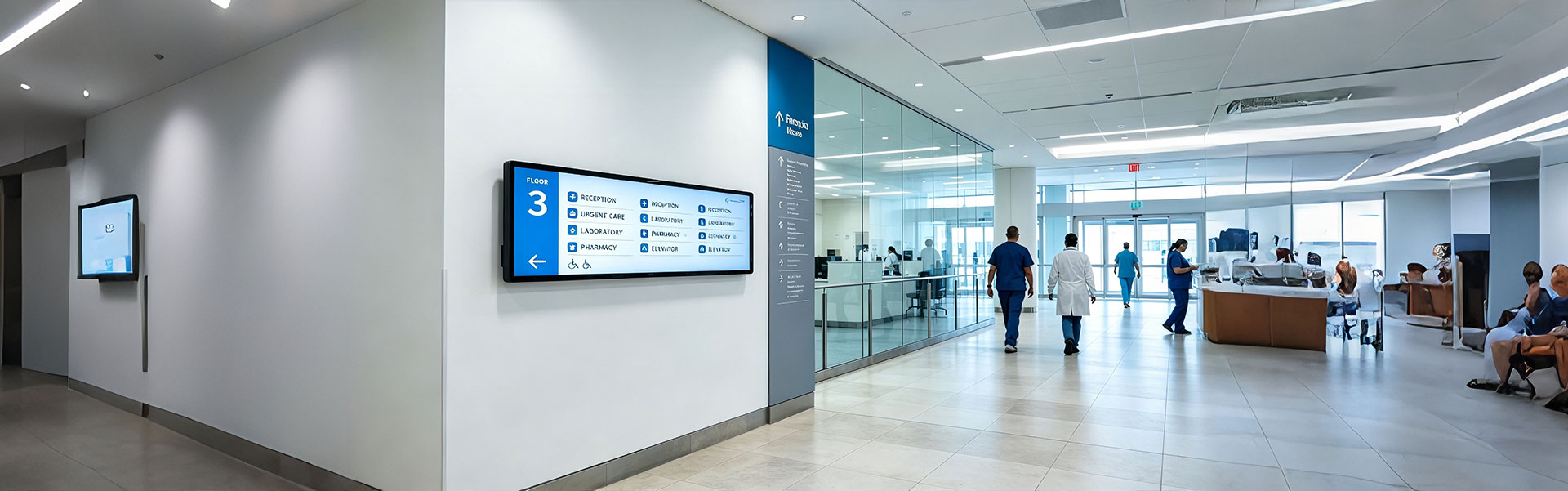
Floor Information Bar LCD Display Solution
Ultra-wide, high-brightness stretched bar LCD disp...
view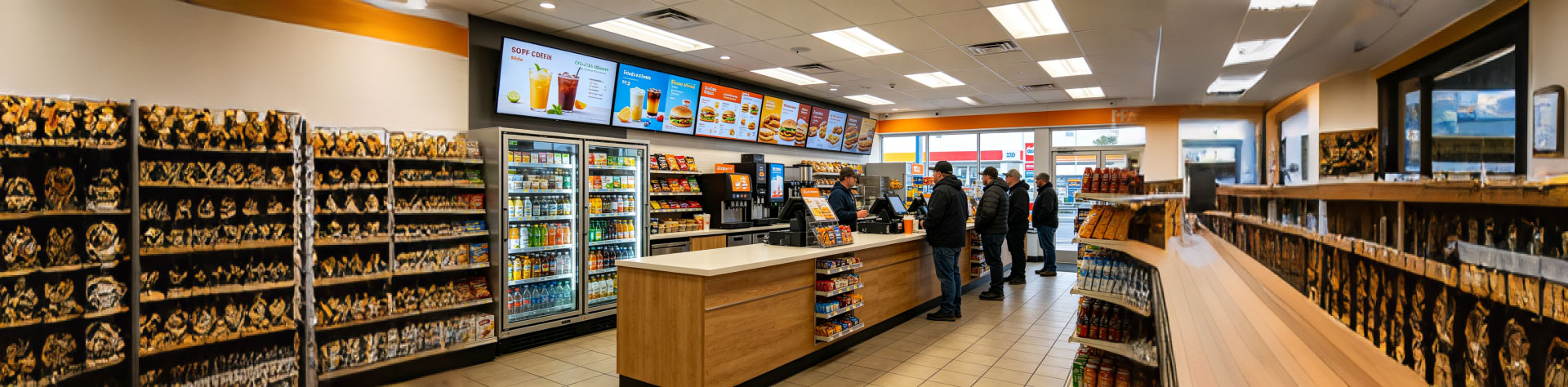
Convenience Store Bar LCD Display Solution
Ultra-slim, high-brightness stretched bar LCD disp...
view
Bus Passenger Information Stretched Bar Display Solution
A rugged, ultra-wide stretched bar display solutio...
viewRelated Products
You may also be interested in the following products
