
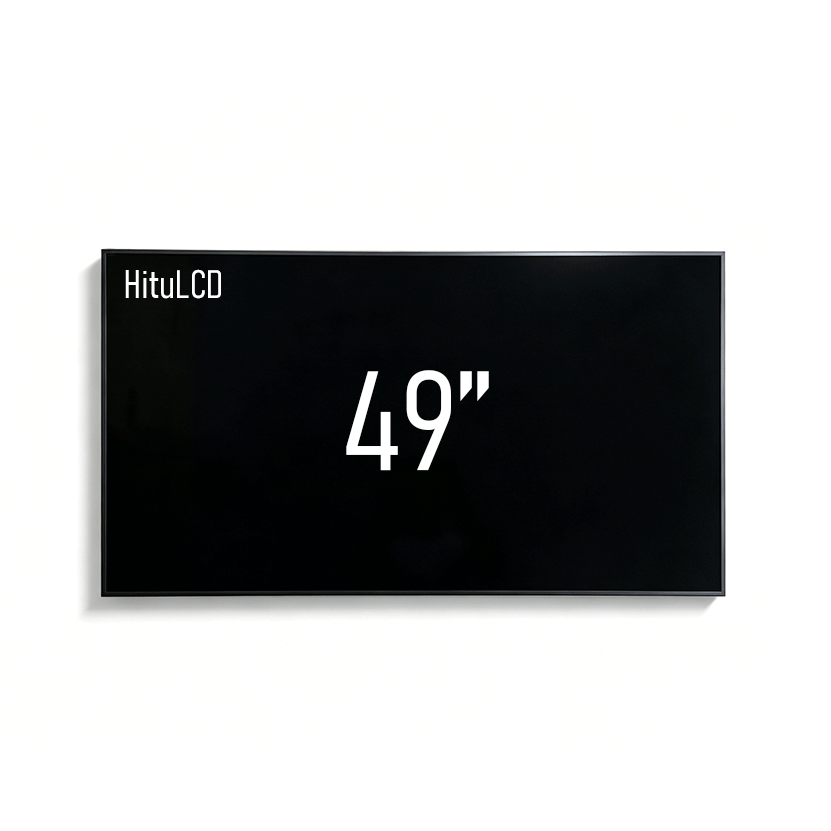
49 Inch 1500nits High Brightness LCD Panels for Custom OEM
MODEL: HT490FHD-D1500
Need customized solution?
Our engineering team is always ready to provide you with professional technical support and flexible customized services.
Understand light customization servicesBuilt by us. Configured for you.
HITULCD supplies LCD modules and display solutions directly from our manufacturing operation, giving OEMs, integrators and distributors direct access to engineering, customization and production.
Supply
Supplier Qualification
VerificationTechnical Specifications
| LCD PANEL PARAMETERS | HDMI/CONTROL BOARD SPECIFICATIONS | ||
|---|---|---|---|
| ITEM | DETAILS | ITEM | DETAILS |
| Description | HITULCD 49" QLED QUANTUM DOT HIGH COLOR GAMUT 350CD | Input Interface | HDMI, VGA,DP |
| Size | 49 | Power Input | AC 100~240V |
| Display area (mm) | 1073.78×604 mm (H×V) | OSD KEYS | 5 KEYS (POWER SWITCH, MENU, +, -, EXIT) |
| Resolution | 1920*1080 | OSD CONTROL | BRIGHTNESS, COLOR, CONTRAST, AUTO ROTATION, H/V POSITION, ETC. |
| Aspect ratio | 16:9 | ||
| Contrast ratio | 1200:1 | ||
| Pixel per inch (PPI) | 45 | ||
| Viewing angle | 178(H),178(V) | ||
| Display Colors | 16.7M, 72% NTSC | ||
| Response time(Typical) | 8ms | ||
| Signal Type | LVDS (2 ch, 8-bit) | ||
| Backlight | WLED, 30K hrs, With LED Driver | ||
| Power consumption | 120W | ||
| Dimensions (mm) | 1098.3x627.6x31.7(H*V*Dmm) | ||
| Mounting | VESA400x400 | ||
| Bezel size(mm) (U/B/L/R) | 12/12/12/12 | ||
| Operating temperature | 0℃~+50℃ | ||
| Storage temperature | -20℃~+60℃ | ||
| Weight (Net) | 10KG | ||
One Factory, Every Display You'll Ever Need to Spec
Why OEM/ODM Buyers Consolidate Their Display Sourcing at HITULCD
When a project spans multiple form factors — a kiosk display this quarter, a stretched bar panel next quarter, a sunlight-readable outdoor unit after that — most integrators end up managing three or four vendor relationships just to keep their display sourcing covered. HITULCD was built to remove that fragmentation: one factory, one quality system, one point of contact, across the full size, brightness, and form-factor range your projects actually need.
Scale That Backs Up the Promise
120,000+ units/year manufacturing capacity — enough headroom to take a project from a 20-unit engineering sample run straight through to a multi-thousand-unit rollout without re-qualifying a new supplier mid-program.
38+ export markets served since 2014 — over a decade of shipping to teams who each brought their own regional compliance requirements, mechanical constraints, and reliability bars.
ISO 14644-1 certified cleanroom production — the same controlled environment for a 5.5" HMI panel as for an 86" outdoor advertising unit.
Capacity without process consistency is just a bigger risk surface. What actually protects your program is that every unit — regardless of size or destination market — runs through the same 11-stage bonding and inspection line: cell feeding → vacuum bonding → ACF attachment → IC alignment and pre-bonding → FOG electrical test → FPC bonding and alignment → IC main bonding → ITO encapsulation → high-temp adhesive/label attachment → visual inspection. That's the process discipline that lets a 5.5" panel and a 98" panel come off the same quality system with the same traceability.
Manufacturing Depth: We Don't Subcontract the Hard Parts
A lot of "manufacturers" in this space are assembly houses that outsource bonding, cutting, or testing to third parties — which means your NRE conversation and your quality escalation path both run through someone else's factory floor. HITULCD's OEM/ODM line keeps the technical core in-house:
Core module production
Automated COG/FOG bonding lines (JYD-I900E full-automatic COG series, JYD-F900E/F900A atomization bonding system) with micron-level alignment control — the precision layer that determines long-term signal stability and service life.
ACF laminating (F6-AS120) for stable, 100%-tested circuit connection.
Structural & assembly flexibility
Fiber laser cutting (GH-1111, 7.5KW) for burr-free panel edges and custom sizing.
OC glass precision cutting (OC-1200A) purpose-built for bonding-grade dimensional accuracy.
Laser marking (LS-900Pro) and automated SMT mounting (PT-A12-B, 5.5KW) for consistent component-level assembly at volume.
Reliability verification, in-house, every batch
High/low temperature and humidity test chambers (HYC-TH-80DH) for environmental simulation.
2D measuring instruments and microscope-based visual inspection for dimensional and cosmetic conformance.
Because bonding, cutting, assembly, and testing all sit on one factory floor, a design change on your side doesn't trigger a chain of vendor hand-offs — it's one engineering conversation.
Product Diversity: One Supplier Across Your Full BOM
Where a lot of factories specialize in a single format, HITULCD's OEM/ODM catalog is built around the reality that most integrators need several:
| Category | Range | Typical Use |
|---|---|---|
| Industrial control displays | 5.5–27" | HMI panels, embedded devices, automation terminals |
| Edge-lit LED kits | 32–55", 350–800 nits | Indoor digital signage |
| Direct-lit LED kits | 43–86", 1000–1500 nits | Semi-outdoor, high-visibility signage |
| Ultra high-brightness kits | 32–86", 2000–3000 nits | Full sunlight-readable outdoor applications |
| Stretched bar displays | Ultra-wide formats | Shelf-edge, elevator, transit signage |
| Open frame monitors | Custom | Kiosks, self-service equipment, embedded control |
| Window/outdoor displays | Custom | Storefront and outdoor digital advertising |
| OLED / e-paper / touch | Custom | Advanced integration projects |
Full range: 5.5" to 98", brightness from standard indoor levels up to 3000 nits. Whether your BOM calls for one panel type or five, it's the same factory, the same lead-time structure, and the same quality documentation across all of them — which matters most when your own product line spans multiple display formats and you don't want your supplier list to do the same.
Compliance Built for Global Rollout, Not Retrofitted After
CE, FCC, RoHS — standard on every unit, valid through Dec 2027
ISO 9001:2015, ISO 14001:2015, IATF 16949:2016, UL, REACH, WEEE — available depending on program requirements
Certified lab testing against international safety and environmental standards, so compliance is verified before shipment — not discovered at customs.
OEM Re-Branding or Full ODM Development — Your Call
HITULCD supports both ends of the customization spectrum:
OEM: re-brand or lightly modify an existing qualified platform to shorten your time-to-market.
ODM: full-spec development from your mechanical, electrical, and environmental requirements — sized, brightness-tuned, and interfaced to your exact spec.
Either path runs through the same engineering team and the same production line — so switching from a rebrand to a custom build mid-program doesn't mean switching suppliers.
Start the conversation with your spec, not a sales call. Send your size, brightness, interface, and environmental requirements, and our engineering team will return a feasibility and capacity assessment.
Custom Panel Cutting — Technical Feasibility, Reliability & Cost Guide
For the HT490FHD-D1500 (49" 1500nits Direct-Lit Panel)
Sizing a standard panel down to fit an existing mechanical opening is one of the most common — and most misunderstood — customization requests we get. Before you send an RFQ, here's how our engineering team actually evaluates and executes a cutting project, organized around the three questions procurement and design teams ask first: is it feasible, is it reliable, and what does it cost.
1. Process Feasibility: Can This Panel Be Cut to Your Spec?
Cutting method.We select the cutting process based on final dimension, cut-line location relative to the active area, and glass thickness — not a one-size-fits-all default.
Mechanical wheel scribe-and-break — lower cost, shorter lead time, suited to straight-line cuts well outside the display's active circuitry, typical tolerance ±0.3–0.5mm.
Ultra-fast laser cutting (picosecond/femtosecond) — required when the cut line runs close to the Gate/Source driver area or the seal line, or when the shape isn't a simple rectangle. Produces a cleaner edge with a smaller heat-affected zone, tighter tolerance (±0.1–0.2mm achievable), at higher cost.
Circuit interference check.Before quoting, our applications engineers overlay your requested outline on the panel's actual Gate/Source trace layout and TFT array boundary — cut lines are never assumed safe just because they're outside the visible image area. To run this check we'll need from you:
Target outer dimensions and the position of the cut line(s) relative to the panel's reference edge (a marked-up drawing or DXF is ideal)
Tolerance requirements for the finished dimension
Any keep-out zones dictated by your mechanical housing (mounting bosses, bezel overlap, etc.)
Confirmation of which panel orientation (active side up/down) the cut references
We'll return a feasibility report showing margin (or conflict) between your cut line and the nearest circuit trace before any tooling or sample cost is committed.
Edge quality.Cut edges are inspected against a defined flatness and micro-crack standard — typically edge chipping under 0.1mm and no propagating cracks beyond the immediate cut line, verified under microscope inspection on every sample batch. Edge finishing (grinding/polishing) is applied where the cut edge is user-accessible or load-bearing.
2. Reliability & Edge Sealing
Sealing process.A cut edge exposes the LCD's internal cell gap, so re-sealing isn't optional — it's what keeps liquid crystal contained and moisture out over the panel's service life. Depending on the cut location and edge exposure, we apply UV-cure edge sealant (dispensed and cured in a controlled environment) or, on higher-spec projects, a secondary epoxy edge bead for added moisture resistance. The sealing method is specified per-project based on where the cut sits relative to the original seal line.
Reliability testing.Cut-and-sealed samples go through the same qualification battery as standard panels before we release a design for mass production — consumer or industrial grade, depending on your end application:
Double-85 (85°C / 85% RH) high-temp/high-humidity soak
High/low temperature cycling
Thermal shock cycling
Structural drop test
We can share anonymized test summaries from comparable prior cutting projects (size class, cut location, sealing method) on request — send us your target spec and we'll pull the closest reference dataset rather than a generic number that may not apply to your geometry.
Optical performance at the edge.The main risk after cutting is light leakage or a visible Mura band along the new edge, usually from backlight diffusion irregularities or seal-line stress. We inspect for both under standard and off-axis viewing during sample evaluation, and this is one of the criteria samples must clear before a cutting design is approved for volume.
3. Cost, Yield & Lead Time
NRE: Custom cutting projects carry a one-time engineering fee covering feasibility review, tooling/fixture setup, and sample validation. The amount depends on cutting method (mechanical vs. laser), complexity of the cut path, and whether new sealing tooling is required — we quote this after the circuit-interference check above, not before.
First sample run: A first article batch (e.g. 20 pcs) typically takes 2–4 weeks from spec sign-off, covering cutting, sealing, curing, and full reliability screening before shipment.
Mass production yield: Yield depends heavily on how close the cut line sits to the active area and which cutting method is used — laser-cut jobs away from circuit edges run close to standard-panel yield; mechanical cuts near tight tolerances see more variability. We'll give you a project-specific yield estimate once the feasibility review is done, rather than a blanket figure.
MOQ: Standard panel MOQ is 1 unit; custom cutting, size modification, or bezel redesign carries its own MOQ, confirmed at the quotation stage — before any deposit, not after.
To move from question to quote: send us your target outline drawing (DXF/PDF), tolerance, and end-use environment. Our engineers will return a feasibility assessment and NRE/lead-time quote — no cost to you for the initial review.
Know The Terms Before You Inquire.
|
01 — Shipping Terms
Incoterms Available
EXW
Ex Works — pick up from our factory
FOB
Free On Board — most common for ocean freight
CIF
Cost, Insurance & Freight — to your port
|
02 — Order Minimum
MOQ: 1 Units
Applies to standard specs. Custom brightness, cutting or bezel may adjust MOQ, confirmed at quotation. Sample units available before bulk order
|
03 — Payment Protection
Multiple Secured Methods
|
A Real Factory. Publicly Verifiable.
|
Legal Company Name
Shenzhen Hantu Jiashi Technology Co., Ltd.
|
Unified Social Credit Code
91440300306068446B
|
|
Legal Representative
YUN CHEN
|
Registered Capital
RMB 2,000,000
|
|
Established
May 23, 2014 (11+ years operation)
|
Business Status
● Active / In Operation
|
|
Registered Factory Address
Building B, Gangshen Innovation Park, Huaning Road, Dalang Sub-district, Longhua District, Shenzhen, Guangdong, China
|
|
Contact HITULCD
We'll respond via email within 24 hours. If you'd like to discuss details over WhatsApp or a call, please leave a preferred time and contact method in your message — we will never call you unannounced.
Related solutions
This product is suitable for the following industry application scenarios
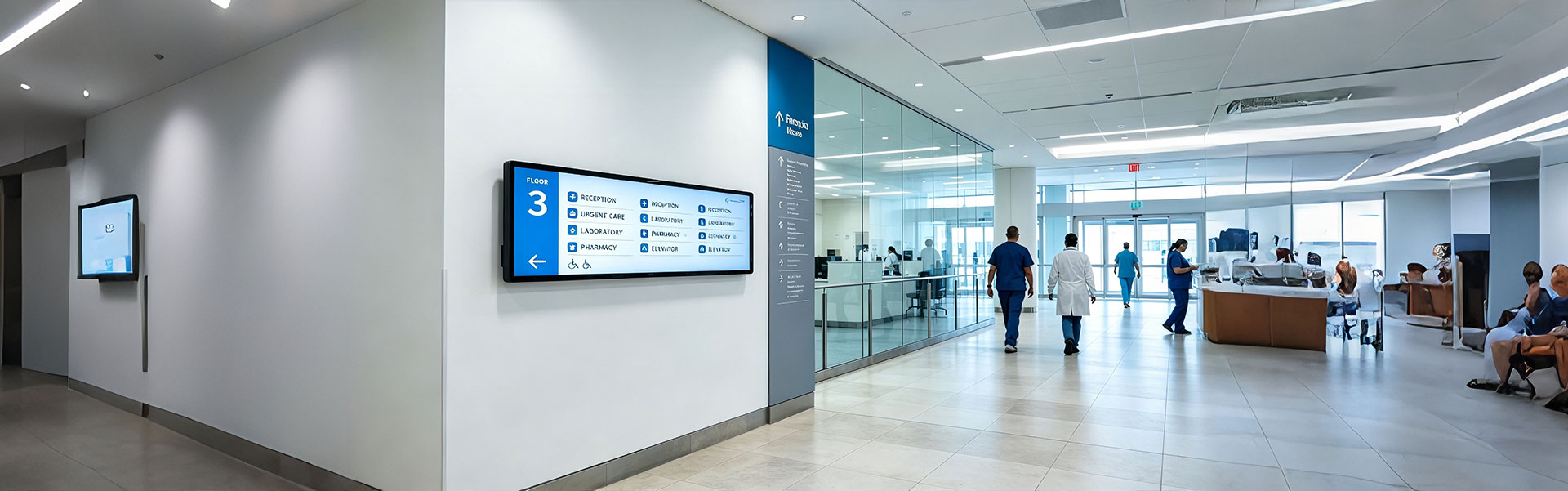
Floor Information Bar LCD Display Solution
Ultra-wide, high-brightness stretched bar LCD disp...
view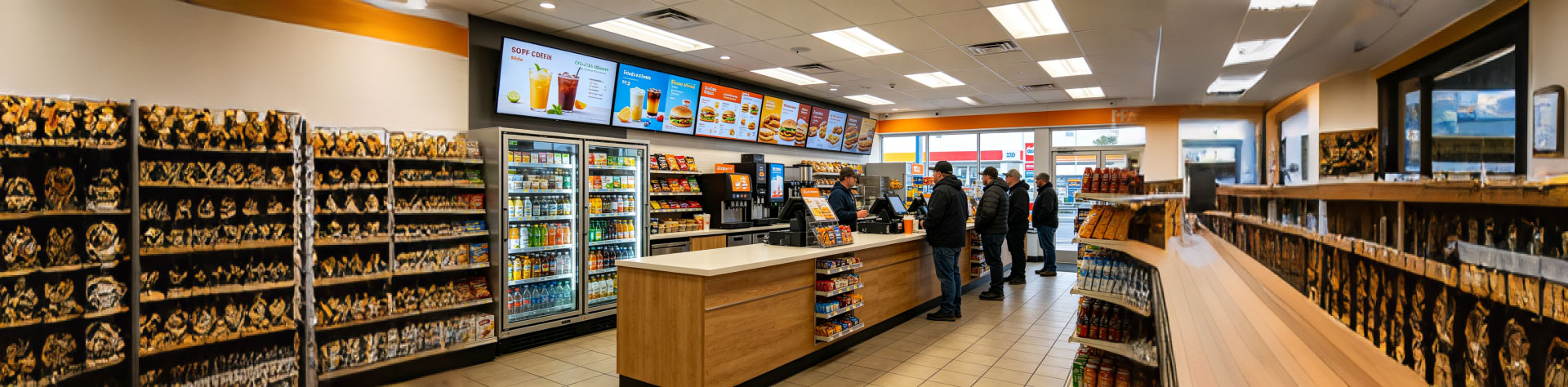
Convenience Store Bar LCD Display Solution
Ultra-slim, high-brightness stretched bar LCD disp...
view
Bus Passenger Information Stretched Bar Display Solution
A rugged, ultra-wide stretched bar display solutio...
viewRelated Products
You may also be interested in the following products
 1500 Nits
86 Inch 1500nits High Brightness LCD Screen for Outdoor Embedded
 1500 Nits
75 Inch 1500nits Industrial High Brightness Lcd Panel
 1500 Nits
65 Inch 1500nits High Brightness Direct-Lit LCD Display for Outdoor Kiosks
