Why the Stretched Bar Format Has Become a Design Default in British Equipment
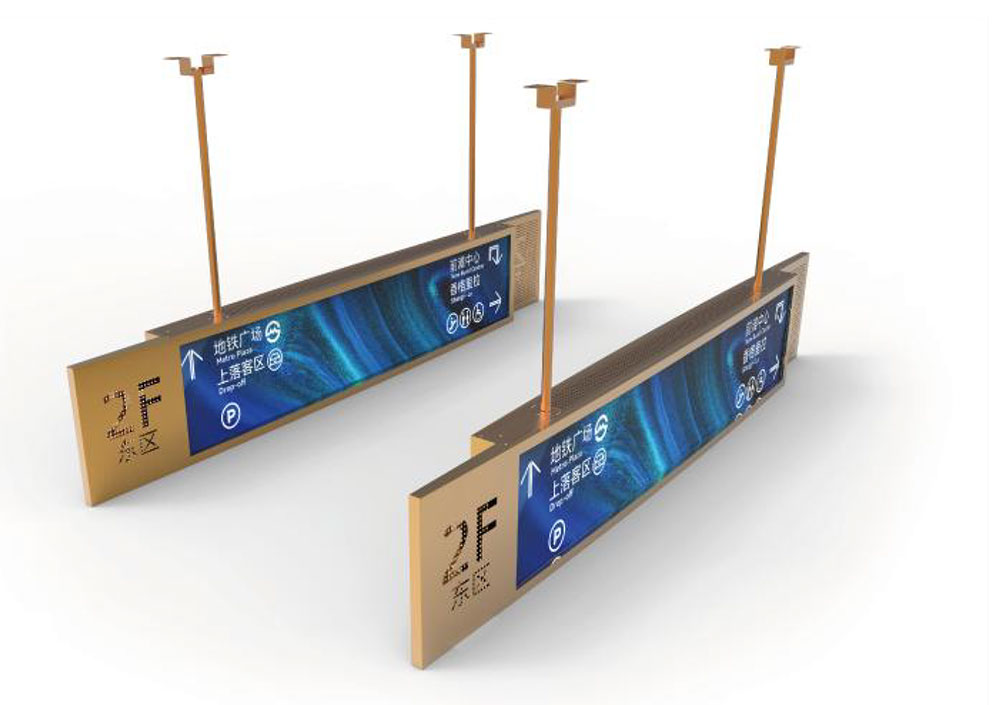
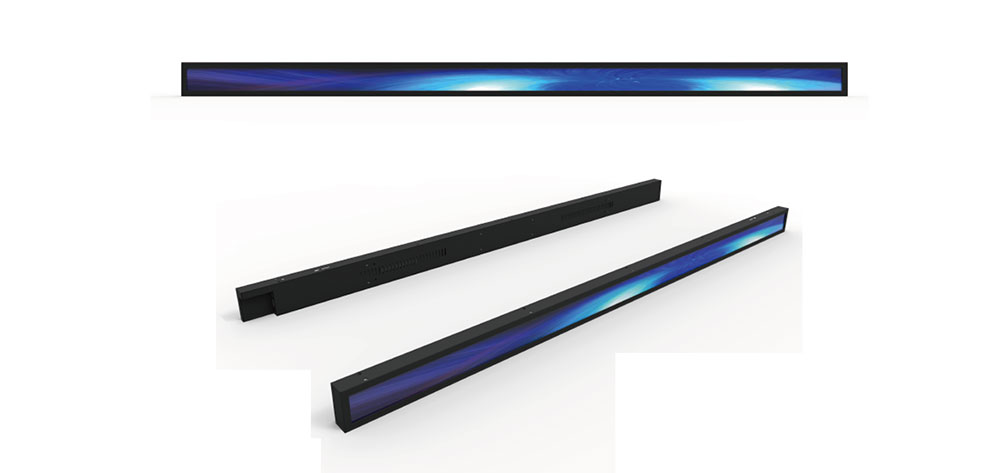
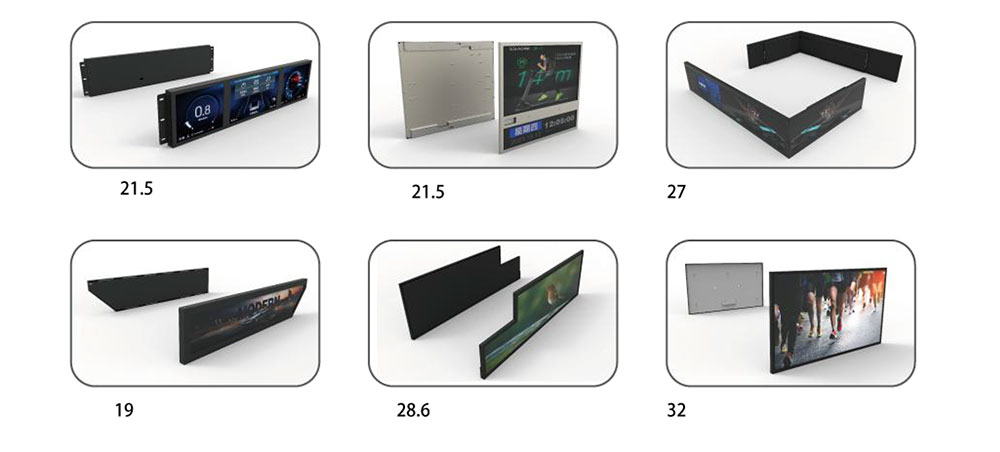
Walk through a UK railway concourse, a supermarket aisle, a hospital imaging suite or a factory control room and you will pass scores of screens that are not 16:9. They are long and narrow — 920 × 100 mm, 1200 × 120 mm, 1440 × 240 mm — mounted horizontally above a shelf, beside a passenger information board, or inset into the fascia of a machine. This is the stretched bar LCD, and for equipment manufacturers it solves a problem that standard panels cannot: the display has to fit the enclosure, not the other way round.
A UK OEM designing a ticketing kiosk, a vending front, a rack-mounted instrument or a betting terminal rarely has the luxury of a bezel-to-bezel square face. Mechanical constraints, airflow paths, door swing geometry and existing tooling all dictate a long, shallow aperture. A stretched bar panel — typically with an aspect ratio between 3:1 and 16:1 — fills that aperture with active pixels rather than with a blanking plate and a smaller standard display inside it.
What Actually Defines a Stretched Bar Display
The category is defined less by a single specification than by a relationship between three variables: aspect ratio, diagonal and resolution. A 28-inch stretched panel at 1920 × 360 and a 37-inch unit at 1920 × 540 are both "bars," but they behave very differently once you start designing the interface that will run on them.
| Parameter | Typical range | Design consequence |
|---|---|---|
| Diagonal | 7 in to 88 in | Determines window aperture and mounting rail spacing |
| Aspect ratio | 3:1 to 16:1 | Governs layout: single-line ticker vs. multi-zone dashboard |
| Native resolution | 1280 × 160 up to 3840 × 720 | Text legibility at target viewing distance |
| Brightness | 500 to 2500 cd/m² | Readability in glazed atria, shopfronts, outdoors |
| Interface | LVDS, eDP, MIPI DSI, V-by-One HS | Choice of SoC or AD board; cable routing radius |
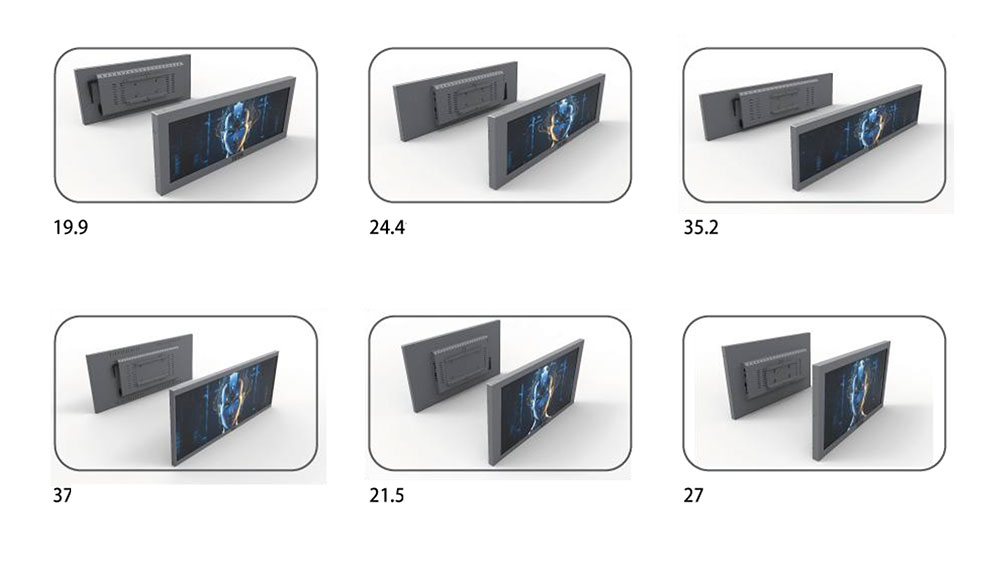
Because these panels are almost always cut from larger mother-glass or specified as bespoke tooling, the real question for an OEM is not "which standard size exists" but "how closely can the supplier hit the mechanical envelope I have already committed to." That is an engineering conversation, not a catalogue lookup.
Where UK OEMs Are Actually Using Them
Transport and Passenger Information
Rail and bus operators need above-door and platform displays that survive vibration, wide temperature swings and salt-laden coastal air. This is where stretched bars earn their keep: a slim bar fits the space above a door cassette that a square panel never would. Equipment built for the UK rail network frequently has to demonstrate compliance with EN 50155 (electronic equipment on rolling stock) and EN 50121 (EMC), and increasingly with EN 45545-2 for fire behaviour of materials. Specifying the panel is only half the job; the bonding adhesive, gasket material and enclosure polymer all fall inside that scope.
Retail Shelving and Electronic Shelf-Edge Media
Shelf-edge video strips are the highest-volume application. A 1200 × 80 mm bar mounted on a gondola end lets a brand run motion content at the point of decision. The engineering challenges here are thermal (enclosed, poorly ventilated, often powered inline) and optical (users look at the shelf from above, below and the side, so vertical viewing angle matters more than horizontal).
Vending, Kiosks and Self-Service
Vending fascias and self-checkout heads use stretched bars as the primary transactional interface. Because the panel is the product's face, OEMs usually want an optically bonded cover glass with an anti-glare or anti-reflective treatment, plus a projected-capacitive touch sensor laminated directly to the display. Optical bonding eliminates the internal air gap, which removes the double-image "ghosting" that makes un-bonded displays look cheap under store lighting.
Instrumentation, Test and Medical Rack Equipment
Nineteen-inch rack instruments have a fixed 1U or 2U frontage. A 1920 × 360 bar across a 1U fascia gives far more information density than a small square panel flanked by buttons. In laboratory and medical contexts, brightness requirements drop but contrast, colour consistency and long-term drift become critical — a readout that shifts tint after two years of continuous operation is a warranty problem.
Gaming, Betting and Amusement
Betting shop and casino terminal makers in the UK favour curved and flat bars for odds tickers and attract loops. These run 24/7 at high brightness, so backlight lifetime — usually quoted in hours to 50% luminance — is a genuine commercial differentiator rather than a datasheet footnote.
The High-Brightness Question
"High brightness" in this context means getting usable luminance out of a very thin, very long envelope. A bar panel has a poor surface-area-to-perimeter ratio for thermal dissipation, and the LED strings sit close together along one edge or across a single light guide. Three consequences follow.
- Thermal management. At 1500 cd/m² and above, the backlight becomes a meaningful heat source. Aluminium backplates, thermally conductive gap fillers and a defined conduction path into the enclosure chassis are not optional extras — they determine whether the panel reaches its rated lifetime.
- Uniformity. Long light guides are hard to keep even. A well-engineered bar should hold 75–80% luminance uniformity across the active area; anything below that reads as banding to the human eye, especially on flat white backgrounds.
- Dimming. In UK retail and transport environments the ambient light range is enormous — a dim corridor at 06:00 versus a glazed atrium at midday. PWM dimming at high frequency, or DC dimming where flicker would be captured on camera, matters for both comfort and camera-based analytics.
Customisation Levers That Actually Change the Outcome
Off-the-shelf stretched panels exist, but OEM programmes usually need some combination of the following. Knowing which levers to pull early shortens the development cycle considerably.
- Mechanical envelope. Active area position within the outline, mounting boss locations, connector exit side and cable bend radius. A 2 mm shift in active area offset can invalidate a moulding.
- Cover glass and bonding. Chemically strengthened glass from 1.1 mm to 3 mm, with AG, AR or AGAR coatings. Optical bonding with a liquid optically clear adhesive (LOCA) or a solid OCA film.
- Touch integration. PCAP sensors, often with a controller that reports through USB HID or I²C. Bar formats need bespoke sensor patterning — a stretched ITO pattern is not simply a scaled 16:9 design.
- Interface and drive electronics. Some OEMs want raw LVDS or eDP into their own SoC; others want an AD board with HDMI or DisplayPort in and a plug-and-play output. Both are legitimate; they imply very different NRE and unit costs.
- Daisy chaining. Multi-panel shelf installations often prefer one signal source feeding several bars in series, with each panel extracting its own slice of a wide canvas.
- Optical enhancement films. Brightness enhancement film (BEF) and dual brightness enhancement film (DBEF) can lift on-axis luminance without increasing LED drive current — useful where power budget is fixed.
Regulatory Reality for UK Manufacturers
Since the UK left the EU single market, a display-integrated machine placed on the GB market needs UKCA marking; goods going to Northern Ireland or the EU need CE marking. In practice most OEMs run both routes in parallel. The relevant threads are:
- Electrical safety: BS EN IEC 62368-1 (replacing 60950 and 60065).
- EMC: BS EN 55032 (emissions) and BS EN 55035 (immunity) for multimedia equipment.
- Materials: RoHS, REACH SVHC declarations and, for many public-sector and rail buyers, conflict-minerals and modern-slavery statements.
- End-of-life: WEEE producer obligations fall on whoever places the finished equipment on the market — but the display's recyclability and disassembly design feed into that obligation.
- Sector overlays: EN 50155 and EN 45545-2 for rail; IEC 60601 for medical electrical equipment, where the display's leakage current and creepage distances are part of the patient-safety analysis.
A display supplier that can hand over a documentation pack — declarations of conformity, test reports, material declarations, RoHS/REACH statements — removes weeks from a UK OEM's own conformity assessment. This is often the difference between two otherwise similar quotes.
What to Specify Before You Ask for a Quotation
Suppliers can respond accurately and quickly when the enquiry contains the following. Missing any one of them usually produces a round of clarification instead of a price.
- Target diagonal, active area dimensions and outline dimensions (with a mechanical drawing if one exists).
- Required brightness in cd/m² and the ambient conditions it must survive.
- Resolution and interface.
- Operating and storage temperature range.
- Whether touch is required, and if so which controller and interface.
- Cover glass thickness and surface treatment.
- Annual volume, first-year and steady-state, plus expected programme life.
- Target regulatory regime: UKCA, CE, or both, and any sector standard.
New Product Introduction: A Realistic Timeline
For a genuinely custom stretched bar — bespoke tooling, custom backlight, integrated touch — an OEM should budget roughly 10 to 16 weeks from specification freeze to first articles, with the bulk of that in tooling and first-article inspection. Where an existing panel family can be adapted (different cover glass, different bonding, a custom AD board), the cycle compresses to 4 to 8 weeks. Programme managers who treat the display as a long-lead item from the start are rarely surprised; those who treat it as a catalogue part KEYWORDS: Custom Stretched Bar LCD Displays for UK OEM Equipment Manufacturers