Why Elevators Need a Different Kind of Display
An elevator car is a narrow, enclosed, constantly moving steel box. The usable wall space is tall and thin, the viewing distance is short, and the electromagnetic environment is unusually harsh. A standard 16:9 panel wastes most of that vertical real estate and often fails to survive the switching noise generated by the traction drive. Custom stretched LCD displays solve the shape problem, but their real value in an elevator shows only when they are engineered to stay readable and reliable inside a cabin that behaves like a moving EMC test chamber.
What "Stretched" Actually Means
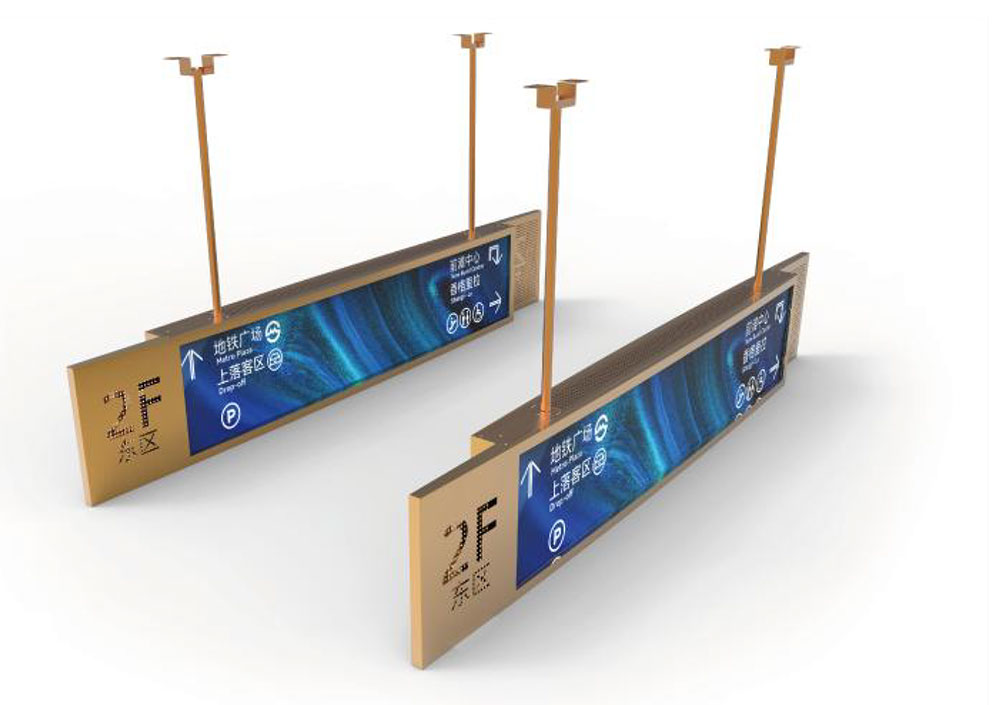
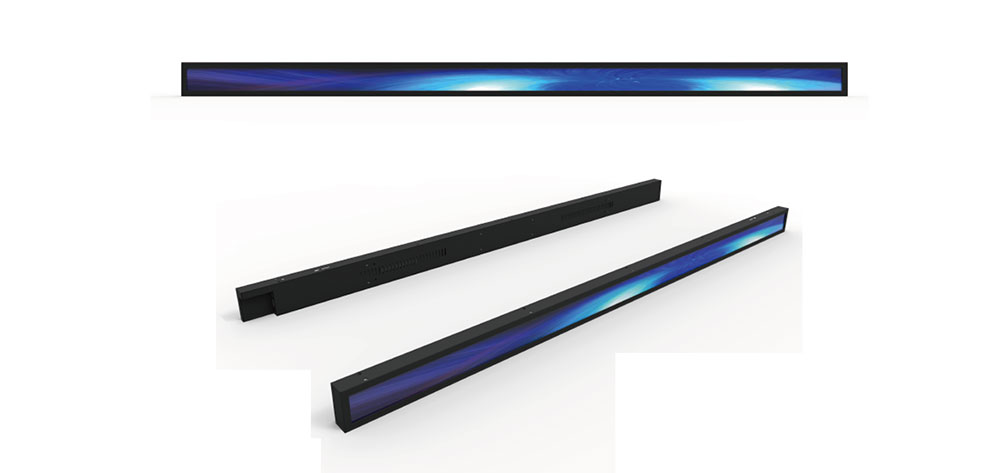
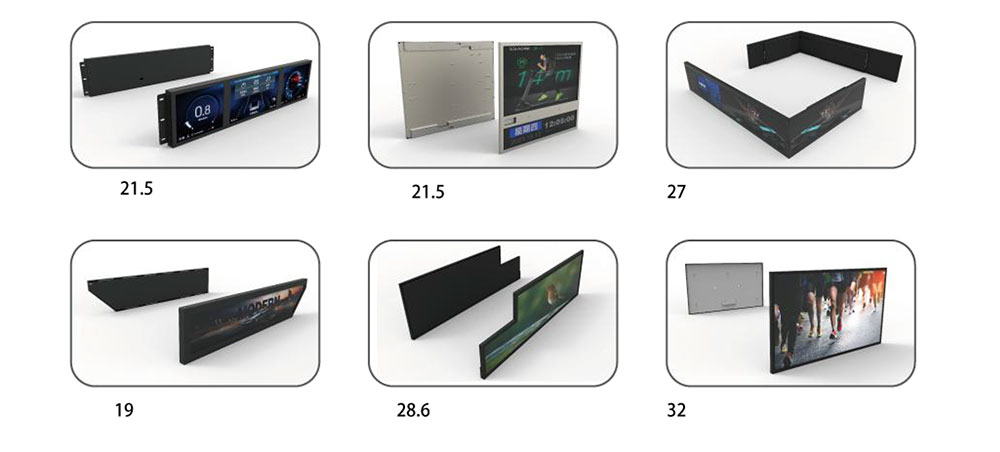
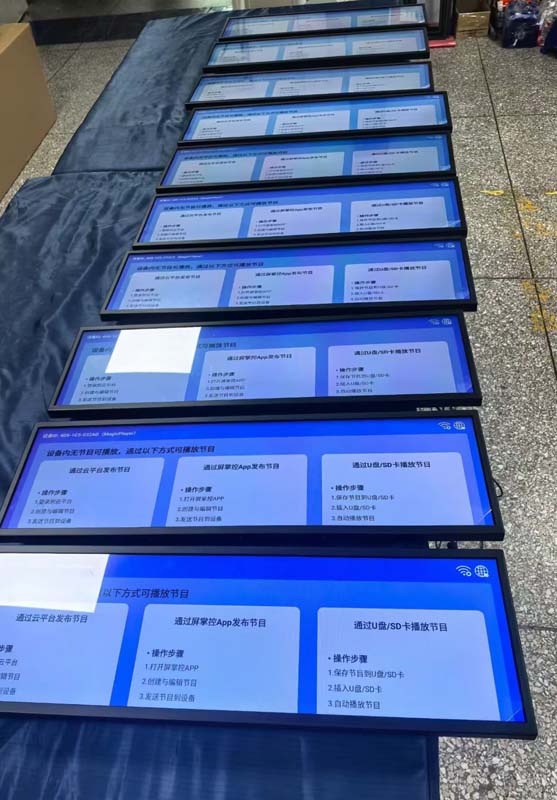
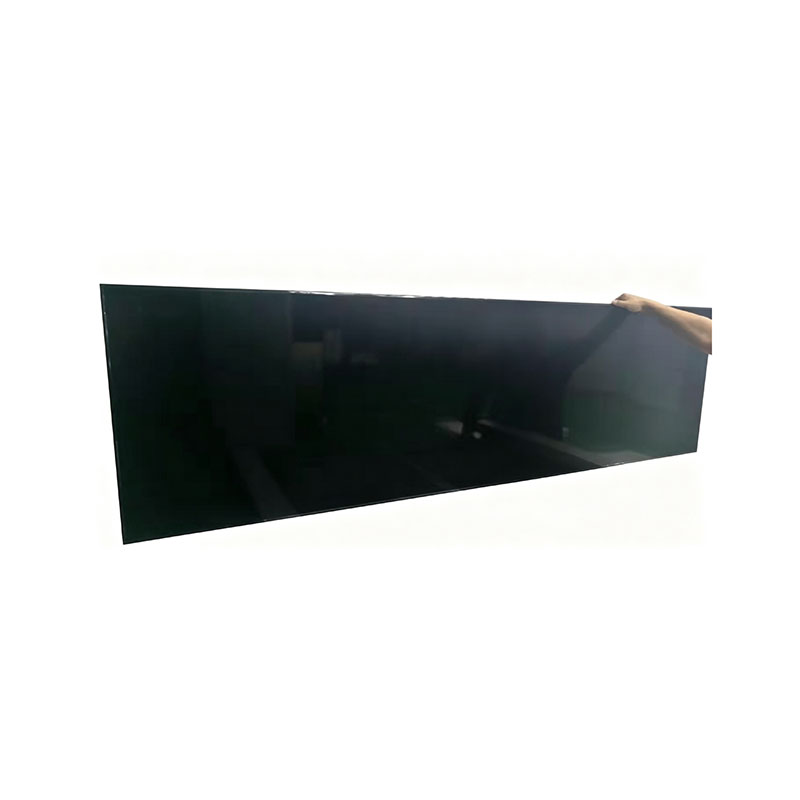
A stretched LCD is a panel with a non-standard aspect ratio, typically produced by cutting a parent glass into a long bar shape such as 23:6, 16:4.5, or similar ratios. HITULCD builds these as true-cut panels rather than cropped full-size modules, so the backlight, driver board, and timing controller are all matched to the active area. Common formats for elevator information systems include slim portrait strips mounted beside the door and wide landscape bars positioned above it. The result is a screen that fits the architectural opening instead of forcing the cabin design to accommodate a rectangle.
The Content an Elevator Display Carries
Elevator information systems typically combine several data streams on one surface: current floor and direction arrows, scrolling building directories, emergency and evacuation messages, maintenance and out-of-service notices, plus optional advertising or news. A stretched format lets each of these occupy a dedicated zone without crowding. Portrait strips suit floor numbers and directory listings; landscape bars suit tickers and multimedia. Because the panel is driven by a standard interface, the same hardware serves a basic floor indicator or a full media player depending on the controller behind it.
Brightness and Readability in the Cabin
Lighting inside a cabin ranges from dim mood lighting to bright LED ceilings, and glass or mirror finishes create reflections. A high-brightness panel in the 700 to 1500 cd/m² range keeps text legible against these reflections without washing out. HITULCD pairs the high-brightness backlight with optical bonding to remove the internal air gap, which reduces internal reflection and improves contrast. Optical bonding also stiffens the display stack, which matters in a vibrating car, and prevents condensation between the cover glass and the panel.
EMC: The Decisive Engineering Problem
The electromagnetic environment is where most elevator display projects succeed or fail, so it deserves the most attention. An elevator traction machine uses a variable-frequency drive that switches large currents at high frequency. That switching, combined with braking resistors, contactors, and long cable runs in the hoistway, produces strong conducted and radiated emissions and fast transient events. A display mounted a short distance from these sources must both tolerate that energy and avoid adding to it.
The Standards That Apply
Elevator equipment in Europe falls under the Lifts Directive and the EMC Directive, with the harmonized standard EN 12016 defining immunity requirements and EN 12015 defining emission limits specifically for lift, escalator, and moving walk applications. These reference the generic IEC 61000 series test methods. A display intended for this market should be validated against the relevant subset:
- Electrostatic discharge (IEC 61000-4-2): contact and air discharge on the touch surface and bezel, since passengers touch the screen directly.
- Radiated RF immunity (IEC 61000-4-3): the panel must not corrupt its image or reset when exposed to field strengths representative of the hoistway.
- Electrical fast transient / burst (IEC 61000-4-4): coupled onto power and signal lines to simulate contactor and relay switching.
- Surge (IEC 61000-4-5): on the power input, since building supplies in an elevator shaft are rarely clean.
- Conducted RF immunity (IEC 61000-4-6): injected on cables that run parallel to drive wiring.
- Voltage dips and interruptions (IEC 61000-4-11): the display should ride through brief sags caused by the drive and recover gracefully.
How the Display Is Hardened
Meeting these limits is a design discipline, not an add-on. HITULCD applies a layered approach to custom stretched modules destined for elevators:
- Shielding: a metal rear enclosure or conductive coating forms a Faraday boundary around the driver electronics, with a continuous low-impedance bond to chassis ground rather than isolated screw points.
- Filtered power entry: a common-mode choke and transient voltage suppression at the DC input block conducted noise and clamp surges before they reach the timing controller.
- Cable and connector management: shielded signal cables with 360-degree termination, short pigtails, and ferrites on power leads keep injected RF off the sensitive LVDS or eDP lines.
- Grounding strategy: a single, deliberate ground reference avoids the loops that both radiate emissions and pick up interference.
- PCB layout: controlled-impedance traces, guard rings, and solid return planes on the driver board raise immunity at the source, which is cheaper and more reliable than fixing it with external shielding later.
- Firmware watchdog: if a severe transient still disturbs the controller, a watchdog restores the correct image within a defined recovery time so passengers never see a frozen or blank floor indicator.
Treating EMC as a specification from the first design review, rather than a certification hurdle at the end, is what separates a panel that passes once from one that runs for years in a noisy shaft.
Mechanical and Environmental Durability
Beyond EMC, an elevator display endures continuous low-frequency vibration, door-slam shock, a wide temperature range, and near-permanent operation. HITULCD specifies industrial-grade panels rated for long operating life and wide temperature tolerance, uses locking connectors that resist vibration loosening, and recommends mounting that decouples the module from the harshest resonances. Cover glass can be specified with chemical strengthening and anti-vandal thickness for public-access cars.
Integration and Interfaces
A stretched module for an elevator is rarely a standalone product; it integrates with the building's information system. HITULCD supplies panels with standard LVDS or eDP interfaces and can deliver complete assemblies that include an embedded media controller accepting HDMI, Ethernet, or serial floor-position data from the lift controller. For retrofit projects, the slim depth of an optically bonded stretched module allows installation in existing door frames and header panels with minimal cabin modification.
Customization Options at a Glance
- Aspect ratio and size cut to the cabin opening, portrait or landscape.
- Brightness from standard indoor levels up to 1500 cd/m² for reflective interiors.
- Optical bonding with anti-glare or anti-reflective cover glass.
- Capacitive touch for interactive directories, hardened against ESD.
- EMC-validated enclosure and power filtering matched to EN 12015 and EN 12016.
- Interface and controller options from simple floor indication to full media playback.
Conclusion
A custom stretched LCD gives an elevator information system the shape it needs, but the shape alone does not make it fit for the job. Readability under reflective cabin lighting, mechanical endurance against constant vibration, and above all proven EMC performance against the variable-frequency drive next door are what keep the display accurate and alive for its full service life. HITULCD engineers each stretched module around those requirements from the start, so building operators get a display that looks right in the car and keeps working in the electromagnetic reality of the shaft.
KEYWORDS: custom stretched LCD, elevator information display, high-brightness LCD, LCD EMC compliance, stretched bar display