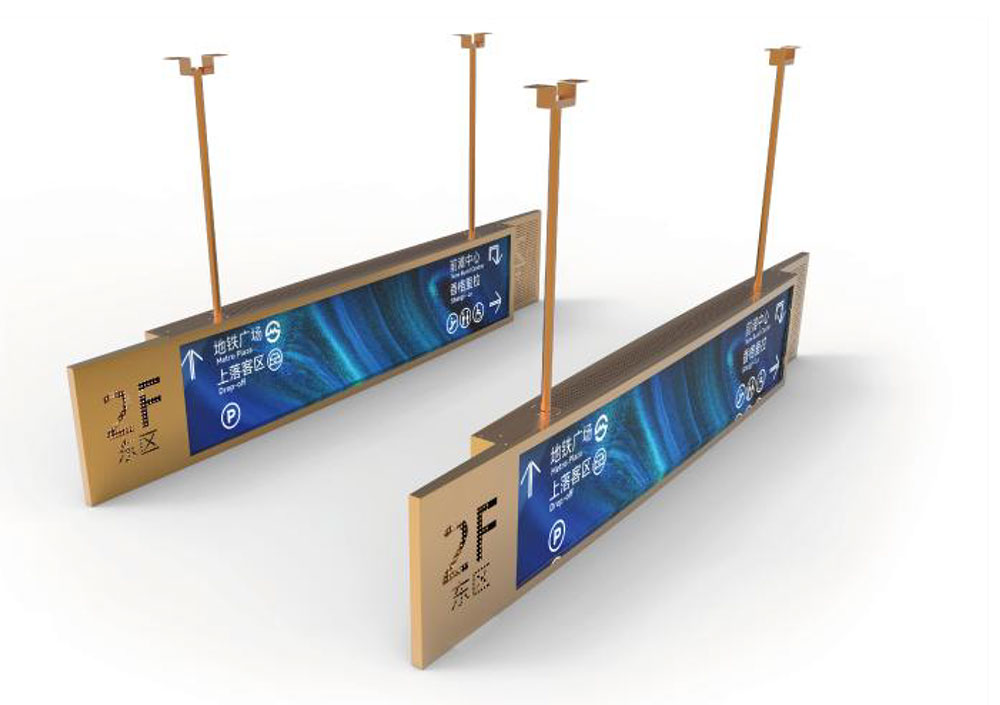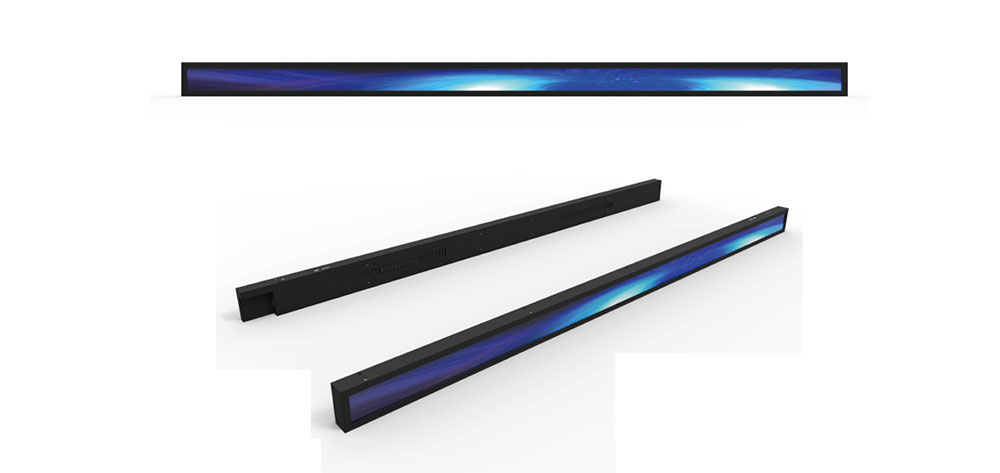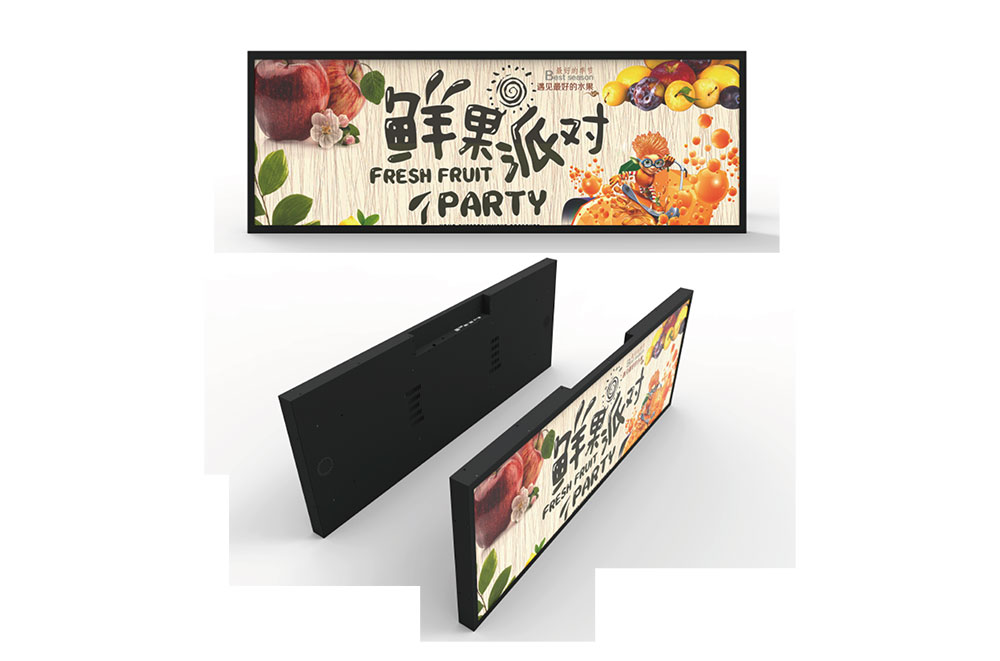
Stretched bar LCD displays have become an essential component for OEM equipment manufacturers designing products for narrow, elongated mounting spaces. Whether integrated into shelf-edge retail signage, transit information panels, elevator displays, industrial machine indicators, or smart building applications, these ultra-wide-aspect-ratio panels solve a fundamental design challenge: how to deliver clear visual information in spaces where a conventional 16:9 display simply won't fit. This guide explains the technology, key specifications, selection criteria, and integration considerations OEMs need to make informed sourcing decisions.
What Is a Stretched Bar LCD Display?
A stretched bar LCD (also called a bar-type, strip, or ultra-wide LCD) is a panel with an aspect ratio far wider or taller than standard displays. Instead of 16:9 or 4:3, stretched bar panels commonly use ratios such as 16:3, 16:4.5, 24:9, or even more extreme formats. There are two primary manufacturing approaches:
- Cut (Cropped) Panels: A standard LCD mother glass is physically cut to a bar shape during fabrication, then the driver circuitry, backlight, and timing controller are adapted to the reduced active area. This is the most common and cost-effective method for true bar displays.
- Native Bar Panels: Purpose-designed panels engineered from the ground up with a stretched active area. These offer optimized uniformity but are typically higher cost and lower volume.
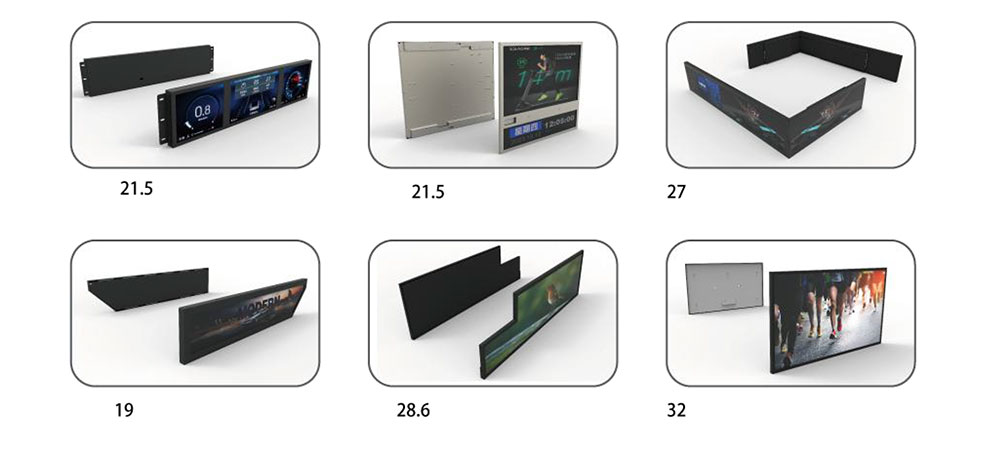
For OEM applications, cut panels dominate the market because they leverage existing high-volume glass, keeping costs manageable while delivering reliable performance.
Common Applications for OEM Manufacturers
- Retail & Shelf-Edge Signage: Digital price rails and promotional strips mounted along shelving.
- Transit & Public Information: Bus, train, and subway route displays; platform status boards.
- Elevator & Building Systems: Floor indicators, news tickers, and directory panels.
- Industrial & Machine HMI: Status bars, process readouts, and instrumentation panels.
- Smart Home & Appliances: Control strips on refrigerators, HVAC units, and kitchen equipment.
- Gaming & Casino: Topper displays and secondary information bars on slot machines.
Key Specifications to Evaluate
When specifying a stretched bar LCD for integration, the following parameters directly affect readability, reliability, and total cost. The table below shows typical ranges available across the industry.
| Parameter | Typical Range | Notes for OEMs |
|---|---|---|
| Diagonal Size | 7" – 88" | Bar displays measured by diagonal despite unusual shape |
| Aspect Ratio | 16:3, 16:4.5, 24:9, 32:9, others | Match to mechanical opening; custom cuts possible |
| Resolution | 1920×360 up to 3840×1080 | Higher pixel density improves close-viewing legibility |
| Brightness | 350 – 700 cd/m² (indoor); 1000 – 3000 cd/m² (high-bright) | Select based on ambient light and viewing distance |
| Contrast Ratio | 800:1 – 1500:1 (typical IPS/VA) | VA offers higher native contrast; IPS wider angles |
| Viewing Angle | Up to 178° (IPS) | Critical for public and shelf-edge viewing |
| Operating Temp. | 0°C to 50°C (standard); -30°C to 85°C (industrial) | Outdoor/transit use requires wide-temp grade |
| Interface | LVDS, eDP, MIPI, V-by-One | Depends on resolution and controller board |
| Backlight Life | 30,000 – 50,000 hours (LED) | Higher for units with brightness control/dimming |
Brightness and Sunlight Readability
Brightness is the single most important specification for many stretched bar applications. A shelf-edge display in a dim aisle may perform well at 350–500 cd/m², but a transit panel behind glass or an outdoor-facing window sign requires high-brightness solutions of 1000 cd/m² or more to overcome sunlight washout.
At HITULCD, high-brightness stretched bar panels are engineered with enhanced LED backlight arrays and optional optical bonding to reduce internal reflection. For sunlight-exposed installations, pairing 1500–3000 cd/m² brightness with an anti-glare or anti-reflective surface treatment and an ambient light sensor for automatic dimming delivers the best balance of legibility and power efficiency.
Panel Technology Comparison: IPS vs. VA vs. TN
| Attribute | IPS | VA | TN |
|---|---|---|---|
| Viewing Angle | Excellent (up to 178°) | Good | Limited |
| Contrast | Moderate | High | Low–Moderate |
| Color Consistency | Excellent | Good | Fair |
| Cost | Higher | Moderate | Lowest |
| Best Use | Public signage, wide viewing | Retail, deep blacks | Cost-sensitive, front-viewing |
Thermal and Reliability Considerations
High-brightness backlights generate more heat, and the elongated form factor concentrates thermal load along a narrow strip. OEMs should design enclosures with adequate airflow or heat-dissipating chassis, particularly for panels rated above 1000 cd/m². Wide-temperature-grade components, conformal coating, and quality LED binning extend field reliability. For 24/7 operation such as transit or elevator use, specify panels with automatic brightness control to prolong backlight life and prevent image retention.
Integration Guidance for OEMs
- Mechanical Fit: Confirm active area, bezel width, and mounting points against your enclosure. Stretched panels often have driver electronics on one short edge—plan cable routing accordingly.
- Controller Boards: Match the interface (LVDS/eDP/V-by-One) and provide a driver board that supports your signal source. Many OEMs request pre-configured boards to shorten development.
- Touch Options: Projected capacitive (PCAP) touch can be laminated for interactive kiosks; confirm glass thickness and controller compatibility.
- Cover Glass & Bonding: Optical bonding improves contrast, ruggedness, and prevents condensation—recommended for outdoor and public installations.
- Lifecycle & Supply: Choose panels with long-term availability commitments to protect your product roadmap against end-of-life disruptions.
Choosing the Right Supplier
Because stretched bar displays frequently involve custom cutting and tailored driver solutions, supplier capability matters as much as the panel itself. Look for a partner that offers engineering support, customization of size and brightness, wide-temperature options, optical bonding, and stable long-term supply. HITULCD specializes in high-brightness stretched bar LCD modules with customizable configurations designed specifically for OEM integration, backed by technical support throughout the design-in process.
Conclusion
Stretched bar LCD displays unlock design possibilities in spaces where conventional panels cannot go. For OEM equipment manufacturers, success comes from carefully matching brightness, panel technology, resolution, and thermal design to the target environment—and from partnering with a manufacturer capable of delivering customized, reliable, long-lifecycle solutions. By understanding the specifications outlined in this guide, engineering teams can specify the right stretched bar display with confidence.