Why stretched displays have become a fixture in Australian hospitality fit-outs
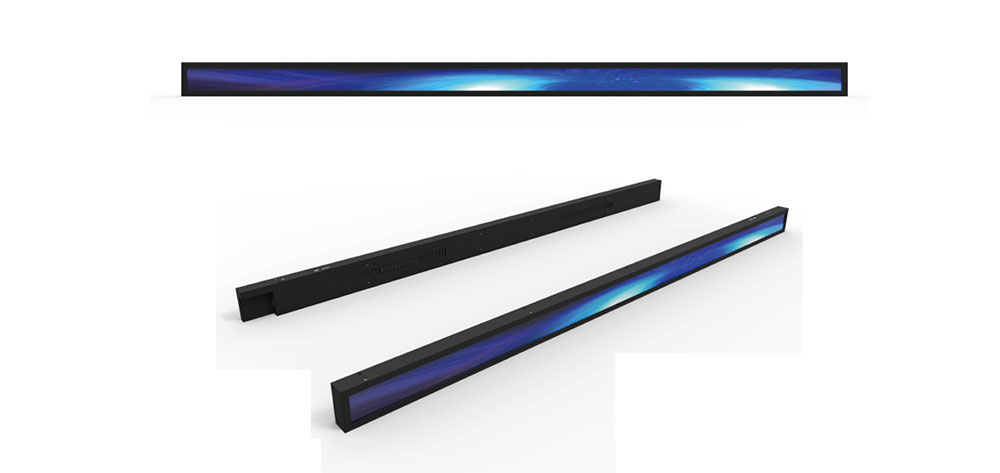
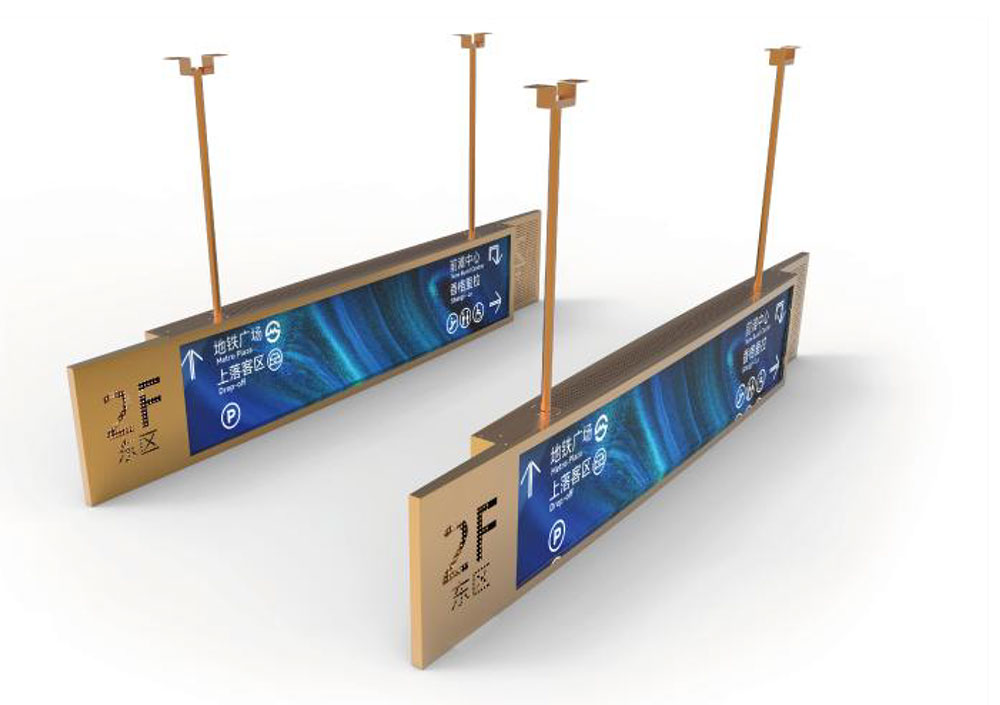
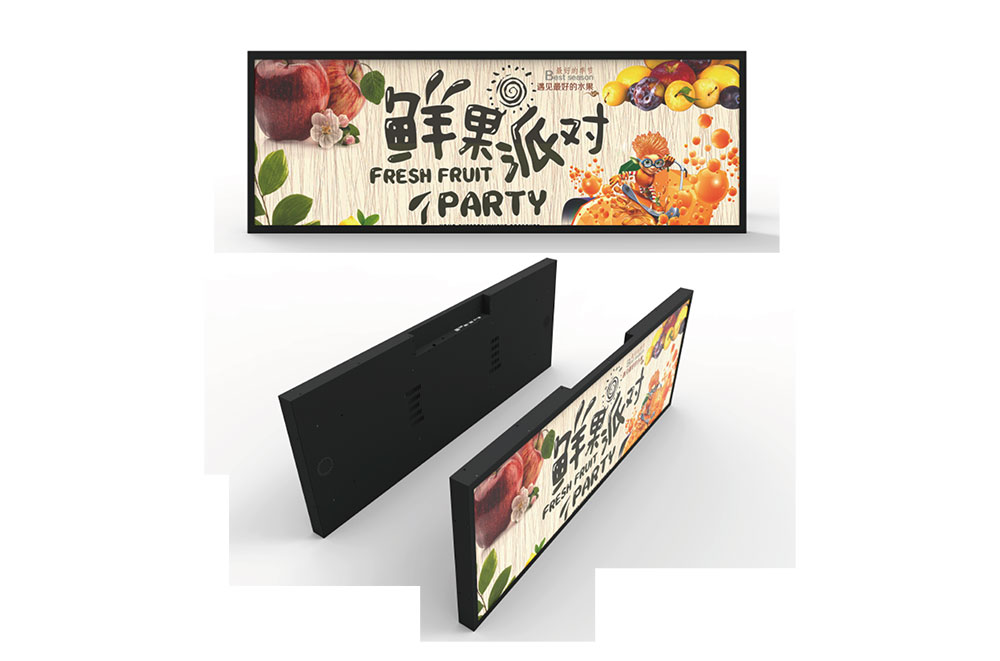
Walk into a refurbished pub in Richmond, a drive-through in Ipswich or a hotel lobby in Darwin and you will notice the same thing: the screens are no longer 16:9. They are long, thin bars mounted along the top of a counter, inside a menu header, under a bottle shelf or across the face of a pass-through window. These are stretched displays — bar-type LCD panels with aspect ratios between roughly 16:3 and 32:9 — and for hospitality equipment suppliers in Australia they have quietly become one of the highest-margin add-on categories in a typical fit-out tender.
This paper is written for the suppliers, fabricators and integrators who specify, bracket and commission that hardware. It covers the form factors that actually suit Australian venue layouts, the brightness and thermal realities of the local climate, the compliance chain that lands on the supplier when the panel is built into a piece of equipment, and the specification checklist to run before a container leaves the factory.
Form factors: matching the panel to the venue geometry
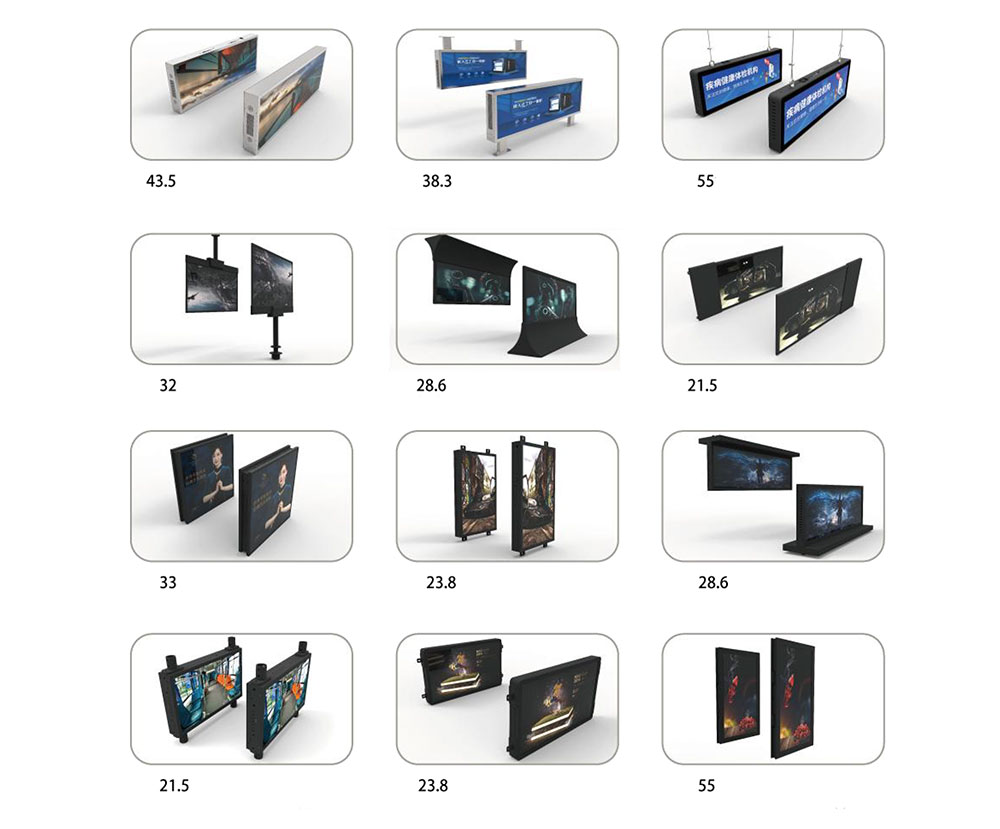
Hospitality equipment in Australia is built to metric dimensions. A back-bar joinery run is usually specified in millimetres, a drive-through menu header is set by the height of a canopy, and a bottle-shop shelf pitch is dictated by the 750 ml bottle. Stretched panels need to be chosen against those numbers, not against the diagonal advertised on a datasheet.
HITULCD stretched display range
| Model | Screen size | Native resolution | Aspect ratio | Brightness options | Approx. active area (mm) |
|---|---|---|---|---|---|
| HITULCD B28 | 28.6" | 1920 × 360 | 16:3 (5.33:1) | 700 / 1000 nits | 714 × 134 |
| HITULCD B37 | 37.6" | 1920 × 540 | 32:9 (16:4.5) | 1000 / 1500 nits | 905 × 254 |
| HITULCD B43 | 43.6" | 1920 × 540 | 32:9 (16:4.5) | 1500 / 2000 nits | 1051 × 296 |
| HITULCD B48 | 48.5" | 3840 × 1080 | 32:9 (16:4.5) | 2000 / 2500 nits | 1186 × 334 |
| HITULCD B75 | 75.5" | 3840 × 1080 | 32:9 (16:4.5) | 2500 nits | 1846 × 519 |
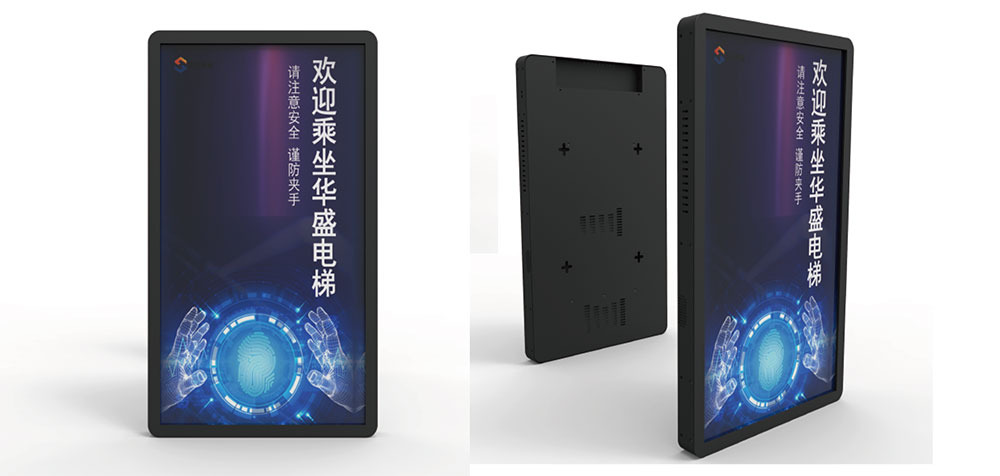
Common panel parameters across the range: LED edge-lit backlight, 178° horizontal and vertical viewing angle, 4000:1 typical contrast, 8-bit + FRC colour, 50,000-hour backlight life to 50% luminance, 30,000-hour MTBF, LVDS and V-by-One internal interface, and slim aluminium-alloy bezels from 8 mm to 15 mm depending on the sealing option.
Practical sizing rules
- Counter headers and pass-through signage: a 28.6" or 37.6" bar suits a 900–1400 mm joinery run. Anything wider forces the supplier into custom brackets that cost more than the panel.
- Back-bar and bottle-shop shelf strips: the 37.6" unit maps cleanly onto standard 600 mm shelf bays when two panels are butted, because the 905 mm active area plus bezels lands just under 1 m.
- Drive-through and forecourt menu boards: 43.6" and 48.5" panels in portrait-stacked pairs give a 3,000 mm-tall menu face with a resolution that still reads at 15 m.
- Casino, gaming room and stadium concourse: 75.5" 32:9 panels replace two or three 16:9 screens on a single cable run and a single power feed, which matters where conduit space is already tight.
Brightness is the Australian specification
Australian hospitality venues are unusually exposed to ambient light. A west-facing café in Perth takes direct afternoon sun through glazing; an open-air beer garden in Brisbane is specified at well over 1,000 lux at the screen face at midday; a drive-through canopy at 4 pm in summer can push 20,000 lux onto a menu board. Under those conditions, a standard 350–400 nit commercial panel goes grey and the client blames the supplier, not the panel.
The working rule used across the range:
- 700–1000 nits for indoor, shaded, controlled-lighting environments: hotel back-of-house, kitchen display systems, indoor menu headers more than 3 m from glazing.
- 1500 nits for indoor positions with strong reflected light, glazed entrances and open bar areas.
- 2000–2500 nits for semi-outdoor and outdoor installations: drive-through canopies, forecourt pylon signage, alfresco ordering kiosks, poolside and rooftop venues.
Brightness alone is not the answer. Two other parameters decide whether the customer can actually read the screen outdoors: surface treatment and contrast under reflection. Anti-glare (AG) etched glass is standard for indoor stretched panels; for outdoor positions, an anti-reflective (AR) coating with optical bonding is the specification that stops the panel behaving like a mirror. Optical bonding also removes the internal air gap, which reduces condensation risk in coastal and tropical installations — a genuine issue in Far North Queensland and the Northern Territory where a panel that cools overnight and is hit by morning humidity will fog behind the glass.
Thermal design for 50 °C ambient and 50 Hz power
Australian venues are hot, and kitchen-adjacent equipment is hotter than the venue. A stretched display mounted above a grill line, inside a heated display cabinet surround or on a pizza oven pass can sit in 45–55 °C air while the panel itself is running at 2000 nits. A running high-brightness panel adds roughly 20–30 °C of self-heating to its own internal temperature.
Specification consequences for suppliers:
- Operating temperature: standard HITULCD stretched panels are rated 0–50 °C ambient; high-brightness and touch variants are rated 0–50 °C with derated luminance above 45 °C. Panels specified for kitchen-line duty should be derated to a maximum of 45 °C or fitted with forced-air cooling.
- Storage and transport: −20 to 60 °C, which matters for a container sitting on a Fremantle or Port Botany wharf in January.
- Airflow, not sealing, for hot zones: an IP65-sealed panel in a 50 °C kitchen with no airflow will fail faster than an IP54 unit with a filtered fan. Suppliers should treat washdown rating and thermal management as separate decisions, not one decision.
- Power: 230 V AC nominal, 50 Hz, via external 24 V DC or 48 V DC power supplies rated for Australian mains tolerance (216–253 V). Power factor correction above 0.9 is worth specifying for venues running dozens of screens on one sub-board. Note that AS/NZS 3000 wiring rules govern the fixed installation — the display is an appliance, not a wiring outlet for downstream equipment.
- Brownout and restart behaviour: regional and remote venues see more voltage sag than metro sites. Panels should auto-restart to the last input state after a power interruption rather than sitting on a blue screen until someone walks into the store.
Compliance: what the supplier actually carries
When a hospitality equipment supplier bolts a stretched display into a cabinet and sells that cabinet as a piece of commercial kitchen or bar equipment, the supplier becomes the responsible party for the assembled product in Australia. That is where most of the risk sits, and it is worth spelling out.
| Requirement | Instrument | What it covers |
|---|---|---|
| Electrical safety | AS/NZS 62368.1 | Safety of audio/video, IT and communication equipment; the basis for most panel-level safety testing |
| EMC (emissions) | AS/NZS CISPR 32 | Radiated and conducted emissions from the assembled unit |
| EMC (immunity) | AS/NZS CISPR 35 | Immunity — relevant where panels sit near induction cooktops, compressors and refrigeration starters |
| RCM marking | ACMA regulatory arrangements | Mandatory marking for electrical and EMC compliance supplied in Australia |
| Hazardous substances | RoHS / REACH declarations | Restricted substances in the panel, backlight and electronics |
| Food premises fit-out | AS 4674 and FSANZ Food Standards Code 3.2.2 | Cleanability and construction of equipment in food handling areas — drives the choice of sealed, wipe-clean enclosures |
| Accessibility | AS 1428.1 and the DDA | Counter heights and reach ranges for accessible ordering points; affects mounting height for touch units |
Two practical notes. First, RCM compliance is on the assembled article, not on the bare panel, so a supplier who adds a frame, a PSU and a control board has created a new electrical product and needs test evidence covering it — panel-level CE or FCC reports are a starting point, not the finish line. Second, EMC immunity matters more in hospitality than in office AV because of the electrical noise environment: induction hobs, combi ovens, ice machines and refrigeration compressors all switch hard currents within a few metres of the screen, and a panel with marginal immunity shows it as intermittent flicker or a dropped input.
Integration: interfaces, control and content
Stretched displays in hospitality are rarely free-standing. They are built into equipment, so the supplier's own controller usually drives them. Design accordingly.
- Internal interface: LVDS or V-by-One over a short, shielded, strain-relieved harness. Suppliers building panels into moving assemblies — rotating menu headers, lift-up counters — should specify a locking connector and a service loop.
- External signal: HDMI 2.0 and DisplayPort 1.4 inputs; USB-C on higher-tier models. For long cable runs from a head-end player, HDMI over HD KEYWORDS: Hospitality Equipment Suppliers Stretched Displays for Australian