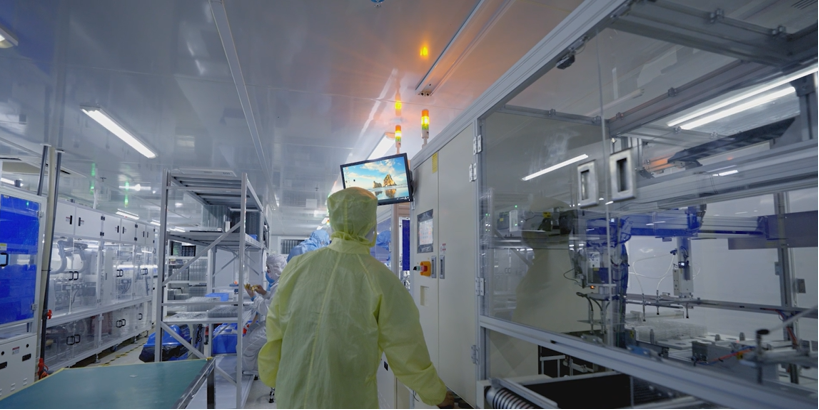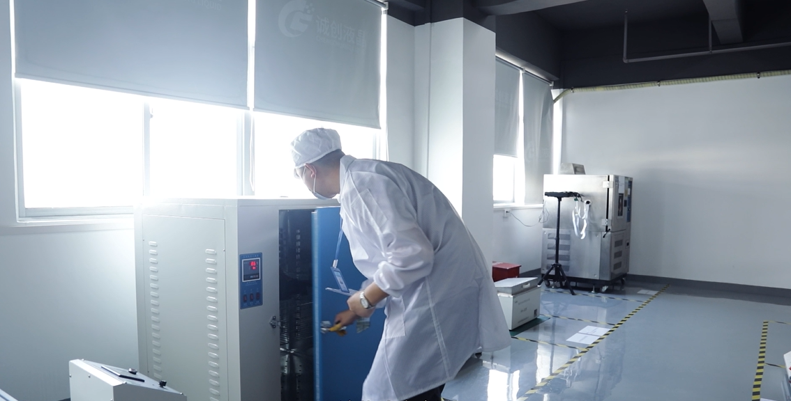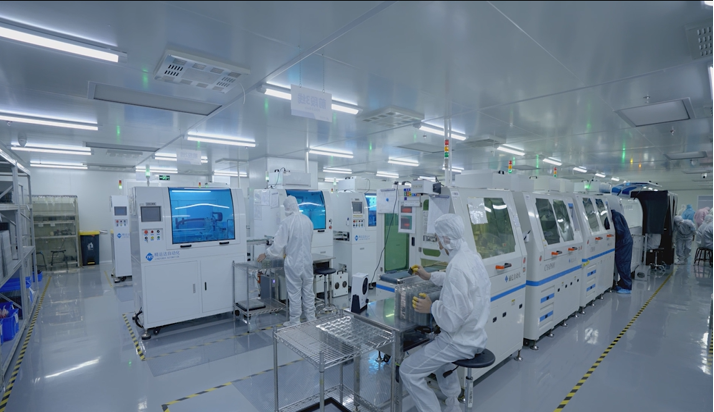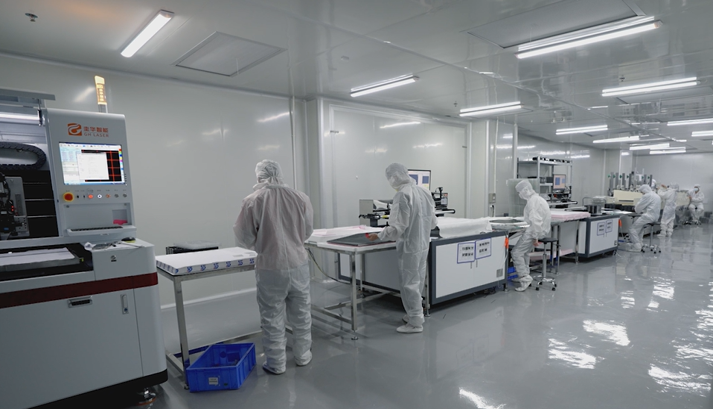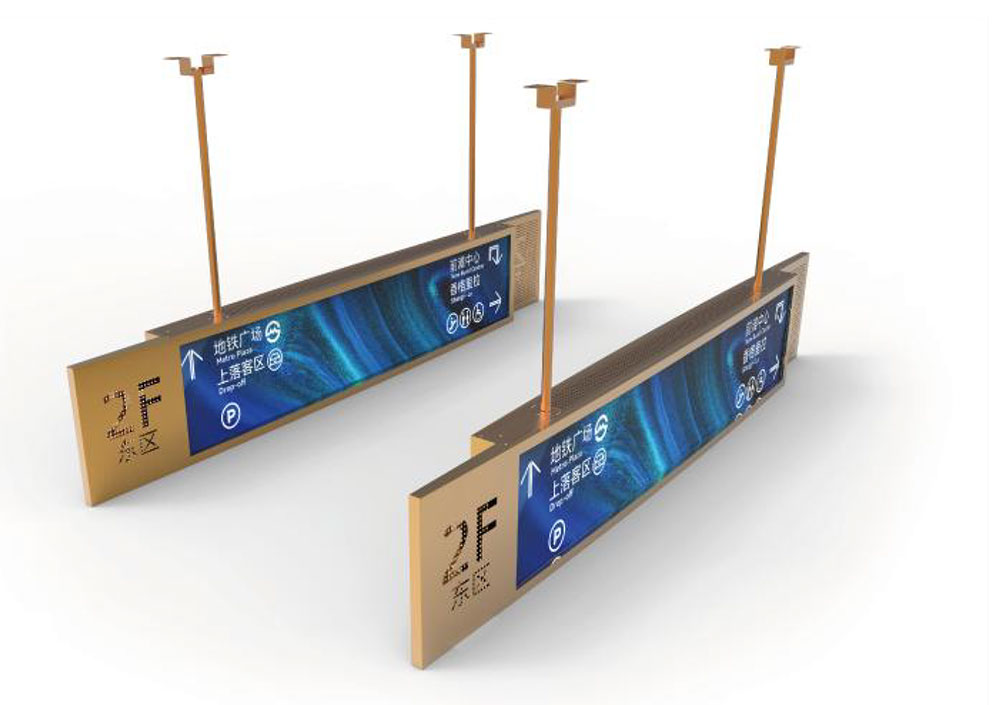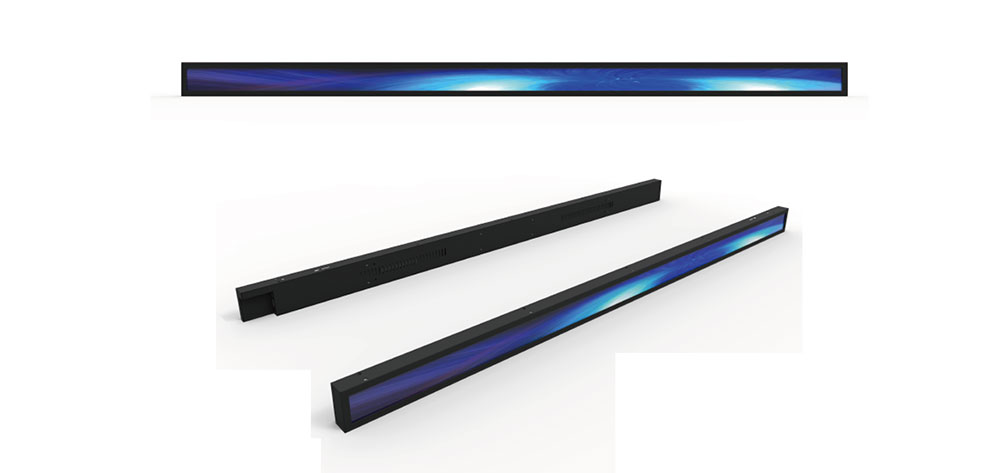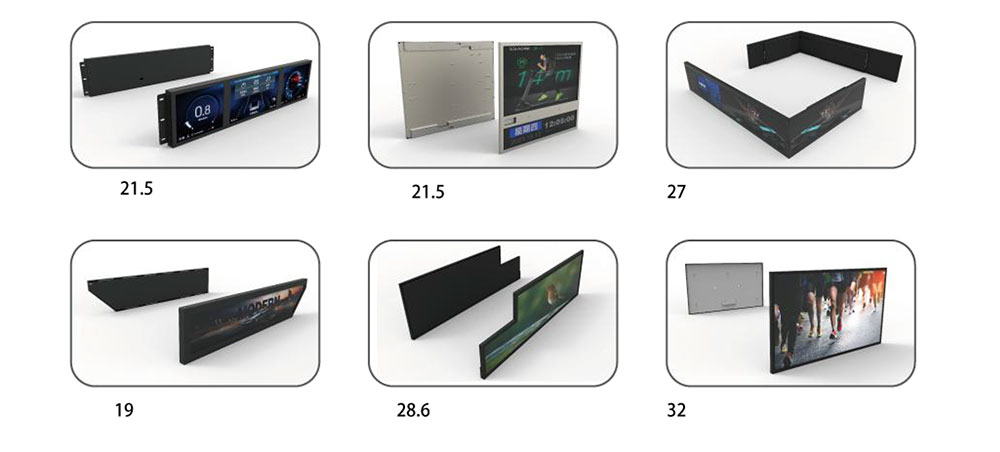
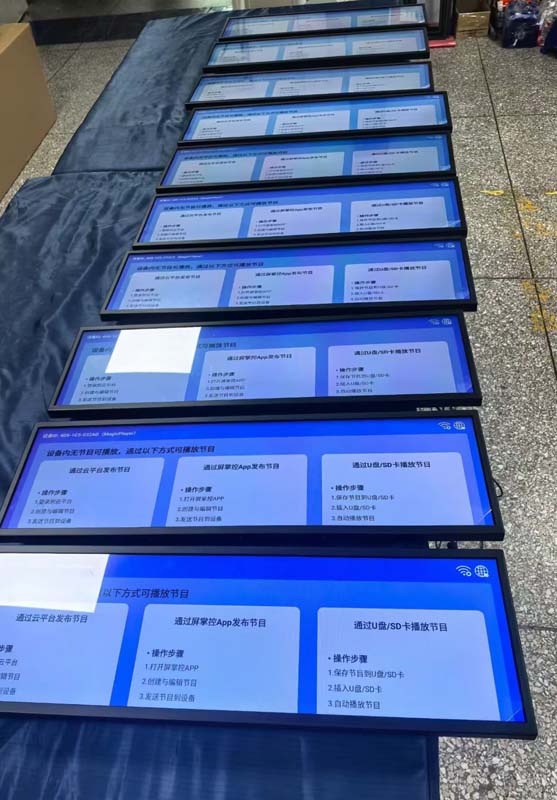
A stretched bar LCD display is a liquid crystal panel cut to an ultra-wide, low-profile format — typically 16:4.5, 16:3.5, or 16:3 — so it fits where a conventional 16:9 screen cannot. Instead of a 27-inch rectangle, an OEM gets a 1,000-millimetre-wide strip that is barely 150 millimetres tall, ideal for shelf edges, transit headers, drive-thru menu rails, elevator panels, and bank queue counters. For Canadian manufacturers integrating these panels into their own products, the engineering challenges are rarely about the glass itself. They are about brightness management, cold-weather behaviour, certification for the Canadian market, and supply-chain continuity across a very long border.
This guide covers what design engineers, product managers, and sourcing teams at Canadian OEMs actually need to make a stretched bar LCD work in their product — from panel selection through compliance, thermal design, and lifecycle planning.
What Makes a Stretched Bar LCD Different
Standard LCD panels are cut from large glass mothersheets (commonly Gen 8.5, roughly 2.2 m × 2.5 m) into as many identical 16:9 tiles as possible to maximize yield and drive down cost per square metre. A stretched bar panel breaks that economy. The cut pattern wastes glass, so the cost per unit area is typically 30 to 60 percent higher than a commodity 16:9 panel of the same brightness class.
That has three practical consequences for OEMs:
- Fewer sources. Only a limited number of panel fabs and module houses produce bar-format cells at volume. Qualification and second-sourcing matter more than in mainstream monitor categories.
- Non-standard resolutions. You will encounter native pixel formats such as 1920 × 540, 1920 × 357, 2880 × 864, 3840 × 1080, and 1280 × 480. Your SoC, scalar, or timing controller must accept that exact format — many embedded platforms assume 16:9 and will letterbox or refuse the mode.
- Custom lengths are expensive. Cutting a bespoke length usually means tooling, minimum order quantities in the thousands, and long lead times. It is almost always cheaper to redesign the mechanical envelope around an available size than to demand a custom cut.
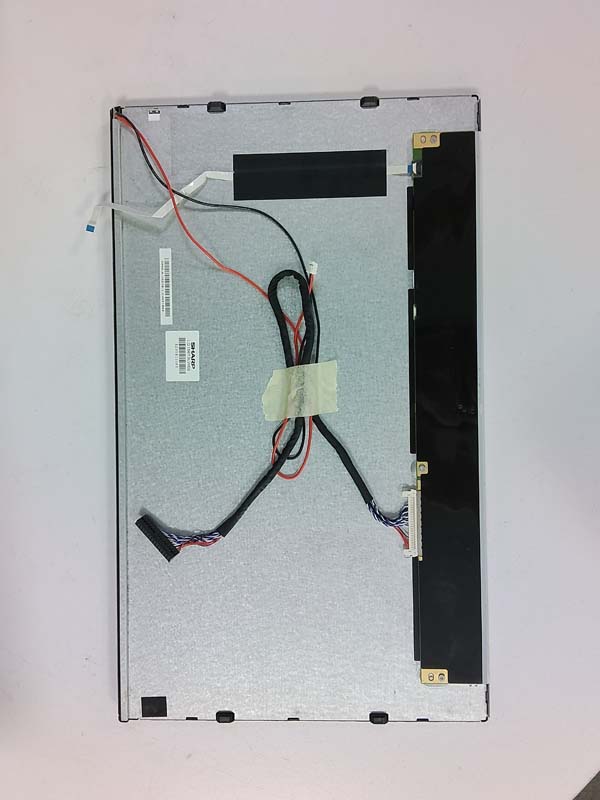
Common stretched bar formats
| Typical diagonal | Active area (approx.) | Native resolution | Ratio | Frequent use |
|---|---|---|---|---|
| 23.1" | 572 × 112 mm | 1920 × 380 | 16:3.4 | Shelf edge, bank counters |
| 28"–29" | 700 × 150 mm | 1920 × 540 | 16:4.5 | Retail, POS, elevators |
| 35"–37" | 900 × 200 mm | 1920 × 540 / 2880 × 864 | 16:4.5 | Transit headers, QSR rails |
| 43"–44" | 1,080 × 300 mm | 3840 × 1080 | 16:4.5 | Drive-thru menu, window display |
| 49"–50" | 1,200 × 340 mm | 3840 × 1080 | 16:4.5 | Large retail fascia, wayfinding |
Treat the table as a starting map, not a catalogue — suppliers revise panel roadmaps frequently, and the same nominal size can carry different brightness or interface options.
The Specification Decisions That Actually Matter
Brightness and where the product will live
This is the single most consequential decision, and it should be driven by ambient light measurements taken at the installation site, not by intuition.
- Indoor, controlled lighting (400–500 nits): Elevator lobbies, bank queue lines, hospital wayfinding, indoor shelf rails. Higher brightness here only adds heat, power draw, and cost.
- Indoor with high ambient light or window proximity (700–1,000 nits): Grocery aisles under dense troffers, showrooms, concourses. Anti-glare surface treatment matters as much as raw nits.
- Semi-outdoor and window-facing (1,000–1,500 nits): QSR menu boards under a canopy, storefront window displays. Requires a light sensor and automatic dimming to avoid blinding customers at night.
- Direct sun exposure (2,000–3,000 nits): Drive-thru directional displays, outdoor digital signage. Only a handful of bar-format panels reach this class, and they require substantial thermal design.
A useful rule: for a display viewed at arm's length in shadow, roughly 500 nits is comfortable; for one competing with direct sunlight on the cover glass, target 1,500 nits minimum and assume you will only retain a fraction of the contrast once reflections are accounted for. Contrast, not brightness alone, determines whether the content is legible — a 1,000-nit panel with 5 percent surface reflection can look worse than a 700-nit panel with proper anti-reflective bonding.
High-brightness panels in bar formats also generate proportionally more heat concentrated in a small vertical envelope, which leads directly to the next issue.
Thermal design in a thin envelope
An ultra-wide panel at 1,500 nits produces a backlight load that a 150 mm-tall chassis cannot easily dissipate. Hot spots cause mura (cloudy luminance variation), accelerated LED degradation near the edges, and local dimming artefacts. Designers should:
- Provide a metal back chassis with a continuous thermal path, not a plastic rear cover with air gaps.
- Place the LED driver and power board away from the panel's centreline and out of the bar's own convection shadow.
- Account for both summer and winter extremes: a display that runs at 55 °C internally in July may start at −25 °C in a Winnipeg January.
Cold-weather operation — the Canadian differentiator
Standard commercial panels specify 0 °C to 50 °C operating temperature. That is fine for a heated shopping mall and useless for a bus shelter in Saskatoon, an unheated warehouse in Thunder Bay, or a refrigerated distribution centre in Moncton. Liquid crystals become sluggish as they approach freezing: response time lengthens dramatically, ghosting appears, and below roughly −20 °C the panel may simply fail to produce a usable image until it warms.
Specify wide-temperature panels rated to −20 °C or −30 °C where the product may see cold starts, and add a heater layer or an internal warm-air path for anything that must operate instantly at −30 °C. Two further Canadian realities:
- Condensation. A panel moved from a −25 °C dock into a heated building will form moisture internally unless the enclosure is sealed and pressure-equalized with a breathable membrane vent. Condensation on the inner surface of the cover glass is a frequent warranty complaint.
- Thermal cycling. Canada's day-to-night swing in spring and fall routinely exceeds 25 °C. Adhesive, gasket, and connector choices must survive thousands of cycles without delamination or intermittent contact.
Optical bonding and surface treatment
Air-gap bonding between the LCD and the cover glass creates internal reflections that cut effective contrast by 30 to 50 percent in bright environments. Full optical bonding with a silicone or OCR adhesive eliminates those reflections and improves ruggedness, but adds cost and complicates repair. For window-facing and outdoor units, bonding plus an anti-reflective coating is usually justified; for indoor units, an anti-glare (AG) or anti-smudge treatment on a bonded or air-gap assembly is often sufficient.
Compliance and Certification for the Canadian Market
Canadian OEMs face a compliance regime that is close to but not identical to the US one. Do not assume a panel module certified for the United States automatically satisfies Canadian requirements for the finished product.
Electrical safety
Finished products sold in Canada should carry a mark from a recognized certification body — CSA, cUL, cETL, or equivalent — indicating conformity with CSA/UL 62368-1 (the current safety standard for audio/video, information, and communication technology equipment, which replaced 60950-1 and 60065). Because the stretched bar panel itself is a component, the final assembly is what gets certified. Ask your panel supplier for the component recognition documentation (UL file number, insulation system details, flammability ratings for plastics) early — it is a common source of late-stage delay.
Electromagnetic compatibility
In Canada, information technology equipment must comply with ICES-003 (based on CISPR 32), administered by Innovation, Science and Economic Development Canada. In practice this means your finished display product needs its own EMC test report and Canadian compliance labelling. A panel vendor's FCC report on a bare module does not transfer. Budget for EMC testing of the complete product with its driver board, cabling, and enclosure — long LVDS or eDP cable runs inside a metal bar chassis are a classic source of radiated emissions failures.
Language and signage law
If your display product will show commercial advertising in Quebec, the Charter of the French Language — as amended by Bill 96 — requires French to be markedly predominant in commercial signage and advertising. That affects the content management system and the default language configuration your OEM customer receives, not the hardware. Building bilingual FR-CA/EN-CA defaults and French-first templates into the product at the factory saves integrators a painful retrofit.
Accessibility obligations
Public-sector and federally regulated deployments frequently fall under accessibility legislation — the Accessible Canada Act federally, and the AODA in Ontario, the Accessibility for Manitobans Act, and the Accessible BC Act provincially. For a display product, the practical requirements are visual: adequate contrast ratios, scalable text, and where interactive, touch targets of sufficient size and tactile or audible alternatives. Designing for these from the start is far cheaper than retrofitting.
Materials and environmental rules
RoHS and REACH conformity are expected by most Canadian buyers as a baseline. If the product will also ship to California, Proposition 65 labelling applies. Provincial e-waste programmes (for example, Ontario's and British Columbia's electronics recycling regimes) obligate brand owners in some categories — confirm obligations with your compliance advisor based on the product classification.
Interfaces, Drivers, and Signal Integrity
Stretched bar panels are almost always supplied as bare modules with an LVDS or eDP interface, occasionally MIPI DSI. Your integration options:
- LVDS (single or dual channel): The most common choice for bar panels up to 1920 × 540. Simple, well understood, but limited in reach. Beyond about 300–500 mm of cable, skew and EMI become a problem — a real constraint inside a 1.2 m-wide chassis, where the board is often mounted at one end.
- eDP: Better for higher resolutions such as 3840 × 1080 and for longer internal runs. Requires careful impedance control and correct lane assignment.
- V-by-One HS: Used on some large-format high-brightness bars; requires a dedicated bridge chip.
- HDMI/DP via a bridge board: The pragmatic route for OEMs building a signage product, since it lets a standard Android or Linux media player drive the panel. Factor in the bridge board's power, thermal footprint, and firmware update path.
Verify three things before committing: the panel's exact timing parameters (many bar formats use non-VESA timings), the required power sequencing order with delays, and whether the backlight driver is integrated or separate. A common failure mode is an Android SoC that outputs 1920 × 1080 and cannot be configured for 1920 × 540, resulting in a stretched or letterboxed image.
Mechanical and Optical Integration Pitfalls
- Light leakage at the bezel. In a long, thin chassis, the smallest gap between the panel edge and the front bezel shows as a bright line. Specify a compression gasket and verify with a dark-room test at maximum brightness.
- Sag and flatness. A 1,000 mm unsupported panel will bow. Add a mid-span stiffener or mounting boss; a 1 mm deflection is enough to cause uneven backlight coupling and visible mura.
- Connector strain. FPC tails on bar panels are short and fragile. Design cable routing with a service loop and mechanical retention so field vibration does not fatigue the connector.
- Serviceability. Bonded assemblies cannot be field-repaired. For products with a five-year field life, decide early whether the display is a replaceable module or a sealed unit, and price the spares accordingly.
Where Stretched Bar LCDs Earn Their Cost
The format justifies its premium where vertical space is scarce and horizontal reach is valuable:
- Quick-service restaurant menu rails and drive-thru. Content changes daily; a bar format replaces printed strips without giving up counter space.
- Transit passenger information. Bus, subway, and light-rail headers and platform strips — Canadian transit agencies are active buyers, and these deployments demand wide temperature range, vibration tolerance, and long service life.
- Retail shelf edges and end caps. Electronic shelf labels for pricing, bar LCDs for promotion and product storytelling.
- Bank and clinic queue displays. Multi-window layouts that a square monitor handles poorly.
- Elevators and building directories. A natural fit for the 16:4.5 aspect, often paired with a floor-indicator integration.
- Vending, kiosks, gaming cabinets, and industrial control panels. Where a status or attract loop must occupy a narrow band.
Sourcing, Lead Time, and Lifecycle — the Canadian Practicalities
Bar-format panels are a niche within a niche. Plan the supply chain accordingly:
- Sample first, then qualify. Request an engineering sample of the exact panel, driver board, and cable set, and run it in your enclosure at your worst-case ambient temperature before you commit to a production order. Film-based evaluations of datasheets are how projects fail.
- Understand minimum order quantities. Standard sizes may be available in small volumes; custom brightness, custom FPC, or custom mechanicals will not be. Ask explicitly what drives the MOQ — glass cut, backlight build, or assembly.
- Confirm country of origin and tariff treatment. Whether a display module qualifies for preferential treatment under CUSMA depends on classification and origin rules, and the answer differs between a bare panel and a finished display with a controller. Get a written opinion from a customs broker and keep the documentation current; do not let a shipping clerk guess at the HS classification.
- Plan freight realistically. Ocean freight to Vancouver or Montreal is economical but slow and subject to port congestion; air freight is fast and expensive. For a product launch, most OEMs air-freight the first two production runs and then transition to ocean with a buffer of four to six weeks of safety stock.
- Insist on written EOL notice. Panel lines in niche formats a KEYWORDS: Stretched Bar LCD Display: Complete Guide for Canadian OEM Manufacturers