Why the Panel Shape, Not the Panel Spec, Decides Retrofit Success
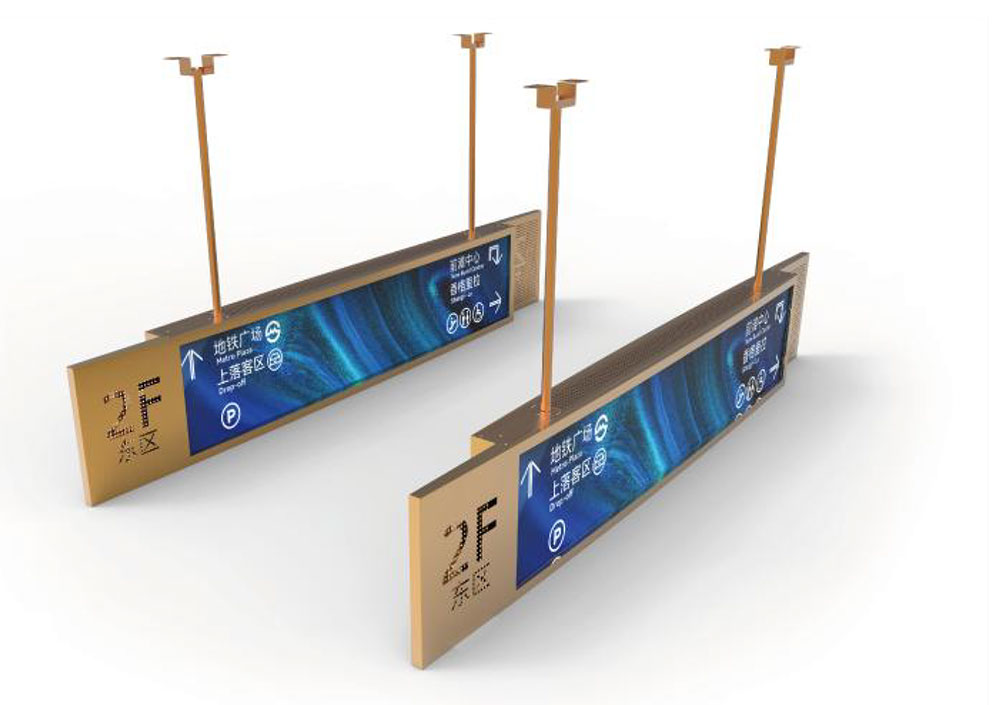
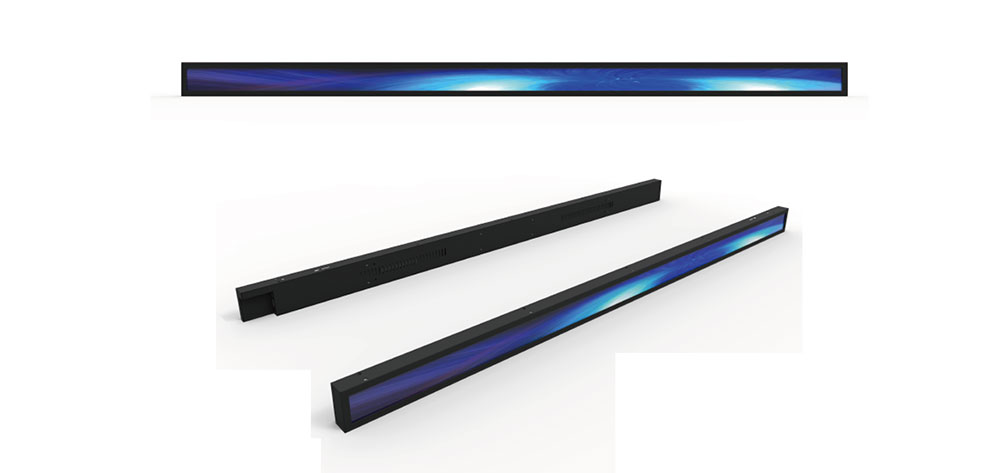
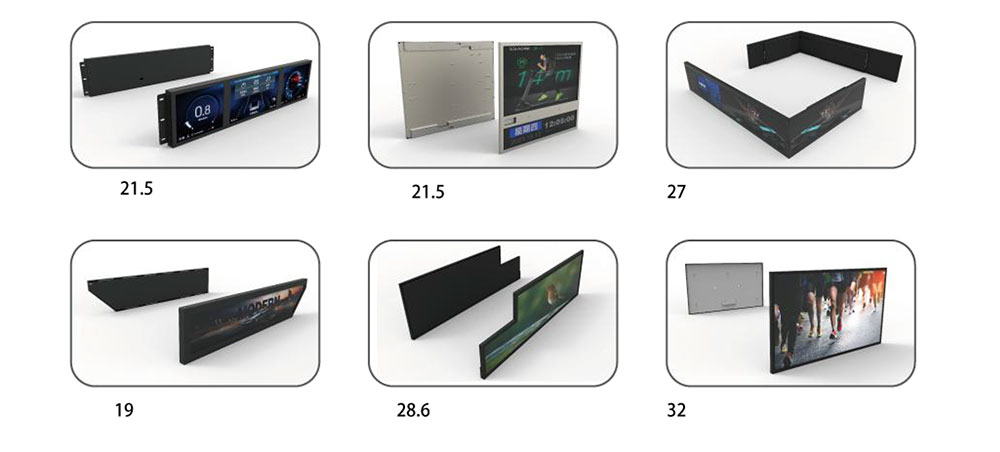
Most display upgrade projects on British industrial equipment do not fail because the panel is too dim or too slow. They fail because the opening in the machine is 400 mm wide and 90 mm tall, and the only panels on the distributor shelf are 16:9. A stretched LCD — also sold as a bar-type, ultra-wide, shelf-edge or strip display — is the only format that fills that aperture without a mechanical re-design of the fascia, the door, or the guard.
On a new-build machine this is a specification decision. On an installed asset it is a geometric constraint that has already been fixed by steel, gasket channels and 20 years of service history. That distinction shapes everything else in a retrofit: the panel's aspect ratio, its mounting datum, its connector exit, its thermal path and its certification route are all downstream of an aperture that cannot move.
Where British Industry Actually Meets This Problem
The demand profile in the UK is dominated by long-life capital equipment in sectors that took delivery of their control platforms between the mid-1990s and the mid-2010s:
- Packaging and filling lines — machine-mounted status bars above conveyors, showing fill counts, reject rates and OEE, sized to sit inside an existing aluminium extrusion profile.
- Food and beverage processing — washdown areas where the display sits behind a stainless door and must survive caustic CIP cycles without fogging.
- Textile and nonwovens machinery — legacy operator stations with narrow bar apertures originally occupied by vacuum-fluorescent or early monochrome LCD modules.
- Rail and light transit — passenger information and depot diagnostic panels where EN 45545-2 fire performance is not negotiable.
- Off-highway, agricultural and quarry plant — high-vibration, high-dust environments with 12/24 V DC architecture.
- Defence and naval support equipment — DEF STAN 00-35 environmental evidence demanded alongside the display itself.
In each case the failure mode that triggers the upgrade is rarely the display dying outright. It is obsolescence: a discontinued FSTN module, a CCFL backlight with no spare inverter, a 4:3 panel whose controller board is end-of-life, or a display that was never bright enough for a sunlit shop floor and has been read through a scratched polycarbonate window for a decade.
The Stretched Formats That Cover Most Retrofit Apertures
Stretched panels are defined by their active area ratio. The practical families used in industrial retrofit work are:
| Nominal Size | Resolution | Aspect | Typical Retrofit Role |
| 24.6 in | 1920 × 360 | 16:3 | Machine status bar, narrow extrusion fascia |
| 28 in | 1366 × 256 | 16:3 | Legacy bar aperture, low-cost dual-source |
| 37 in | 1920 × 540 | 3.56:1 | Overhead conveyor information, depot signage |
| 48.5 in | 3840 × 720 | 16:3 | Wide gantry, multi-zone status wall |
| 86 in class | 3840 × 1080 | 16:4.5 | Full-width machine arch, control room band |
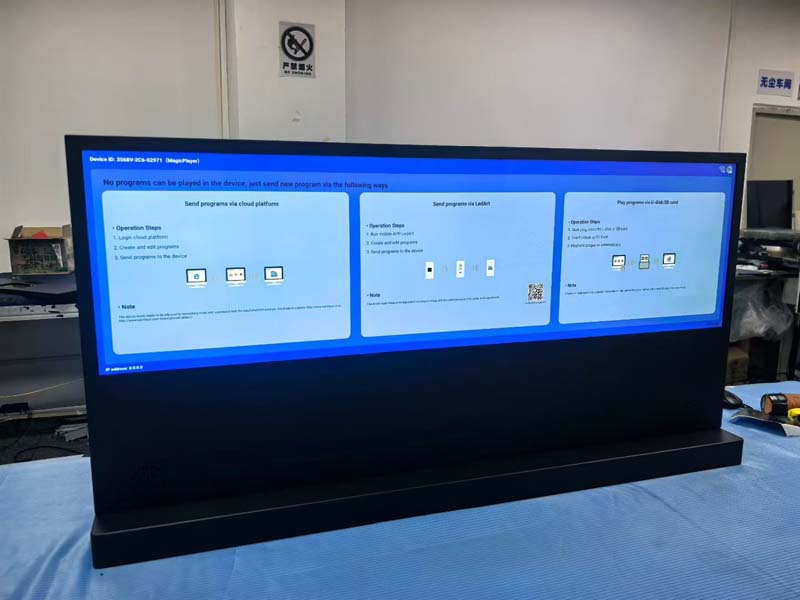
The critical point is that a stretched panel is not a cropped 16:9 panel. Its driver IC count, gate-line loading and backlight architecture are designed for the long, narrow geometry, which is why the better bar panels achieve brightness uniformity across a 3.5:1 width that a cropped consumer panel cannot match. When an engineer measures an aperture, the three numbers that matter are active area width, active area height, and the distance from the active area edge to the nearest obstruction — bezel, hinge, cable gland or guard.
Optical Engineering: Sunlight, Glass and Viewing Cone
A British factory floor is not a dark room, and a south-facing bay window in July produces incident illumination well above 20,000 lux at the machine face. Three parameters do the work:
Luminance
For indoor machine mounting, 700–1000 cd/m² covers most conditions. For displays behind a vehicle windscreen, in a yard-facing depot, or in a glazed atrium, 1300–1500 cd/m² with high ambient contrast ratio is warranted. Raising luminance alone is a trap: doubling nits roughly doubles backlight power, and in a sealed stainless enclosure that heat has nowhere to go.
Optical Bonding
An air gap between the LCD and the cover glass creates two extra refractive surfaces, internal reflection and a measurable contrast loss — typically 20 to 40 percent in high ambient light. Optically clear bonding eliminates the reflections, improves impact resistance and stops condensation forming on the inner glass face during CIP washdown or cold-store duty. For any retrofit into an IP65 or better enclosure, bonding is usually the single largest perceived-quality improvement per pound spent.
Surface Treatment
Anti-glare (AG) etching is right for machine operators who work at oblique angles under overhead lighting. Anti-reflective (AR) coating is right where the operator reads straight-on and image clarity matters. Anti-fingerprint and anti-microbial treatments are common requests in food and medical-adjacent equipment; anti-microbial performance should be declared against ISO 22196 with the test report supplied, not inferred from a marketing claim.
Electrical and Signal Integration
Retrofits live inside two very different worlds, and the interface choice usually follows the existing control architecture rather than the panel's preference.
- Replacing an existing embedded module: LVDS or eDP with a matched timing controller, keeping the original ribbon routing and connector position. The engineering task is EDID and timing compatibility, not graphics.
- Adding a new display to a PLC/HMI cell: HDMI or DisplayPort into an industrial AD board, with the PLC writing to a small signage or SCADA runtime rather than driving the panel directly.
- Harsh electrical environments: 12/24 V DC nominal rails on plant with contactor switching demand reverse-polarity protection, load-dump survival and transient clamping to BS EN 61000-4-4 and -4-5 levels. A display that reboots when a nearby 11 kW motor starts is a failed upgrade regardless of its brightness.
Resolution scaling deserves a warning. Feeding a 1920 × 360 stretched panel a 1920 × 1080 source stretches vertically and produces visible aliasing on text. Custom timing tables, a 1:1 pixel-mapped render target, or a scaler with a genuine non-integer-aware engine are all better than accepting a stretched image, and the choice must be made at the specification stage because it changes the board, not just a setting.
Mechanical Design and Sealing
A stretched panel's width-to-height ratio makes it mechanically fragile in bending. Long, thin glass in a vibrating machine frame will flex unless it is supported correctly. The practical rules:
- Support the panel on a machined or extruded carrier along the full length of both long edges, not at four corner bosses.
- Keep the gasket compression line outside the active area and clear of the driver COF bonds.
- Route the FPC and backlight harness away from the mounting plane so that service removal does not require disconnecting the machine's safety circuit.
- Specify a bezel flange that matches the existing aperture pitch so the upgrade does not require re-drilling a stainless door — re-drilling is where IP ratings are lost.
Ingress protection should be declared as a system figure against IEC 60529 for the finished assembly, tested on the actual housing, not quoted from the bare panel's specification. IP65 is the common industrial floor; IP66/IP67 applies to washdown and exposed deck equipment.
Thermal Management in Sealed Enclosures
A 48.5 in bar display dissipating 45–60 W inside a sealed IP66 stainless box will exceed its own operating limit within a shift. The available tools are conductive rear-plate coupling to the enclosure's steel structure, a graphite or heat-pipe spreader along the long axis, derated luminance modes for continuous duty, and where necessary a sealed air-to-air heat exchanger rather than a filtered fan. Wide-temperature panels rated for −30 °C to +80 °C operation help with cold-start in unheated warehouses and winter yard conditions, but they do not solve steady-state heat accumulation, which is an enclosure design problem.
Condensation is the mirror-image risk. On a display that is cold-soaked overnight in a Scottish distribution depot and then powered in a warm, humid morning atmosphere, the internal glass face fogs. Bonding plus a correctly sized desiccant or a low-wattage heater film addresses it; leaving an air gap does not.
Compliance and Certificates for the UK Market
Post-Brexit, a display supplied for UK industrial equipment must be placed on the market with the correct marking regime, and the documentation pack is a procurement deliverable in its own right. Certificates should be requested as named documents at enquiry stage, not after the purchase order.
- UKCA marking — required for electrical equipment in scope of the Electrical Equipment (Safety) Regulations and the EMC Regulations in Great Britain; the EU CE marking remains valid for Northern Ireland and for export to the EU.
- Product safety — declaration of conformity to BS EN IEC 62368-1 (replacing the older 60950-1 basis) with a test report from a recognised laboratory.
- EMC — BS EN 55032 (emissions) and BS EN 55035 (immunity) with BS EN 61000-4-2, -4-4, -4-5, -4-6 and -4-11 test evidence.
- RoHS and REACH — RoHS 3 evidence via BS EN IEC 63000 technical documentation, plus current SVHC declarations, refreshed because SVHC lists change.
- WEEE — producer registration and take-back obligations for the UK placed-on-market quantity.
- Photobiological safety — IEC 62471 assessment, material where high-luminance backlights face operators at close range.
- Environmental endurance — IEC 60068-2-1 (cold), -2-2 (dry heat), -2-14 (thermal shock), -2-27 (shock) and -2-64 (random vibration) reports; DEF STAN 00-35 for defence programmes.
- Rail fire performance — BS EN 45545-2 hazard-level classification with material test evidence for rolling-stock installations.
- Quality and supply chain — ISO 9001 certification for the manufacturing site, and for long-life industrial supply, a written obsolescence and last-time-buy policy.
A certificate pack assembled this way does two things beyond compliance. It satisfies the machine builder's own technical file obligation under the Supply of Machinery (Safety) Regulations, and it prevents the situation where a display is fitted, works, and then blocks a customer's own CE or UKCA declaration because the component evidence does not exist.
Lifecycle and Obsolescence Planning
The reason a stretched display is being specified in a retrofit is almost always that the previous one disappeared. The upgrade should not recreate that risk. Practical commitments to seek from a supplier are a minimum five-year stated production life with a formal end-of-life notification period of twelve months, a form-fit-function replacement roadmap, and the retention of the tooling and firmware for the custom variant. For a machine expected to run to 2040, a bonded, sealed display with a documented LED backlight life (typically 30,000 to 50,000 hours to 70 percent luminance) and a thermal design that keeps the backlight inside its rating is a better asset decision than a cheaper panel replaced every four years.
Specification Checklist for a Retrofit Enquiry
- Active area width and height in millimetres, plus the maximum bezel envelope available.
- Ambient luminance at the machine face and the operator viewing distance and angle.
- Operating and storage temperatures, plus any washdown chemistry and frequency.
- Required ingress protection for the finished assembly, tested as an assembly.
- Existing interface, connector family, pinout and available supply rail.
- Mounting datum drawing of the current aperture, including hinge and guard clearances.
- Marking regime required — UKCA, CE, or both — and the destination market.
- Named certificates required at delivery, not just the marking on the label.
- Target production life, spares horizon and end-of-life notification terms.
Conclusion
Custom stretched LCD upgrades succeed when the project is treated as a mechanical and compliance exercise with a display attached, rather than a display purchase with a bracket attached. The stretched geometry exists to fit an aperture that already exists; the brightness, bonding and surface treatment exist to make that aperture readable in real British working conditions; and the certificate pack exists to let the machine builder stand behind the asset. Get those three in the right order at enquiry stage, and a twenty-year-old packaging line gains a decade of serviceable life for the cost of one panel and one weekend of downtime.
KEYWORDS: stretched LCD display, custom bar LCD, industrial display upgrade, UKCA certified LCD, sunlight readable stretched display