Transport hubs are among the most demanding signage environments on earth. A single concourse may hold a thousand passengers in motion, half of them reading in a second language, all of them looking up at a screen for two or three seconds while dragging a suitcase. The display has to be legible under skylight glare, survive a decade of continuous operation, and fit into architecture that was never designed around a 16:9 rectangle. That last constraint is why stretched LCD displays have moved from novelty to standard equipment in airports and rail stations.
What "Stretched" Actually Means
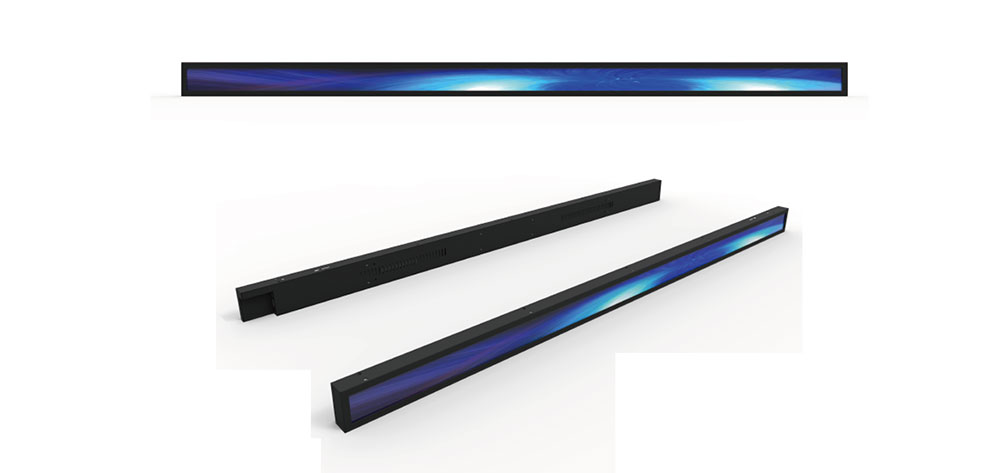
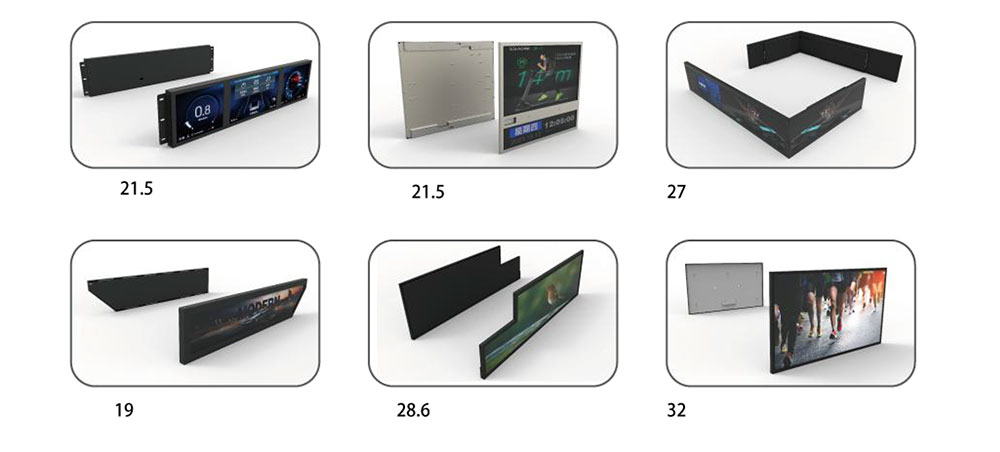
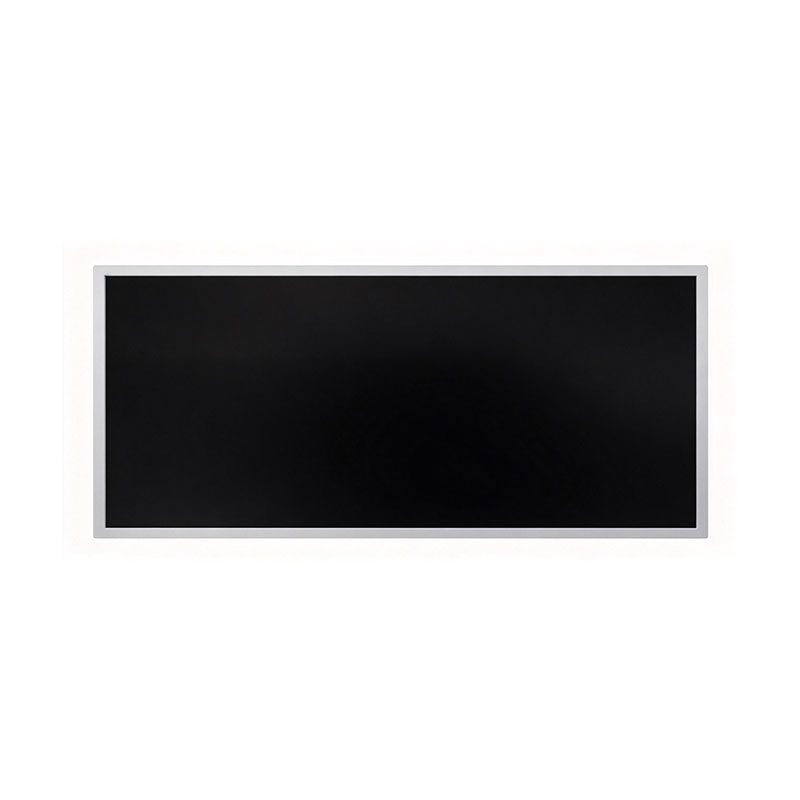
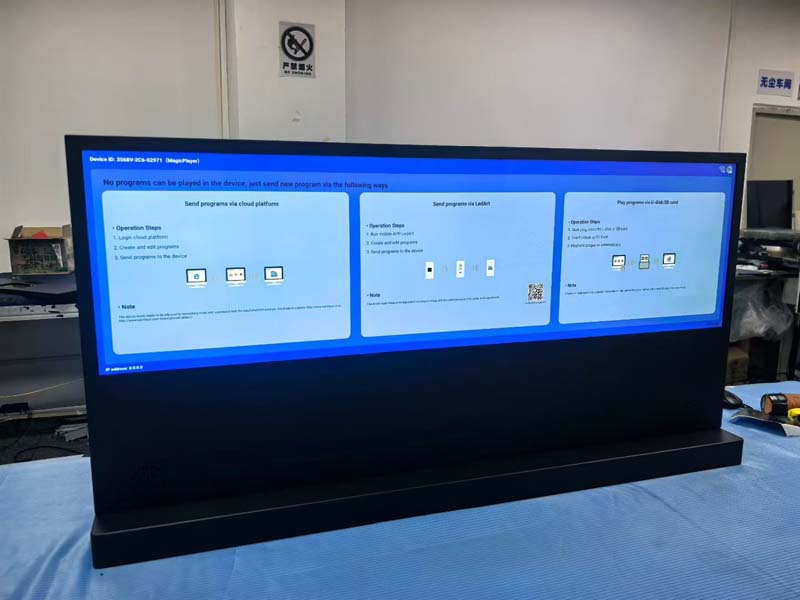
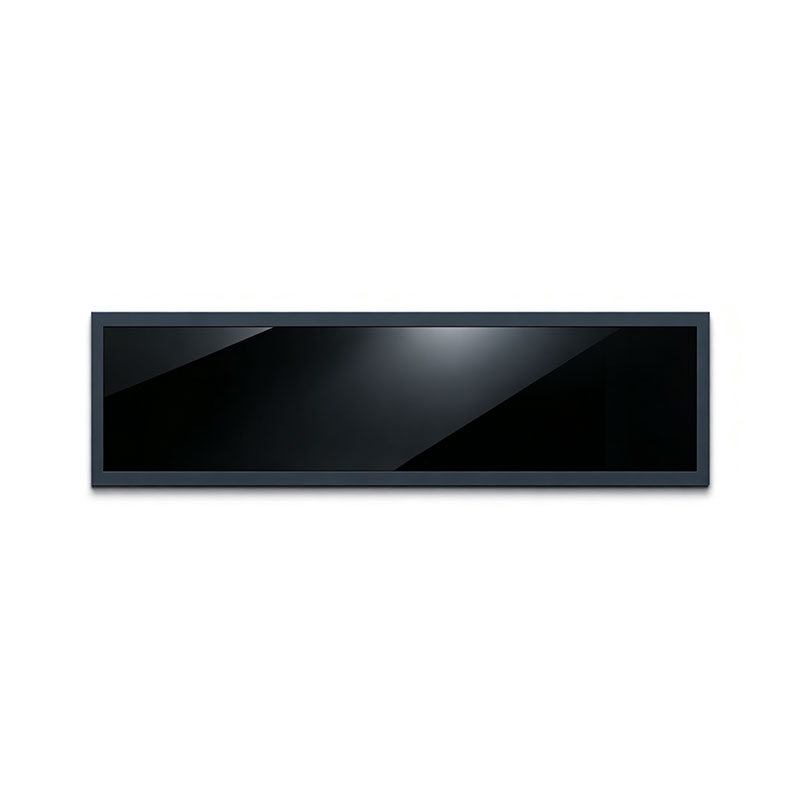
A stretched LCD — also called a bar-type, strip, or ultra-wide display — is a liquid crystal panel cut to an aspect ratio far wider than the consumer standard. Where a conventional monitor is 16:9, stretched panels commonly appear at ratios between 16:3 and 16:1: 28-inch at 1920×540, 37-inch at 1920×540 or 2880×810, 44-inch at 3840×1080, and 88-inch at 3840×810 or wider. The panel is not simply a scaled image; it is a distinct glass cut from the mother substrate, with its own driver ICs, timing controller, and backlight layout.
That distinction matters commercially and technically. Because these panels come from a specialized cut, availability, minimum order quantities, and lead times differ from mainstream panels. Designers who treat a stretched display as "a normal screen with the top and bottom cropped" run into trouble at the backlight and thermal level first, and at the content level second.
Why the Format Fits Transport Architecture
The stretched format solves a physical problem before it solves a messaging problem. Passenger buildings are full of long, shallow voids that a 16:9 screen cannot fill without wasting vertical space or blocking sightlines:
- Above door lintels and gate portals — a passenger information strip that sits flush over the boarding door, readable from thirty metres down the pier.
- Platform edge and trackside panels — suspended beneath the canopy, delivering next-train information where the sightline is horizontal, not vertical.
- Check-in and ticket hall fascias — long runs above counter rows where a continuous ribbon of airline or operator branding is more valuable than a single large rectangle.
- Baggage carousel headers and belt-side rails — short dwell, wide field of view, high glare.
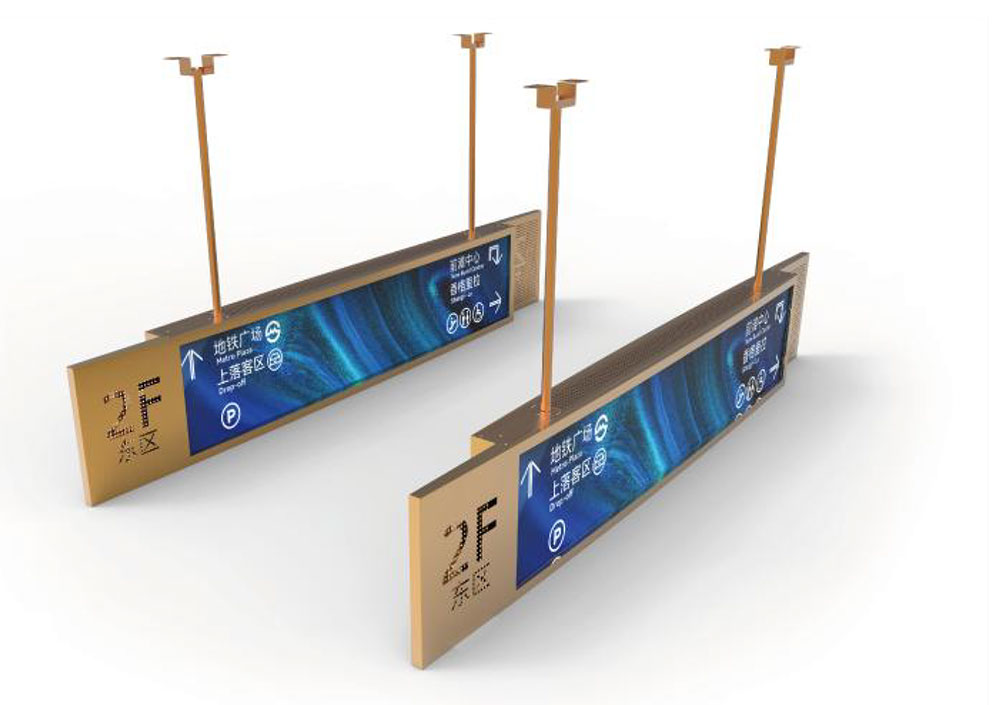
- Column wraps and wayfinding pylons — narrow vertical or horizontal bands that turn structural columns into directory surfaces.
- Retail and duty-free fascia, lift lobbies, and queue rails — secondary revenue surfaces that must not obstruct circulation.
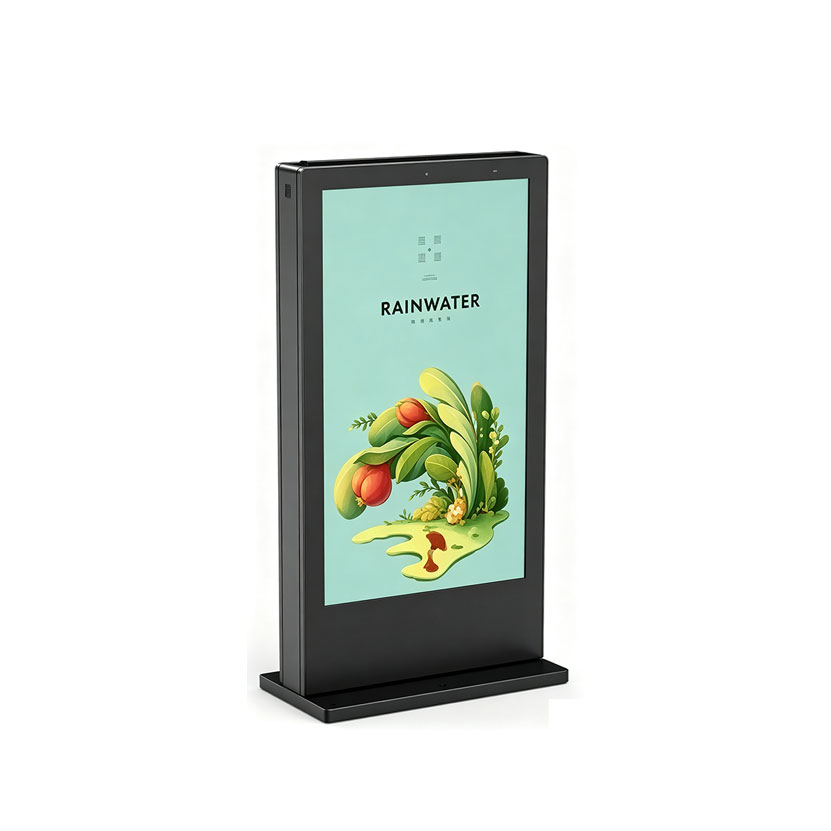
A row of tiled stretched panels can form a continuous digital ribbon tens of metres long, or be broken into individually addressed segments. This is the operational advantage: one hardware platform serves both a single-gate sign and a hall-wide information band.
The Optical Problem: Ambient Light Is the Design Driver
Interior signage in a station is not a dark-room application. Typical maintained illuminance in a ticket hall runs to several hundred lux, and direct daylight through a glazed façade can push localized luminance far higher, with specular reflections off polished floors adding a second source of veiling glare. A 350-nit commercial display that looks brilliant in a showroom turns grey and unreadable in that environment.
Brightness targets
- 700–1,000 nits — covered concourses, retail, back-of-house corridors, lift lobbies.
- 1,000–1,500 nits — check-in halls, ticket halls, gate hold rooms with indirect daylight.
- 1,500–2,500 nits — glazed façades, platform canopies with direct sun exposure, atrium-facing fascias.
Brightness alone is not sufficient. The ratio between peak white and the reflected ambient luminance determines perceived contrast, so a high-nit panel with a glossy front polarizer can underperform a dimmer unit with proper treatment. The practical combination is high native brightness, an anti-glare (AG) surface with controlled haze, and — where the geometry permits — an anti-reflective (AR) coating to suppress the mirror image of a window or ceiling light. Haze values in the 5–15% range are typical for transport signage: enough diffusion to break up reflections, not so much that character edges soften at distance.
Uniformity and the tiled wall
When four to ten panels are butted together into a ribbon, panel-to-panel variation becomes visible as banding. Buyers should specify brightness uniformity across the active area (commonly 75–85% minimum, measured at nine or thirteen points) and request color consistency to a defined tolerance — a ΔE of 3 or better between units in the same array. Hardware calibration at the factory, plus a commissioning-time calibration pass on site, is the reliable route. Bezel width also matters: 2–6 mm bezels on stretched panels are achievable, but narrower bezels usually carry a cost in mechanical stiffness and thermal margin.
Thermal Design and the 24/7 Duty Cycle
Airport and rail signage runs continuously, often in enclosures with limited airflow, frequently in spaces that are warm by design — a glass-walled concourse in summer, a platform canopy with radiant heat, a ceiling void above a check-in row. Two consequences follow.
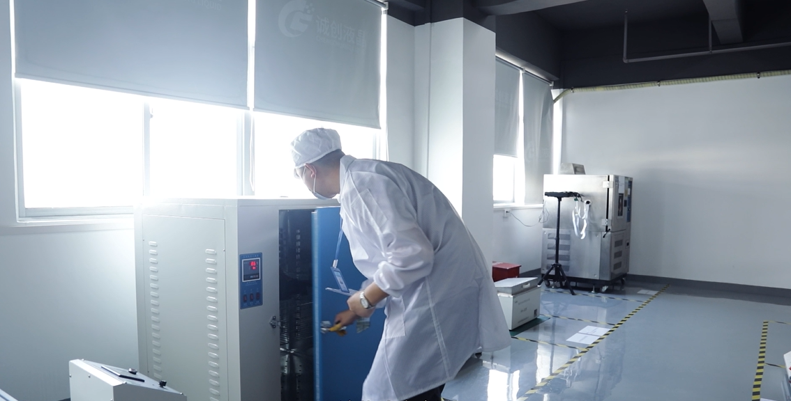
First, the backlight must be derated intelligently. Running LEDs at reduced drive current extends lifetime substantially, and a display rated for 50,000 hours at full output may exceed 70,000 hours at 80% drive with a modest brightness penalty. Second, the mechanical design must conduct heat away from the panel rather than trap it. Fanless designs are strongly preferred in public spaces: fans ingest dust, fail first, and create a maintenance call in an area that requires a permit to access.
Specify an operating temperature range rather than a storage range — a display rated 0–40 °C is marginal for a canopy installation, and units rated to 50 °C or 60 °C ambient are available for exposed positions. Look for evidence of thermal testing in the actual enclosure, not just the bare panel.
Static content and image retention
Signage content is often static for hours: a fixed gate number, a fixed brand lockup, a fixed platform designation. LCD image sticking is a real risk under those conditions. Mitigations include pixel-shift routines, periodic full-screen refresh cycles, content rotation, and transparent logos rendered at reduced luminance. Content design and hardware selection have to be coordinated here, and the CMS should be configured to move static elements on a schedule that is invisible to passengers.
Interfaces, Control, and Video Wall Behavior
Most stretched panels in this market are driven over HDMI or DisplayPort with loop-through for daisy chaining, with LVDS or eDP available at the panel level for integrators building their own controller. For arrays, three capabilities separate a workable product from a frustrating one:
- Deterministic daisy-chain behavior — consistent EDID handling and a defined maximum chain length at the target resolution and frame rate.
- Remote control — RS-232, IR, or IP-based control for brightness, input switching, and power scheduling, so a hall-wide array can be dimmed at night without a site visit.
- Built-in scaling and rotation — native handling of 1920×540 or 3840×1080 canvases, plus 90° rotation for vertical column applications, without external scalers that add a failure point.
For installations that must never show a blank screen, plan failover at the system level: redundant media players, a watchdog that reverts to a locally stored fallback slide, and a monitoring agent that reports panel health and backlight hours to the operations centre.
Designing Content for a Wide, Shallow Canvas
A stretched display is not a shrunken 16:9 screen. Treating it as one produces tiny text and wasted pixels. Practical rules from deployed installations:
- Two-zone layout. Split the canvas into a persistent identity zone (operator or airline mark, fixed at low luminance) and a dynamic zone (times, gates, platforms).
- Distance-based type sizing. A rough rule of thumb is 25–30 mm of cap height per metre of viewing distance for comfortable reading; a gate sign read at 15 m needs far larger characters than a counter fascia read at 2 m.
- Horizontal information rhythm. Because the eye scans a wide band left to right, order elements as destination → time → status, matching the way a passenger's question forms.
- Multilingual handling. Latin, CJK, Cyrillic, Devanagari, and Arabic scripts have very different vertical metrics and, in the Arabic case, right-to-left flow. Verify that the chosen CMS renders RTL correctly and that line height does not clip diacritics or CJK ascenders at the small pixel heights typical of 540-pixel canvases.
- Contrast over decoration. Light text on dark backgrounds reduces glare perception in dim platform environments; dark text on light performs better under strong daylight. Match the polarity to the room.
- Accessibility. Respect contrast ratio guidance, avoid colour-only status coding, and keep animation restrained — motion draws the eye but delays comprehension.
Mechanical Integration and Compliance
Public transport infrastructure carries certification obligations that consumer displays do not. Depending on the market and the installation position, expect to address:
- EMC — EN 55032 / EN 55035 for general equipment; EN 50121-4 for signalling and telecommunications apparatus on railway property.
- Fire performance — EN 45545-2 for rolling stock, and national building-code requirements for fixed installations.
- Electrical safety — EN 62368-1 or the applicable local equivalent, plus low-voltage directive compliance in the EU.
- Ingress protection — IP54 or better for canopy, platform, and semi-exposed positions; sealed cable entries and gasketed bezels.
- Impact — toughened front glass where the public can reach the display, and verified mounting for wind and vibration loads in exposed areas.
Mounting hardware deserves early attention. VESA patterns on stretched panels are often non-standard or asymmetric, and a 44-inch bar display has a high length-to-height ratio that concentrates load at two points. Design the bracket so the panel is supported along its long edge, and confirm service access — a sign mounted 6 m up in a concourse is a scissor-lift job, so the panel should be replaceable without dismantling the surrounding ceiling.
A Reference Specification
| Parameter | Concourse / retail | Gate & platform signage | Façade / atrium |
|---|---|---|---|
| Brightness | 700–1,000 nits | 1,000–1,500 nits | 1,500–2,500 nits |
| Surface treatment | AG, 5–10% haze | AG + AR where geometry allows | AG + AR, low gloss |
| Contrast (native) | ≥ 1000:1 | ≥ 1200:1 | ≥ 1500:1 |
| Uniformity | ≥ 80% | ≥ 80% | ≥ 75% |
| Panel-to-panel ΔE | ≤ 3 | ≤ 3 | ≤ 3 |
| Operating temp. | 0–50 °C | −5–55 °C | −10–60 °C |
| Duty cycle | 24/7 | 24/7 | 24/7 |
| Ingress protection | IP40 (indoor) | IP54 | IP65 |
| Backlight life | ≥ 50,000 h to 50% luminance | ≥ 50,000 h | ≥ 50,000 h, derated drive |
What to Write Into the Tender
Procurement documents for transport signage tend to be written by facilities teams and specified by integrators, and the gap between the two produces avoidable disputes. The following items belong in the technical schedule:
- Measured brightness after AG/AR treatment, not datasheet peak, tested at the centre and at the four corners.
- Uniformity and colour tolerance stated as acceptance criteria at commissioning, with the measurement method named.
- Backlight lifetime defined against a luminance threshold, with the drive current stated.
- Thermal test report for the complete assembly in its enclosure, at maximum specified ambient.
- Firmware update and spare-parts commitment — a ten-year asset needs a ten-year panel supply path.
- Sample unit evaluated in situ, in the real lighting, at the real viewing distance, before the order is placed.
Where the Technology Is Heading
Three developments are shaping the next generation of stretched transport displays. Mini-LED backlights with local dimming are pushing native contrast up and allowing bright highlights without lifting the whole black level — particularly valuable for signage that must read against a bright window. Higher brightness ceilings, driven by improved LED bins and better thermal path design, are opening up fully sunlit positions that previously required projection or e-paper. And tighter bezels combined with factory colour calibration are making multi-panel ribbons genuinely seamless, which changes the architectural conversation: instead of specifying screens, designers can now specify a continuous information surface.
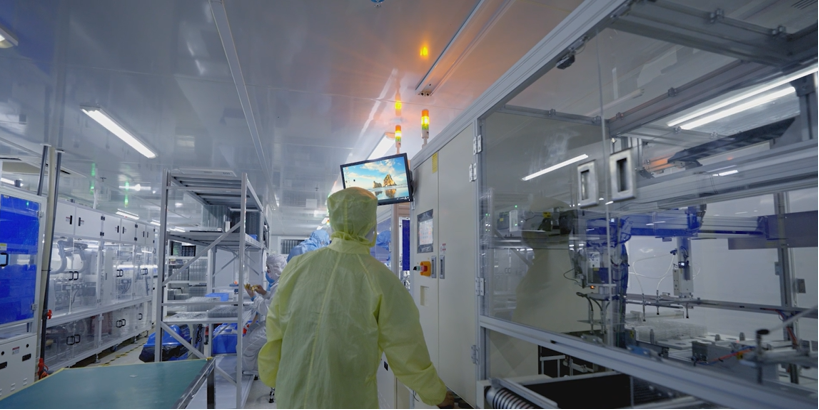
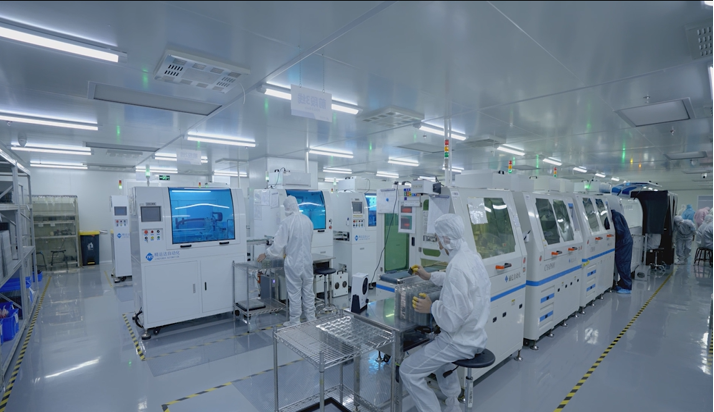
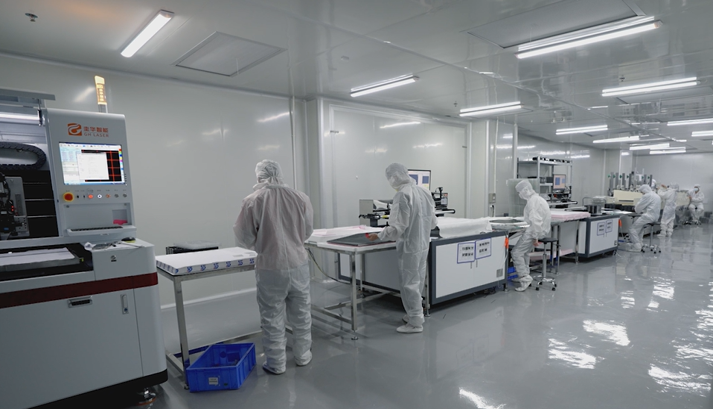
For manufacturers, the discipline is the same as it has always been in this sector. The specification that survives a decade in a station is not the one with the highest headline number; it is the one where brightness, thermal margin, uniformity, and content design were engineered together. HITULCD builds high-brightness stretched LCD panels with that integration in mind — optical treatment, thermal architecture, and control interfaces specified for the operating conditions that transport signage actually faces, rather than the conditions of a demonstration room.
KEYWORDS: stretched LCD display, high-brightness bar-type display, airport digital signage, railway station passenger information display, ultra-wide LCD panel