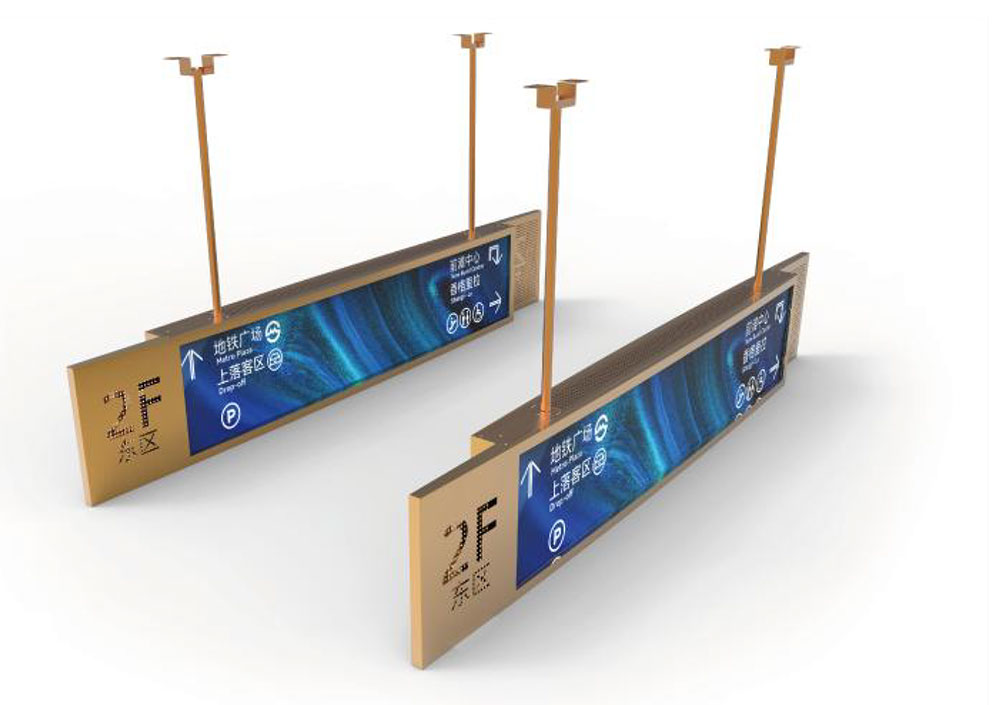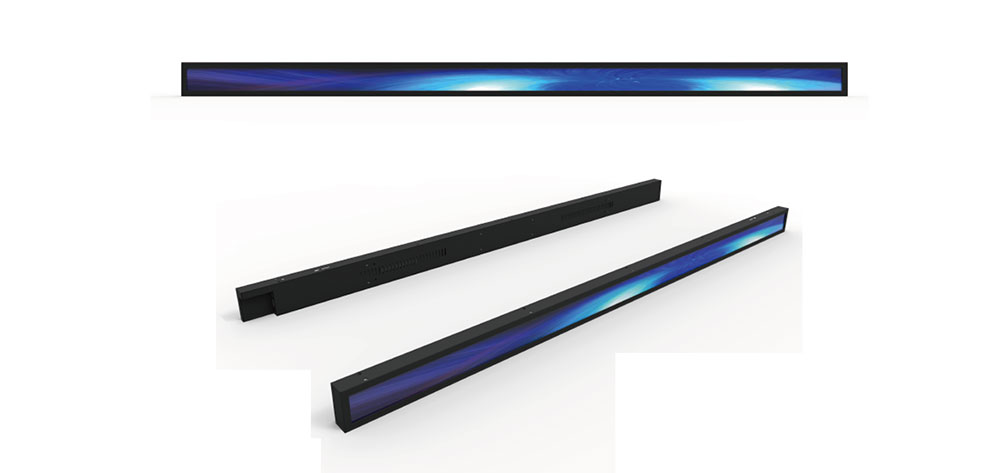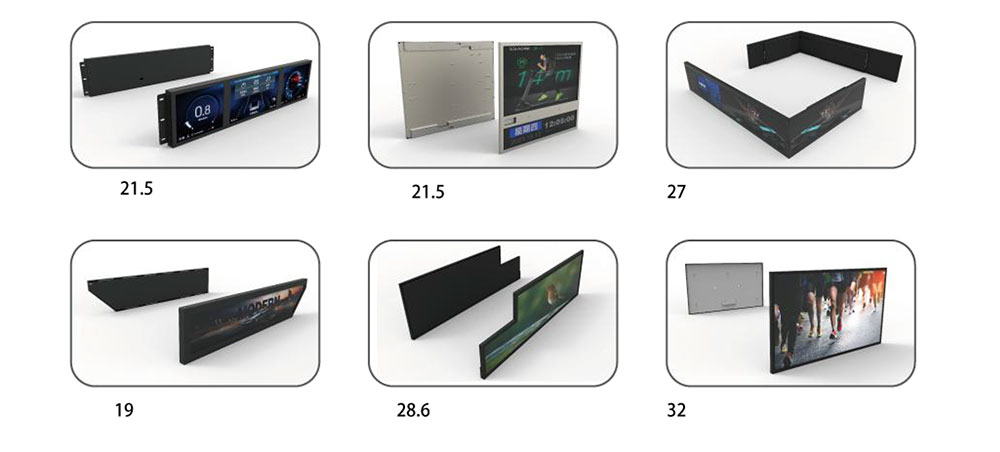
Stretched LCD displays, also called bar-type or ultra-wide displays, have become a core component in modern public transportation equipment. Their elongated aspect ratios (typically 16:3, 16:4.5, or 24:9) fit the narrow mounting spaces above bus doors, along train carriage ceilings, inside subway handrails, and across station platform edges where a conventional 16:9 panel would waste space or simply not fit. For transit operators, the right stretched display balances high brightness for sunlight readability, wide temperature tolerance, vibration resistance, and long-term reliability under 24/7 duty cycles.
This article reviews ten stretched LCD display configurations engineered for public transportation, explains the selection criteria that matter in transit environments, and clarifies how electrical safety and electromagnetic compliance, including GB 17625.1-2022, shape procurement decisions.
Why Stretched LCDs Suit Public Transportation
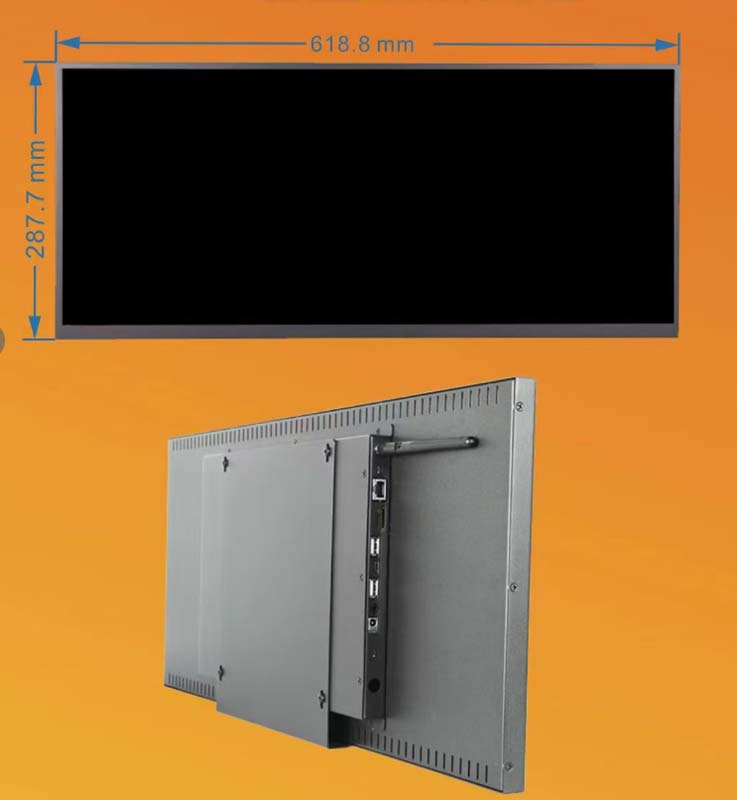
Transit cabins and stations impose spatial constraints that favor ultra-wide formats. A bar display mounted along the top of a bus interior can show route maps, next-stop information, and advertising without obstructing passenger sightlines. The same geometry works for platform-edge information strips and over-door passenger information systems (PIS) in metro cars. Beyond geometry, transit displays must survive continuous operation, wide ambient light swings from dark tunnels to direct sun, mechanical shock, and electrical disturbances on vehicle power buses.
Key Selection Criteria
- Brightness: Interior displays generally need 700–1000 cd/m²; semi-outdoor and platform units need 1500–2500 cd/m² with optical bonding to suppress reflection.
- Operating temperature: A range of -30°C to +80°C covers most climates; wide-temperature polarizers prevent the blackening and clouding common in cheap panels.
- Vibration and shock: Compliance with EN 50155 (railway electronics) and robust mechanical framing is essential.
- Lifetime: LED backlights rated for 50,000 hours or more reduce maintenance intervals.
- Electromagnetic and power compliance: Harmonic current emissions must meet GB 17625.1-2022, the mandatory Chinese standard limiting harmonics injected into the public low-voltage supply by equipment drawing up to 16 A per phase. Compliance protects shared power networks in depots, stations, and charging facilities.
The Best 10 Stretched LCD Displays for Public Transportation
1. HITULCD 38.6" Ultra-Wide Bar Display (16:4.5, 1920×540)
A flagship interior unit delivering 1000 cd/m² brightness and a 1200:1 contrast ratio. Its wide-temperature IPS panel holds color accuracy from -30°C to +80°C, making it ideal for over-door PIS in buses and light rail. The integrated power board is designed to meet GB 17625.1-2022 harmonic limits.
2. HITULCD 28" Stretched Display (16:4.5, 1920×540)
A compact bar display for minibuses and shuttle vans. At 700 cd/m² it suits shaded interiors, consumes under 25 W, and supports 24/7 operation with an anti-glare surface treatment.
3. HITULCD 48" High-Brightness Platform Strip (16:3, 1920×360)
Engineered for metro platform edges and concourse signage, this 2500 cd/m² model uses optical bonding and an anti-reflective cover glass for readability under skylights. Automatic brightness control via an ambient light sensor extends backlight life and cuts energy use.
4. HITULCD 23.1" Transit Bar Monitor (16:4.5, 1920×540)
A versatile small-format unit for ticketing kiosks and fare gates. It offers capacitive touch options, 800 cd/m² brightness, and an IK08 impact-resistant front surface for high-traffic public areas.
5. HITULCD 86" Panoramic Bar Display (32:9, 3840×1080)
A large-format wayfinding display for station halls and interchange hubs. Dual Full HD resolution across an ultra-wide canvas supports split-screen route maps and real-time arrivals, with 1500 cd/m² brightness for bright terminal lighting.
6. HITULCD 35" Railway-Grade Bar Display (16:4.5, 1920×540)
Built to EN 50155 vibration and thermal cycling requirements for mainline and high-speed rail carriages. Conformal-coated electronics resist humidity and dust, and the wide-input power stage tolerates unstable onboard DC buses.
7. HITULCD 19" Compact Stretched Display (16:6, 1280×480)
A low-power unit for handrail-mounted and seatback information in trams and buses. Its slim depth under 35 mm allows flush integration into tight enclosures without protruding into aisles.
8. HITULCD 58" Semi-Outdoor Bar Display (24:9, 1920×720)
Designed for bus shelter headers and open-air platform canopies, this 2000 cd/m² display carries an IP65-rated front bezel and a sealed optical stack to block moisture and insects while sustaining readability at dawn and dusk.
9. HITULCD 43" Dual-Sided Bar Display (16:4.5, 1920×540)
A ceiling-suspended double-face unit for central aisle mounting in metro cars and station concourses, serving passengers on both sides from one chassis. Synchronized content and balanced 1000 cd/m² output keep both faces legible.
10. HITULCD 24" Ruggedized Bar Display (16:4.5, 1920×540)
An entry-level rugged option for fleet retrofits. It combines a metal rear housing, wide 170° viewing angles, and a verified harmonic profile under GB 17625.1-2022 for safe connection to depot power infrastructure.
Electrical Compliance: The Role of GB 17625.1-2022
GB 17625.1-2022 defines limits for harmonic current emissions for equipment with rated input current up to and including 16 A per phase connected to public low-voltage systems. It is technically aligned with IEC 61000-3-2. For transit display procurement this standard matters because stations, depots, and vehicle charging facilities often host many displays, power supplies, and auxiliary loads on shared feeders. Excessive harmonic currents distort voltage waveforms, overheat neutral conductors and transformers, trip protective devices, and interfere with signaling and communication systems.
A display that meets GB 17625.1-2022 incorporates a power supply with active power factor correction (PFC) that shapes the input current to approximate a sinusoid, keeping individual harmonic orders within the standard's Class A or Class D limits as applicable. When evaluating stretched displays, operators should require a test report demonstrating harmonic conformity alongside EMC immunity (GB/T 17626 series) and safety certification. Every HITULCD model listed above is designed with PFC-equipped power stages to satisfy these requirements.
Integration and Maintenance Recommendations
Specify displays with standardized VESA or custom transit mounts, front- or rear-serviceable access, and hot-swappable power modules to minimize vehicle downtime. Use optical bonding wherever displays face variable light to improve contrast and eliminate internal condensation. For fleets, standardizing on one or two resolutions simplifies content management across the passenger information system. Finally, confirm that both the display and its media player share consistent EMC and harmonic compliance, since a non-compliant player can undermine an otherwise clean installation.
Conclusion
The best stretched LCD display for public transportation is the one matched to its mounting location, ambient light, mechanical environment, and electrical network. Interior bar displays prioritize low power and wide temperature tolerance; platform and semi-outdoor units demand high brightness and sealing; railway units require EN 50155 ruggedization. Across all of them, verified compliance with GB 17625.1-2022 harmonic limits protects shared transit power systems and keeps installations reliable for years. The ten HITULCD configurations above cover the full range of transit scenarios, giving operators a dependable starting point for specification and procurement.
KEYWORDS: stretched LCD display, public transportation display, high-brightness bar display, GB 17625.1-2022, transit LCD