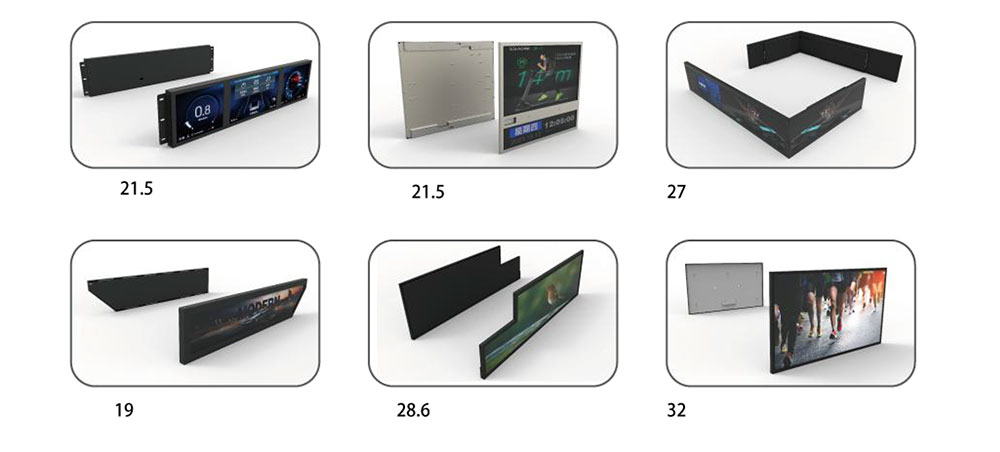
Vending machines have quietly become one of the most demanding display environments in consumer retail. A unit sitting in a Montreal shopping concourse in January, a lobby in downtown Toronto, or a warehouse breakroom in Fort McMurray exposes its electronics to temperature swings, condensation, ambient light extremes, and continuous-duty operation that most consumer products never encounter. For Canadian vending machine manufacturers, the display is no longer a passive price tag — it is the merchandising surface, the payment interface, and increasingly the advertising platform. That shift is why stretched LCD displays have moved from novelty to standard specification.
What a Stretched LCD Actually Is
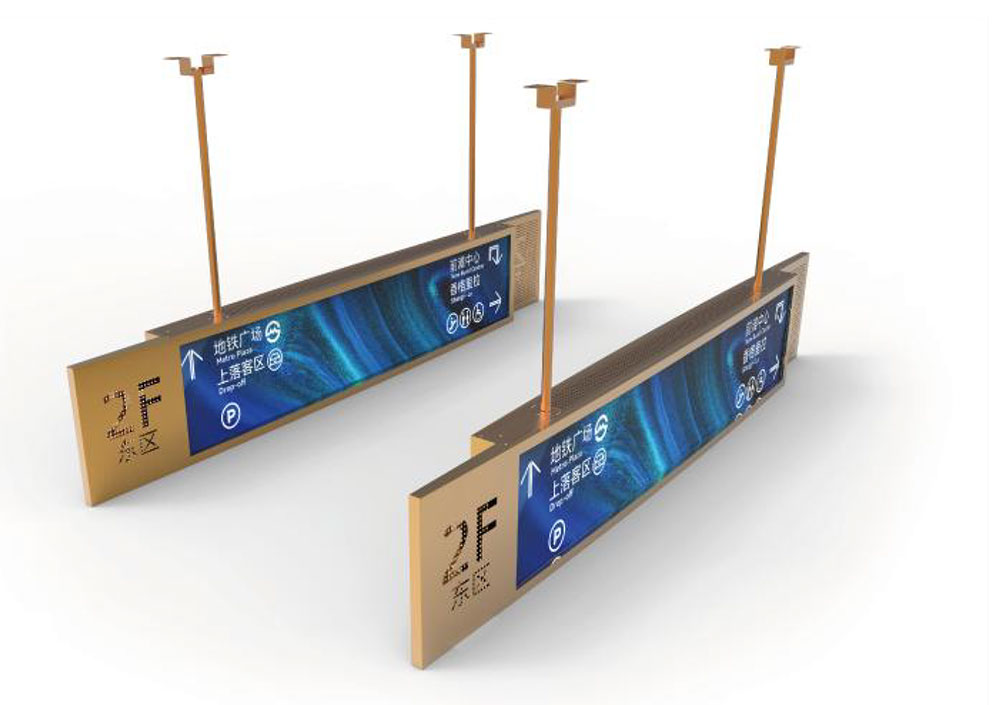
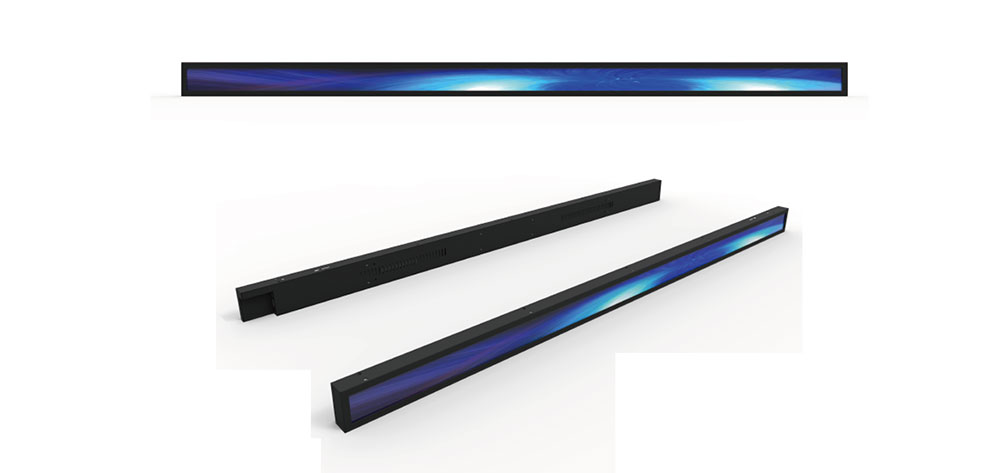
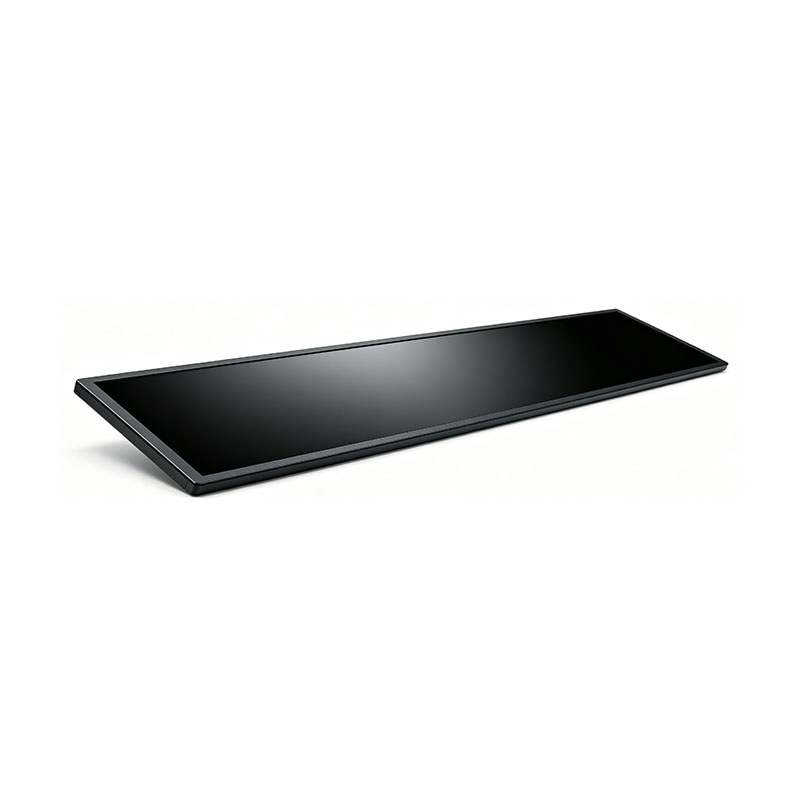
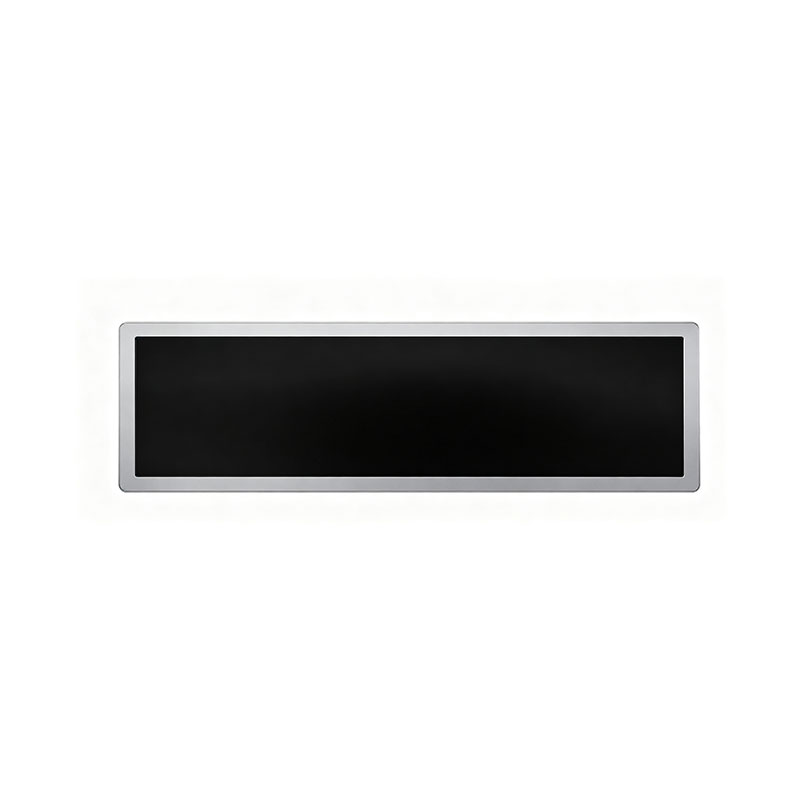
A stretched LCD — also called a bar-type, ultra-wide, or strip display — is a TFT panel whose aspect ratio departs sharply from the 16:9 or 16:10 formats. Rather than shrinking a conventional panel, manufacturers cut the glass and design the backlight, driver geometry, and bezel around a deliberately elongated format such as 16:3, 16:4.5, or 3:1. The result is a viewing surface that fits the physical envelope of a vending machine door: a shelf-edge band above each product row, a header strip above the glass, or a full-height side column beside the selection keypad.
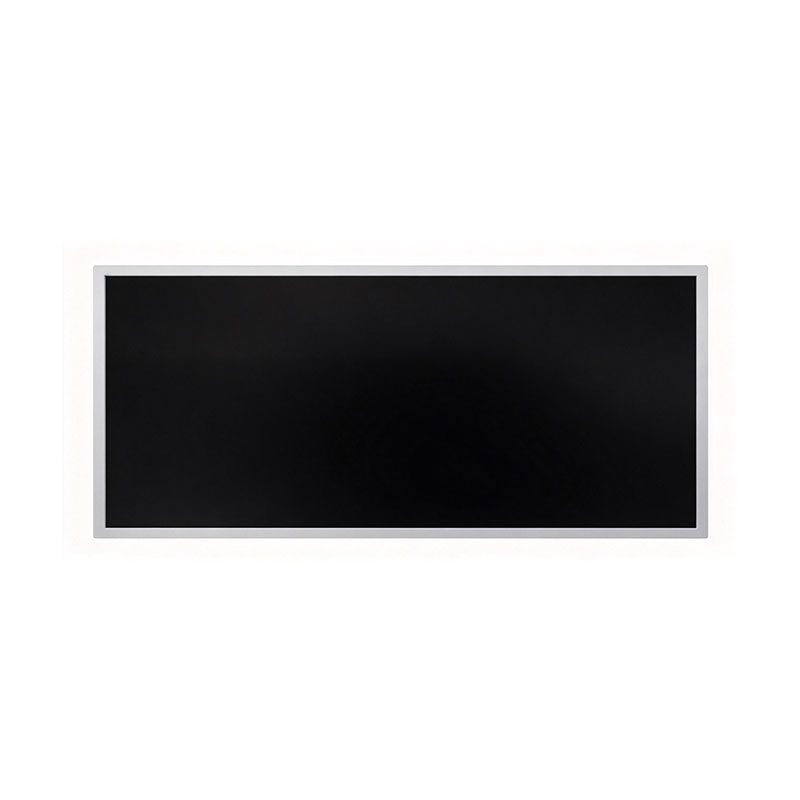
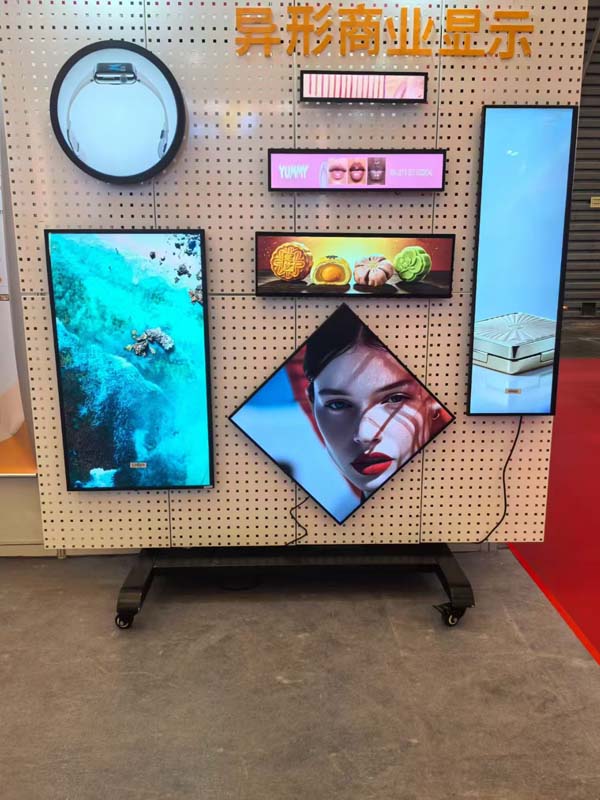
The practical formats fall into a handful of families that have become de facto standards in the vending and kiosk trade:
| Nominal Size | Aspect Ratio | Typical Resolution | Common Vending Application |
|---|---|---|---|
| 23.1" | 16:3.4 | 1920 × 158 | Shelf-edge pricing band, single row |
| 28" / 28.6" | 16:4.5 to 16:3 | 1920 × 540 | Header strip, promo ticker above glass |
| 37" | 16:4.4 | 1920 × 540 | Full-width header, secondary advertising |
| 43" to 47" | 16:4.5 to 3:1 | 3840 × 1080 (stretched) | Large-format header, side-mounted ad column |
| 88" and above | 32:9 | 3840 × 1080 | Multi-column vending wall, retrofitted fascia |
Resolution matters more than buyers initially expect. A 1920 × 540 panel stretched across a 37-inch header looks crisp at two metres but visibly soft at 60 centimetres, so selection depends on viewing distance as much as on the door opening. Where the display sits behind the front glass and the customer's eye is close, a 3840 × 1080 native panel with an unusual cut gives better results than upscaling a low-resolution strip.
Engineering Constraints Unique to Canada
Cold-start performance
The single most common failure mode reported by Canadian operators is not panel death but slow or absent cold start. Liquid crystal viscosity rises as temperature falls; below roughly −10 °C, standard panels exhibit sluggish response, and below −20 °C many will not produce a usable image at all until the backlight has warmed the cell. Outdoor and vestibule machines in Prairie and Northern installations routinely see −30 °C.
The workable solutions are well established. A display specified with an extended operating range (−20 °C to +70 °C, or −30 °C for premium grades) removes most of the risk at the panel level. Where the machine's environmental control cannot guarantee that, an integrated heater layer bonded behind the panel brings the cell to operating temperature within a defined warm-up window before the controller releases the video signal. Manufacturers should specify the warm-up time at a stated ambient — a supplier claiming "cold start to −30 °C" without a warm-up duration is not giving a number you can design a boot sequence around.
Condensation and moisture ingress
A machine that cycles between a heated interior and a cold exterior, or that receives a delivery through a humid loading dock, will condense water on the coldest surface inside the cabinet — frequently the display's metal chassis. Look for displays assembled with anti-fog surface treatment, sealed front bonding, and rated front-side protection of IP65 or better where the panel is exposed behind glass. An anti-reflective and anti-glare coating earned in a Canadian context also pays for itself: it reduces the smear that condensation creates under store lighting.
Brightness and sunlight readability
Indoor vending in a well-lit concourse needs roughly 500 to 700 nits. A machine facing a south window, or an outdoor unit under a canopy, needs considerably more — 1,000 to 1,500 nits with an effective anti-glare treatment, since Canada's low winter sun sits at a shallow angle that finds its way into glass fronts at exactly the times of day when foot traffic peaks. High-brightness panels in this class draw 30 to 60 percent more power than standard panels and dissipate proportionally more heat, which must be accounted for in the cabinet's airflow design and in the temperature the controller sees.
Automotive-grade dimming is worth specifying here. A panel that cannot dim smoothly below about 10 percent of maximum will look harsh in a dim hotel corridor at 2 a.m. and will annoy the building manager who approved the installation. Ambient-light-sensor-driven brightness curves, driven over PWM or a serial dimming interface, solve this cheaply.
Certification: The Part That Stops Shipments
Canada's regulatory stack catches more first-time exporters than any hardware issue. A vending machine display assembly is a component, but the machine it ships inside must carry the marks the provincial electrical authorities require.
- cUL / CSA mark. Electrical equipment sold in Canada requires certification by a body accredited by the Standards Council of Canada. A UL listing alone is not sufficient; the assembly must be evaluated to CSA C22.2 requirements, which is why "cUL" or "cULus" marks matter and plain "UL" does not.
- ICES-003. Canada's interference-causing equipment standard for information technology equipment is administered by Innovation, Science and Economic Development Canada. Displays and their driver boards must meet Class A or Class B limits as appropriate to the installation. A driver board certified for FCC Part 15 in the United States is not automatically ICES-003 compliant, even though the emission limits are similar.
- RoHS and substance restriction. Canadian purchasers increasingly mirror EU RoHS and REACH expectations contractually rather than by statute. Requesting the declaration package up front avoids a late-stage scramble. HITULCD publishes its material compliance documentation openly, and buyers can review the LCD screen RoHS documentation directly as part of supplier due diligence.
- Bilingual interface obligations. In Quebec, the Charter of the French Language — strengthened by Bill 96 — requires that commercial signage and point-of-sale interfaces be available in French, with French displayed at least as prominently as any other language. For a display specification this translates into a firmware and content requirement: the panel must support French character rendering and language toggle without truncation, and the typographic layout of a 1920 × 540 strip must survive the 15 to 25 percent string-length increase that French text typically adds over English.
Optical Bonding, Touch, and the Door Assembly
Most vending machine displays sit behind a secondary sheet of glass or polycarbonate — the machine's front door. That air gap creates two problems: internal reflections that wash out contrast under bright light, and a dust trap that becomes visible from the customer's side over a service life measured in years, not months.
Optical bonding with an index-matched adhesive eliminates the air gap, raising perceived contrast, reducing internal reflection to near zero, and mechanically damping vibration from the machine's compressor and coin mechanism. For machines with a projection-capacitive touch overlay over the strip, bonding is close to mandatory: an unbonded PCAP stack behind door glass produces ghosting and drift as the adhesive-free layers shift slightly with thermal cycling.
Where the stretched panel serves as the selection interface rather than a passive band, specify a PCAP sensor with 2 mm or thicker cover glass, an IK08 or better impact rating, and a controller that tolerates glove input — vending is frequently a gloved-hands interaction, particularly in outdoor and industrial placements.
Interface and Controller Choices
Stretched panels are rarely sold as bare glass into a vending application. Most ship as a kit: panel, LED backlight driver, timing controller, and an interface board exposing LVDS, eDP, HDMI, or DisplayPort to the machine's media player or single-board computer. The choice has downstream consequences.
- LVDS remains the most common raw panel interface and is well suited to long internal cable runs, but it constrains cable length and requires careful shielding inside an electrically noisy cabinet.
- eDP offers higher bandwidth for 4K-class stretched panels and simpler cabling, at the cost of tighter board-level design requirements.
- HDMI or DisplayPort input boards simplify integration dramatically — the machine's existing media player drives the display as a standard second monitor — but add a conversion stage, a power rail, and one more component to certify.
For vending fleets, interface stability across a production run matters more than peak specification. A manufacturer who validates a single board revision and then discovers the supplier has silently swapped the scaler is facing a re-qualification cycle mid-program. Ask for a written change-notification commitment and a stated minimum availability period — seven years is a reasonable floor for a vending platform with a ten-year field life.
Content, Data, and the Advertising Business Case
The commercial argument for stretched displays in Canadian vending is straightforward: the same machine, the same footprint, and a materially higher revenue per square metre once the header and shelf bands become sellable inventory. A 37-inch header strip above the glass can carry paid advertising, dynamic pricing, nutritional information, and localized promotions — and in Quebec, the same content in French.
Two design cautions follow from that business model. First, content updates must not depend on physical access; specify a display and player combination that supports remote content push over the machine's existing telemetry link. Second, brightness and colour consistency across a fleet degrade at different rates as backlights age, and a wall of machines showing visibly mismatched whites is a merchandising problem. Request per-unit colour and luminance binning, and plan a periodic recalibration or a defined luminance-degradation specification (typically 50,000 hours to 70 percent of initial luminance) into the total cost of ownership.
Specification Checklist for Procurement
Consolidating the above into a working specification, a Canadian vending machine manufacturer should require, at minimum:
- Panel size, active area, and aspect ratio matched to the physical door opening, with bezel dimensions given as mechanical drawings rather than nominal figures
- Brightness in nits at a stated drive condition, plus contrast ratio and the anti-glare surface treatment specified by name
- Operating and storage temperature ranges, with cold-start warm-up time at a stated ambient
- Front-side IP rating, condensation mitigation, and anti-fog treatment where the panel is exposed behind door glass
- cULus or cUL certification to CSA C22.2, ICES-003 compliance class, and a complete RoHS/REACH declaration package
- Interface type, connector pinout, and backlight driver topology, with a documented change-notification and availability commitment
- Touch overlay specification including cover glass thickness, IK rating, glove support, and controller interface
- Luminance degradation curve, colour binning tolerance, and stated MTBF for the backlight
- Bilingual content capability verified with French-language test strings at the target resolution
None of these requirements is exotic. Each has a well-understood engineering answer, and the suppliers who serve the vending sector routinely meet them. The failures that reach the field almost always come from a specification that was written around the panel's headline numbers — size, resolution, brightness — without the environmental, certification, and lifecycle clauses that determine whether the machine survives its first Canadian winter and its fifth year on the floor.
A stretched LCD is a small fraction of a vending machine's bill of materials and a disproportionate share of its perceived quality. Specifying it with the same rigour applied to the refrigeration deck or the payment terminal is what separates a fleet that runs for a decade from one that generates service calls every February.
KEYWORDS: stretched LCD display, bar-type LCD vending machine, high brightness LCD Canada, ultra-wide LCD panel, vending machine display supplier